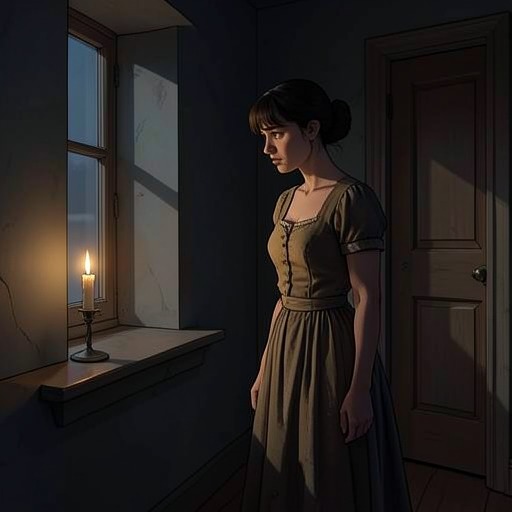
Elvy and Tore’s marital relationship
Handling the UndeadElvy and Tore’s marital relationship was marked by practical kindness and emotional distance, and its defining truth becomes clearest after Tore’s death: Elvy is grateful for what he gave her, but considers their life together complete. As Tore returns to her home among the returned dead, she tests her own response against the extravagant grief of a historical queen—and rejects the idea that love requires refusing to let go.
The Marriage as Elvy Remembers It
Elvy’s account of the marriage is brief but carefully balanced. Tore was ten years older than she was, and he had taken a hysterical woman into marriage. He cared for her and led her through life, acts of sustained kindness that Elvy recognizes without qualification. At the same time, she believes that he never understood her. The care was real; so was the gap between them.
That gap does not become a charge of cruelty. Elvy thinks Tore did the best he could, and says she holds little animosity toward him. Her judgment is neither an idealization of the marriage nor a repudiation of it. She can acknowledge the limitations of their closeness while remaining fair to the man who had looked after her. The relationship is remembered as a life of care that did not amount to complete understanding.
Elvy’s sharpest statement is that she had already had enough of Tore by the time he died. The bluntness matters because it does not cancel her gratitude: she had been able to enjoy him during his life, and does not feel compelled to claim more of him in death. In her understanding, the marriage had reached its ending before his body did. What she needs from memory is not a more perfect version of their intimacy, but the freedom to say that it was enough.
A Historical Mirror: Maria Eleonora and the Dead King
Elvy reaches this understanding while reading Grimberg about Gustav II Adolf and his widow, Queen Maria Eleonora. The account holds her attention because Maria Eleonora repeatedly refused to leave the king’s corpse alone. She accompanied the body on its journey from Germany, and, after being separated from it, obtained the king’s heart and used it to press for access to him again. A Swedish diplomat described her honoring and caressing the body despite its blackening and decay.
The story unsettles Elvy. If the king had risen from his coffin, she imagines, his jubilant queen might have embraced his rotting flesh. Faced with such devotion, Elvy wonders whether her own inability to feel the same attachment makes her heartless. Her comparison brings the question of marriage into the strange new circumstances of the returned dead: does love require a surviving spouse to keep claiming the body, even when death has made the relationship something different?
A later detail in Grimberg’s account gives Elvy a way to distinguish the queen’s longing from her own. Maria Eleonora had a double coffin prepared, with room for herself beside the dead monarch. The book attributes the gesture to her feeling that she had enjoyed so little of him while he was alive; death, she hoped, would let her take full advantage of their union. Elvy recognizes that this is not her situation. She had enjoyed Tore in life, and she does not need death to supply a closeness that their marriage lacked.
Tore’s Return and Elvy’s Refusal to Romanticize It
The reflection takes place after Tore has returned and been taken away. Elvy tells Hagar that he came back, and confirms that people came for him. When Hagar asks whether the experience was awful, Elvy says it had perhaps been a little so at first, but that it went well. The restrained answer fits her view of the marriage: his return is significant, but it does not erase her knowledge of their shared life or turn their bond into the kind of desperate possession she has just read about.
The distinction is reinforced by the way Elvy handles the remains of that life. After watching the news, she paces through the house, takes the copied psalms stained with Tore’s fluids from the guest room, crumples them, and throws them away. The gesture is forceful, but the evidence does not frame it as hatred of Tore. Her own assessment remains that he had done his best and that she feels little animosity. The discarded pages instead sit beside her refusal to preserve every trace of him as sacred: care and grief do not oblige her to keep what she no longer wants.
When Elvy calls Hagar, she is not seeking to talk at length about the marriage or Tore’s return. She asks whether Hagar has watched the news and whether she is thinking what Elvy is thinking about the Prime Minister. That turn redirects the conversation from private bereavement toward the public crisis. Elvy can acknowledge that Tore’s return went well, then attend to what she sees as more urgent. Her marriage remains emotionally consequential, but it does not consume her whole field of attention.
What the Relationship Means in the Crisis
Elvy’s recollection gives the returned dead a domestic measure. The crisis makes the dead physically present again, but presence alone cannot recreate intimacy or settle what a marriage meant. Against the queen’s attempt to extend possession beyond death, Elvy draws a limit grounded in the life she and Tore actually shared: he cared for her, he did not fully understand her, and she had already had enough of him by the end. None of those truths has to defeat the others.
Her response is therefore not indifference so much as a refusal to confuse devotion with endless attachment. Elvy can speak of Tore’s kindness without pretending their marriage was perfectly mutual; she can admit that his return was disturbing at first without describing it as unbearable; and she can let go of the stained psalms without converting her lack of longing into malice. In a story where the dead return to the living, the relationship shows that love may include a boundary: the dead person’s return does not require the survivor to begin the marriage again.