Eva's Release from the Reliving
Handling the UndeadEva's Release from the Reliving is the moment Eva leaves her body, guided by Flora and separated from the Fisher's grasp. It turns a scene of forced finality into one of choice: Eva cannot return to life, but she can say goodbye and depart before the Fisher reaches her. The event also reaches beyond the room through David's subsequent vision, in which Eva's fading plea makes his consent part of her release.
The Link Between Flora and Eva
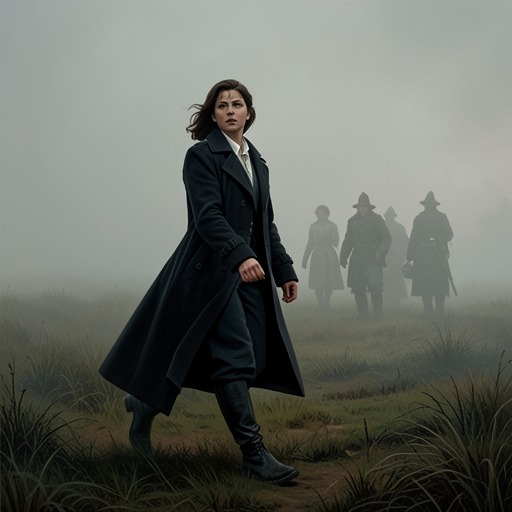
Eva is standing in the hallway, on her way out, her face dimly visible in the stairwell light and partly covered by a bandage. Flora steps forward and takes her by the shoulders. The physical contact establishes a link between them, and Flora immediately knows what to say. She closes her mind to what is happening outside and turns her attention to Eva. The exchange begins not as a conversation spoken aloud but as communication carried through that connection.
Eva's response makes the stakes plain: she wants to live. Flora answers that life is no longer available to her and that the door is closed. Rather than leave Eva with that bare refusal, Flora gives her two images of what may happen when a soul leaves the body. One shows souls being collected; the other shows them disappearing. Flora is not presenting a way back to life. She is making the possible destinations visible, so Eva can face what comes next.
Eva's Choice and the Fisher's Approach
The Fisher is already drawing near. As Eva's soul rises toward the surface, its whining intensifies behind Flora. The narration likens its approach to a sea swallow crossing a wide ocean toward a glinting catch. That image places Eva's departure under pressure: the Fisher is closing in, and the opportunity to leave on her own terms is narrowing.
Flora urges Eva to allow the departure and give herself up, telling her that she is strong. The words are not simply Flora's own speech; they come through her. Eva asks for time to say goodbye. That request changes the scene's emphasis. The decision is no longer only about the two destinations Flora has shown her, but also about Eva's wish to acknowledge the people she is leaving.
Before the Fisher can take shape, and before Eva's soul can become its catch, Eva leaves her chest and moves away with the speed of a disembodied spirit. Flora feels a whisper pass her skin and registers the brief flicker of a consciousness in her mind; then Eva is gone. Her body collapses at Flora's feet. The sequence establishes both the finality of her bodily death and the fact that the Fisher does not capture her in this moment.
David's Vision and the Plea to Let Go
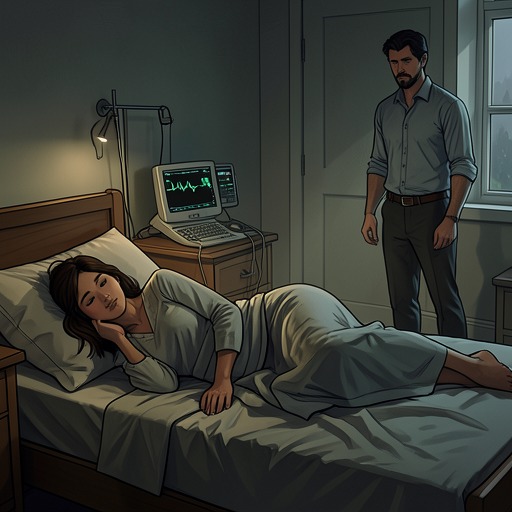
The event's consequences extend into David's experience. In a vision, the lawn, canal, boat, light, and Eva contract to a single point before he opens his eyes in Magnus's bed. A White caterpillar lies curled on his stomach, while the nearby whining warns of a presence he is not permitted to face directly. David reaches to cover the caterpillar with his hands. The hooks halt short of him because he is alive, but the caterpillar communicates a plea through contact.
As the caterpillar swells beneath David's hand, the plea weakens. Eva's voice fades, and darkness seems to gather between her and the part of David that can hear her. The message asks him to let her go if he loves her. David sobs, lifts his hands, and tells her that he loves her. In the vision, love does not mean holding on: his response is followed by the return of the hooks, which take hold of the caterpillar before anything else happens.
The caterpillar then becomes a butterfly. It rests briefly on the hook and flies upward, passing through the ceiling and out of David's sight. The sequence does not explicitly explain the butterfly's identity or establish the vision as a literal account of Eva's destination. Its placement nevertheless connects the caterpillar's plea, David's permission to depart, and Eva's earlier escape from the Fisher's reach. The transformation offers an image of release, while leaving the nature of what follows unresolved.
Significance
The event joins two acts of letting go. Flora gives Eva the information and support needed to face the end of her life; David, reached through the vision, must stop holding the departing presence in order to answer its plea. Neither can restore Eva to life. Their actions instead shape how her departure occurs: she leaves before the Fisher can claim her, and David's final response accepts that she must go.
The contrast between the two possible destinations remains important. Flora shows that souls may be collected or disappear, but the scene does not settle which outcome awaits Eva. It establishes only that she escapes the Fisher's immediate grasp and vanishes from Flora's awareness. David's butterfly vision adds a suggestive image rather than a definitive explanation. In this way, Eva's release is conclusive as a departure from her body but open-ended as an account of where she goes.