Peter
Handling the UndeadPeter is a self-reliant resident of the Heath whose life is organized around concealment, improvised shelter, and useful work. He has made a home inside a former bicycle-storage room, surviving on modest earnings and salvaged possessions rather than escaping the conditions around him. His relationship with Flora is shown through unceremonious trust and shared routines: she comes to him after a night of upheaval, tells him what has happened, and later works beside him as he gathers water. When the dead awaken, Peter meets the news with wary practicality; when police take all the bicycles, the crisis reaches directly into the small livelihood that has sustained him.
Shelter and Daily Conditions
Peter’s room is built into a space originally intended for storing bicycles, a function it still partly serves. Its ground-level window has intact reinforced glass, making entry difficult, and he has fitted a lock to the metal door himself. The door bears a spray-painted summer landscape. Beyond it, a divided section and a door concealed in a wall mural lead to his actual living quarters. Police have searched the larger space, but their cursory inspections have not revealed the hideaway.
The concealed room measures only six square metres. It holds a bed Peter found in a skip and transported home on his moped, along with a chair, a table, food supplies, a kerosene stove, and a water container. A boombox runs from a car battery. He also keeps an electric toothbrush, an electric razor, a Game Boy, an alarm clock, and a mobile phone. The assortment sets everyday conveniences against the strict limits of the room: Peter uses electrical devices in a place where the flashlight Flora brings him batteries for is a notable exception. The room is neither comfortable nor expansive, but its hidden door and carefully assembled contents make it a functioning refuge.
His circumstances are also apparent in small bodily and domestic details. He sleeps in a thin sleeping bag, which he unzips to use as a blanket, and his ribs jut sharply beneath his skin. The room has a pee bucket; Flora cannot bring herself to use it and goes instead to the portable toilets outside the area. Those facilities have been brought in and emptied regularly, despite the county’s unwillingness to acknowledge the Heath’s existence. Peter’s accommodation thus sits within a wider contradiction: the area is officially disavowed, yet practical arrangements are made for the people living there.
Work and Improvised Independence
Peter earns money by guarding bicycles and doing errands, including carrying water. The work brings in roughly a thousand kronor, which he uses to buy food at the surplus store. At the end of the day, market traders in Rinkeby sometimes give him boxes of leftover vegetables. His livelihood depends on small exchanges and whatever resources can be recovered or obtained; it is not secure, but it is specific and sustained by his own labor.
The moped is the centrepiece of that independence. Peter spent half a year restoring it from an abandoned, stripped wreck found in the woods, salvaging essentially its frame and wheels and assembling the rest from found and bartered parts. He added a cargo tray, painted it metallic silver, and named it the Silver Arrow. The narration identifies it as his only possession he cares about. It is both transport and working equipment: Peter uses it to collect water, and Flora rides on its flatbed with the containers. Its importance is made legible not by an abstract claim about his self-sufficiency but by the time he invested in it and the practical journeys it enables.
Flora and Shared Routine
Flora comes to Peter’s locked door while a disoriented man stands nearby with his arms spread, asking for a hug in a babyish voice. Peter switches on a flashlight behind the reinforced glass and calls to learn who is there. Once he recognizes Flora, he lets her in. She gives the man a final glance as Peter closes the door, then enters the ordinary-looking bicycle room and follows him through the concealed entrance into his private space.
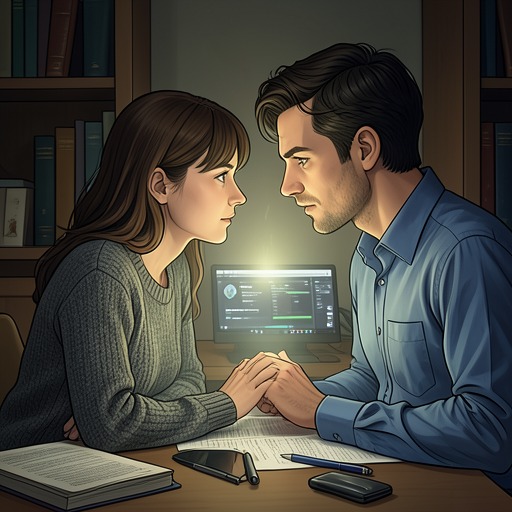
Inside, Flora takes off her shirt and trousers and curls up beside Peter, resting her head against his shoulder. She asks whether he knows what has happened that night. He does not, so she tells him the whole sequence, from waking at Elvy’s home to riding into town in an ambulance. Peter responds briefly that it is strange, puts an arm around her head, and falls asleep within moments. The scene gives his response its own quiet scale: he offers physical closeness rather than explanation, while Flora’s account makes him a recipient of events unfolding beyond his hidden room.
Their connection is also expressed through work. Peter gets up to use the bucket, then suggests that they fetch more water. Flora and Peter put on their clothes, take the moped, and make a round of the area. They collect water from containers outside gates, fill four ten-litre containers at a Shell station on Akallavagen, and carry them back over the rutted field. The sequence joins care to routine: Flora is with him, but their immediate task remains water, transport, and the practical business of getting through the day.
The Awakening and the Seizure of the Bicycles
At the station, newspaper billboards announce that the dead have awakened and advertise sensational images of the night’s violence. Flora points the headlines out to Peter, but he turns to the containers and asks for her help loading them. The contrast is sharp without making him indifferent: the extraordinary event is framed by the ordinary tasks that still have to be done. Flora buys both newspapers, yet outside, people fill their cars and walk along the footpath as if nothing has changed. She is disappointed by this normality; on the ride back, the field and surrounding streets show no visible sign that the world has gone over the edge.
Peter’s own response to the event is more receptive than dismissive. He says it is good for the police to have something else to do, and good that this sort of thing is happening; he thinks it is strange that it has not happened before. His remarks give the awakening a different emphasis from the headlines. The newspapers turn it into spectacle, while Peter sees a change that may interrupt the existing order and regards its arrival as overdue. The account does not explain further what he expects to follow, so his stance remains a brief but pointed contrast to Flora’s unease and the public’s appetite for sensational images.
Later, during a thunderstorm that disrupts Flora’s internet connection, she cannot reach Elvy but Peter answers her call immediately. Speaking in a low whisper, he reports that eight SWAT units and a van have arrived and that they are driving away all the bicycles. Flora asks what will happen to him. Peter says he cannot talk any longer and has to keep quiet before ending the call. The seizure strikes at the centre of his livelihood: the bicycles he guards are not incidental scenery but the work around which his daily survival is arranged. The sudden police presence also reverses the earlier impression of a hidden life beyond official notice. His concealed room has escaped cursory searches, but the operation now reaches the visible resources on which he depends.
Narrative Role
Peter’s story is defined less by a dramatic explanation of his past than by the concrete systems he has built to live: a hidden room, a repaired moped, small paid tasks, traded parts, and occasional food from market traders. These details establish him as someone who converts discarded or overlooked things into necessities. The dead awakening first enters his life through Flora’s report and then through headlines encountered at a petrol station; it becomes materially present when police remove the bicycles.
The contrast between shelter and exposure shapes his limited arc in the available scenes. Peter can conceal a room from cursory searches and make a damaged moped roadworthy, but his livelihood remains vulnerable to a force arriving with eight SWAT units. His subdued manner does not make him passive: he repairs, carries, collects, and maintains. Yet the removal of every bicycle leaves the practical consequences unresolved. The calls end with his need to keep quiet, while Flora is left with news that the crisis has taken hold of the work and objects that sustain him.