
The Race’s Class Conflict
Hans Brinker, or The Silver SkatesThis flow traces the challenge to social prejudice as Gretel’s participation and victory alter the contest’s meaning.
increasing Bearing strength in each event
 decreasing
Bearing strength in each eventdecreasingEntry Resented

Entry Resented
Exclusion voiced
Carl repeats the objections of Rychie Korbes and others who dislike the idea of racing against Gretel. Their complaint rests on her poverty and social position, not on her ability.
A challenge to custom
Hilda encourages the Brinker children to join, insisting that the ranks are open. The race becomes a conflict over belonging as well as athletic skill.
Skill Defies Expectation
Skill Defies Expectation
Ability seen
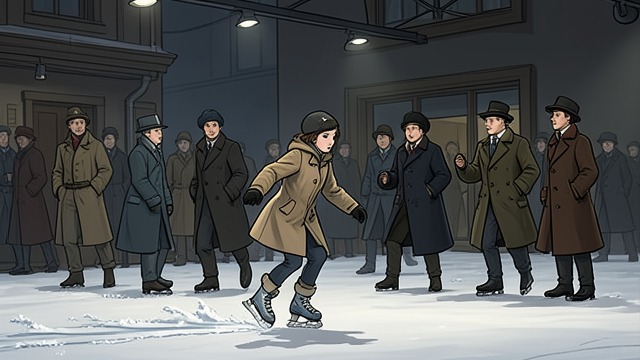
Gretel’s performance on the new skates draws attention from the boys who had assumed she could not compete. Her speed makes the exclusionary argument less credible.
Prejudice persists
Rychie’s circle continues to treat her entry as improper. The tension grows because Gretel’s competence has challenged their assumptions without yet changing all their attitudes.
The Public Contest
The Public Contest
A broad audience
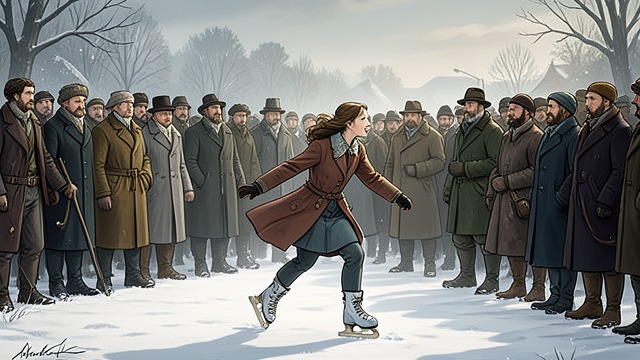
The race attracts wealthy families, working people, and visitors from across Holland. Gretel competes in front of spectators who might never otherwise have noticed her.
Stakes sharpened
The public setting makes each result a judgment on the competitors’ skill. Gretel’s presence brings class tensions onto an ice course where speed can be directly compared.
Gretel Takes the Prize

Gretel Takes the Prize
Merit made visible
Gretel wins the final girls’ race by skating faster than her wealthy rivals. The victory cannot be dismissed as a favor from Hilda or a gesture of charity.
Status overturned
The crowd recognizes Gretel as champion. The result exposes the unfairness of treating poverty as evidence of inferiority.
Respect Replaces Contempt

Respect Replaces Contempt
Recognition follows victory
Girls crowd around Gretel, and Hilda’s welcome helps her enter the circle of acknowledged competitors. Her triumph forces observers to reconsider what they thought they knew about her.
Change remains human
The contest does not erase class difference, but it makes contempt harder to sustain openly. Gretel’s accomplishment creates a new basis for respect.
When the race is first proposed
The days of practice before December 20
December 20, before the girls’ first start
December 20, at the final girls’ mile
Immediately after Gretel’s victory
