Dutch Saint Nicholas Day
Hans Brinker, or The Silver SkatesDutch Saint Nicholas Day turns a winter custom into both a household celebration and a measure of character. The festival’s evening of expectation culminates in gifts at dawn, but the saint’s visit also brings children’s conduct, generosity, and thrift into view. Within the wider story, the custom touches the Brinkers’ hardship: as the family longs for its stolen savings to return, Dame Brinker appeals to Saint Nicholas even while insisting on her Protestant faith.
Calendar and Cultural Frame
The account distinguishes the Dutch observance from the Santa Claus tradition familiar to the book’s American readers. In the narrator’s comparison, Santa Claus has changed after crossing the Atlantic: he arrives on Christmas morning, whereas Saint Nicholas visits Holland on December 5 and distributes sweets, toys, and other gifts early on December 6. Christmas Day, by contrast, is reserved for church rites and family visits. The festival therefore has its own place in the calendar, separate from Christmas, and its suspense is concentrated in the night between the saint’s arrival and the morning’s discoveries.
The narration explains the custom directly to young readers, setting a travel account of Dutch life beside the domestic story. Its description of Saint Nicholas in embroidered robes, with jewels, a mitre, a crosier, and jeweled gloves, presents him as a saintly figure rather than simply a comic gift-bringer. The contrast with the American version makes the Dutch observance legible to its intended audience while emphasizing that customs shift across national settings.
The saint’s visit is not represented as unqualified indulgence. He may admonish children who have behaved badly, and the customary birch rod stands in pointed contrast to sweets and toys. Gifts and correction belong to the same festival: its excitement comes with the possibility that the children will be told what they ought to mend.
The Brinker Household and the Missing Savings
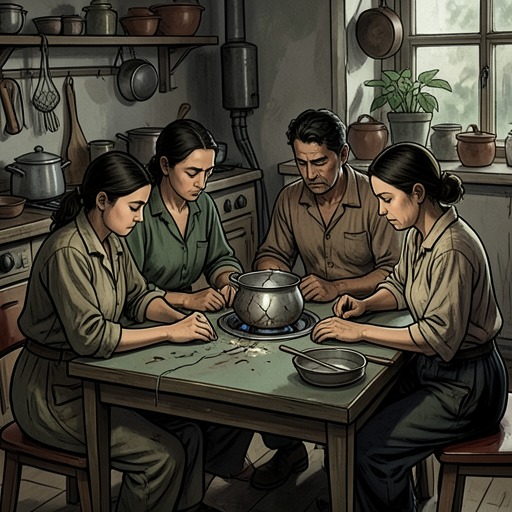
For the Brinker family, Saint Nicholas’s Eve carries a hope more urgent than the promise of ordinary holiday presents. Dame Brinker wishes that the family’s stolen money might return that night. She says she has prayed to the saint, prompting Hans to object. She answers that she remains as true a Protestant as any churchgoing woman, but sees no wrong in turning sometimes to the saint associated with children.
Her prayer asks either that the thieves be kept awake until they restore the money, if Saint Nicholas can bring that about, or that the family’s own wits be sharpened so they can find it. The appeal thus joins supernatural hope to practical searching. Dame Brinker emphasizes that the money has not been seen since the day before Raff Brinker was injured; Hans recalls how thoroughly she has searched the cottage without success. Her wish for a festival miracle arises from a concrete loss that has unsettled the household for years, not merely from seasonal excitement.
This exchange also gives the custom a domestic and religious complexity. Dame Brinker’s Protestant identity does not prevent her from invoking the saint, and her frustration over the vanished savings makes the prayer emotionally charged. Hans’s dismay and his gentler follow-up show how closely the subject presses on the family, even as the festival is described elsewhere through children’s games and presents.
The Van Gleck Celebration
At the Van Gleck home, Saint Nicholas’s Eve is a night of collective anticipation. Hilda van Gleck, fourteen and nearly grown in appearance, joins the younger children’s games with full enthusiasm. Her parents and grandmother look on approvingly; her grandfather eventually covers his face with a large red handkerchief, his visible signal that he intends to sleep. The noisy merriment becomes so exuberant that the baby shows signs of distress, and Madame proposes that the children sing the invitation that had brought Saint Nicholas the year before.
The arrival changes the mood at once. After a knock, the door opens slowly and Saint Nicholas appears in full costume. The household falls silent. He greets the family members by name and delivers a separate moral assessment of several children: Diedrich had been rude at the Haarlem fair but had tried to make amends; Mayken had neglected her lessons and charity box; and Katy had repeatedly tormented the cat. He warns Katy that even a small, voiceless creature feels cruelty, then waits quietly until her frightened crying has subsided.
The address extends beyond reprimand. Saint Nicholas praises kindness to the poor, devotion, cheerful obedience, goodness, industry, benevolence, and thrift, and blesses the family with a wish for wisdom and love in the coming year. His judgment makes the festival more than a test of whether children have earned presents: it publicly names habits that the household can correct and virtues it can continue to practice.
Gifts at Dawn and the Festival’s Significance
After the saint’s farewell comes a shower of sugarplums onto a linen sheet spread before the doors. The children scramble to fill their baskets, while Madame keeps the baby safely among them until his fists are full. They rush to inspect the adjoining room but find it empty. The disappearance preserves the mystery of the visitor even after the household has heard his judgments and received his blessing.
The children then place one shoe each on a table covered with fine white linen. The door is locked, and the key is hidden in the mother’s bedroom before the family goes upstairs. In the morning, the household gathers to unlock the room. Every shoe is overflowing, colored piles stand beside them, and the table bears candies, toys, trinkets, books, and other gifts. The presents reach everyone, from the grandfather to the baby. Katy’s delight includes a promise to herself that the cat will suffer no more; Hilda opens a crimson box and laughs over its glittering contents.
The sequence moves from noisy play, to sudden silence, to moral instruction, and finally to the shared abundance of morning. Its gifts are material, but the account repeatedly ties happiness to kindness and gratitude rather than to price: even a modest present can bring the poor peace and love. In the novel’s broader portrait of Holland, this carefully observed household custom serves the stated aim of joining travel instruction to domestic narrative. A later Sunday scene in The Hague likewise presents church bells as a language capable of reaching across religious differences. Together, such moments place belief within the rhythms of family and everyday life, while the Brinkers’ prayer keeps the festival’s promise of renewal shadowed by the unresolved loss of their savings.