Hans Brinker
Hans Brinker, or The Silver SkatesHans Brinker is a poor boy from Broek whose defining acts of generosity are inseparable from self-respect and responsibility. Faced with hardship at home, he seeks aid for his incapacitated father, supports his mother and sister, and repeatedly puts another person’s needs ahead of his own ambitions. The story’s closing account completes that arc: Hans becomes a celebrated physician and surgeon, turning the work that saved his father into his life’s calling.
Identity and Family Background
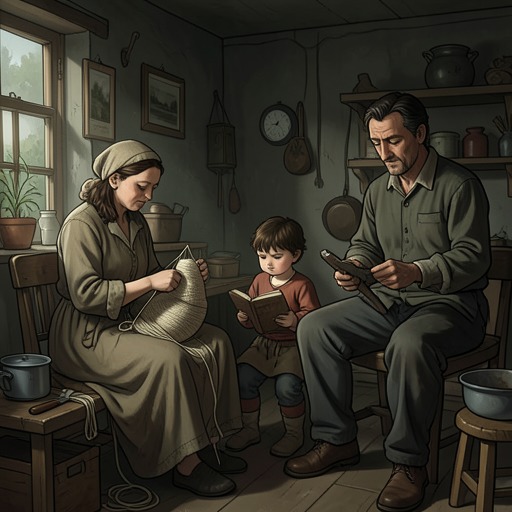
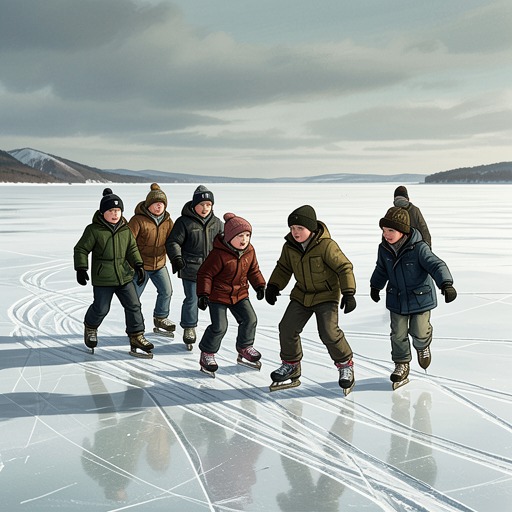
Hans first appears with his sister, Gretel, on a frozen canal in Holland on a bright December morning. The two children are thinly clad, and passing skaters notice them as they kneel on the bank. Their circumstances are shaped by the loss of their father’s livelihood and health. Raff Brinker had worked on the dikes for years; during a storm, in darkness and sleet, he fell from scaffolding at a weak spot near Veermyk Sluice. He survived, but his mind and memory were gone, and he never worked again.
That loss belongs differently to the two children. Gretel knows their father only as a strange, silent man whose vacant eyes follow her. Hans remembers a cheerful, hearty father who carried him on his shoulders and sang. The contrast helps explain the particular hope bound up in his efforts: he is not only caring for the sick man before him but trying to recover the father whose voice and affection remain vivid in his memory.
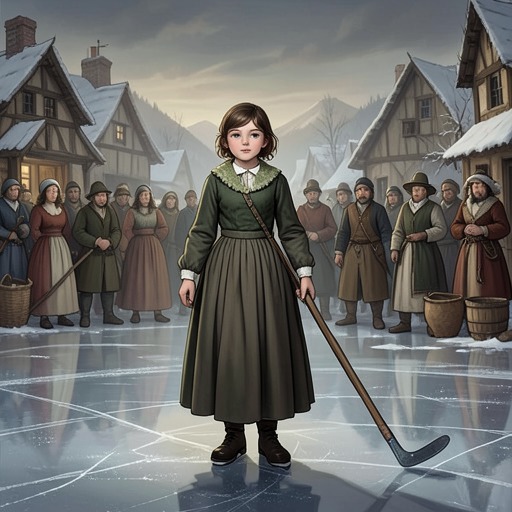
Poverty does not make Hans willing to accept kindness without regard to its terms. When Hilda offers money, he refuses it because he and Gretel have not earned it. His answer is not a rejection of Hilda’s goodwill: he proposes instead to carve her a wooden chain like the one Gretel wears. Hilda has noticed the chain and asks Hans to make one for her, turning an attempted gift into an exchange of skill and work. His pride is therefore practical as well as moral; he wants help to preserve the children’s dignity.
Choices Under Pressure
A decisive choice comes when Hans encounters Dr. Boekman on the ice. He has never met the famous physician, though he recognizes him from an engraved likeness seen in Amsterdam shop windows. Hans is on his way with money that could buy skates, but his conscience turns the encounter into an appeal for his father: he realizes that the money might instead secure medical help. Though the stern-looking doctor is difficult to approach and Hans is frightened, he calls out to him.
Hans’s concern for others is not limited to his own family. When Peter has lost his purse, Hans presents it to him. The boys’ delighted cheering marks the return as a shared triumph, but Peter’s personal thanks matters especially to Hans: the passage describes it as making him feel as though a king had knelt to him. The incident sets his poverty against neither honesty nor generosity; the purse is returned because it belongs to someone else, even while Hans himself has pressing needs.
Later, during the skating race, Hans is among the entrants wearing the same skates he had sold for seven guilders. He has suspected that the mysterious friend who bought them was his fairy godmother; the passage says she had spent her own little savings to buy them and that he was able to buy them back. Yet his chance to race does not outweigh Peter’s need. When Peter damages a skate strap while trying to make a new hole, Hans pulls off his own skate and offers his strap. Peter protests that Hans should go to his post, but Hans insists that Peter take it, declaring that he will not skate this time. He gives up his place just as the race is about to begin.
His Father’s Treatment and Hans’s Devotion
At the Brinker cottage, Hans waits respectfully while Dr. Boekman consults with his student and assistant. The doctor beckons him closer and explains Raff’s case to him, rather than to the women in the room, because he is afraid they might scream or faint at surgical matters. Hans listens closely, his expression changing as he glances toward his father’s bed. When the doctor speaks of the proposed operation in terms of whether it might kill the patient, Hans answers that this question is everything to the family. His tearful dignity makes Dr. Boekman recognize that he has been treating the operation too abstractly: for Hans, the risk concerns his father’s life.
When Dr. Boekman leaves the cottage, Hans goes out after him, blushing and trembling as he tries to express his gratitude. The doctor cuts him short and gives him a more immediate duty: keep the household quiet when the patient wakes, because agitation could harm someone near death. Hans’s devotion thus takes a form beyond pleading for a cure. It means attending to the doctor’s instructions and protecting the conditions of his father’s recovery.
The family’s poverty remains severe even as Raff improves. Hans promises his mother that his father will have the meat and wine the doctor requires; he offers the cover from his own bed and says he can sleep in the straw. When his mother warns that their peat is running out, Hans proposes cutting down the willow tree for fuel and says he will seek work in Amsterdam, where he hopes there will be opportunities unavailable in Broek. His reassurance that the worst trouble is past rests on the change in his father, whom he now describes as himself again, not on any sudden relief from want.
Hans does go looking for work, but the factories turn him away: they have no need for more hands, and some say they would have hired boys before Saint Nicholas’s Day, when work was busier. At sundown he starts back toward Broek unsure whether the choking feeling in his throat comes from discouragement or resolve. He has one more possibility in mind: Peter may have returned. Peter is home when Hans arrives, and is himself about to set out for the Brinker cottage. This encounter places Hans’s search for help and work alongside the friendship he has earned, without making the evidence of hardship disappear.
Friendship, Gratitude, and a Larger Promise
After Raff has recovered enough for his memory to be sought, Dr. Boekman asks him to think of the son he lost. Raff cannot recall what the doctor needs. Hans responds not with a limited offer of comfort but with a promise to search for the missing man: if the son is alive, he says, he will devote every day of his life to finding him. He tells the doctor that his mother can spare him now and that the wealthy physician can send him wherever the search requires. Gretel begins to cry at the prospect of Hans leaving, but the offer shows how expansively he understands gratitude. The doctor’s intervention for his father has created an obligation Hans is prepared to answer with years of his own life.
His friendship with Peter is similarly expressed through action rather than rank. Hans returns Peter’s purse when he himself is in need, and later gives Peter the strap that would have allowed him to skate in the race. Peter calls him a friend; Hans treats that word as a reason to insist, not a reason to accept Peter’s refusal. Both acts show his readiness to surrender an advantage when another person’s need is more urgent.
Calling and Ending
The final portrait looks back across the years as a record of sustained effort. Hans has pursued one object faithfully and profitably, overcoming obstacles without losing his resolution. The choice that defines his career is stated plainly: he believes that becoming a surgeon, curing the sick and crippled, and saving lives is nobler than any other calling. Dr. Boekman warns him that surgery is ugly work, demanding patience, self-denial, and perseverance. The adult Hans’s history answers that warning through the work itself: he has endured the rugged way rather than merely admired its ideal.
Hans is eventually known as Dr. Brinker, a famous physician in Amsterdam who rides in a grand coach to visit patients. The novel also pictures him skating on the frozen canal with his own children, returning him to the setting of his childhood without returning him to its helplessness. He marries Annie Bouman, described as much like the beautiful, frank-hearted peasant girl she had been, but still lovelier and wiser. The conclusion thus joins public achievement to family life: the boy who once offered his own bedcover and his chance at a race becomes a doctor, husband, and father.
Hans’s story turns acts of care into a vocation. His father’s accident first makes medical help a desperate family need; Dr. Boekman’s treatment gives Hans a model of what such help can accomplish; and the adult surgeon carries that purpose into the lives of his own patients. The closing echo of the doctor’s caution against idealizing surgery is answered by Hans’s enduring conviction that the work is great and noble. His achievement is not simply advancement beyond poverty, but the fulfillment of a purpose first formed beside his father’s sickbed.