Hans Brinker is offered medical training
Hans Brinker, or The Silver SkatesHans Brinker is offered medical training by Dr. Boekman after declaring that surgery is the noblest work he can imagine. The offer transforms Hans’s admiration for the care that restored his father into a concrete prospect: with his parents’ consent, he may study at university and eventually train in the doctor’s office. Dr. Boekman also undertakes to pay for the opportunity, while arranging a separate position for Hans’s father with Laurens Boekman in Amsterdam.
Background: Generosity and responsibility
Before the offer, Hans has repeatedly shown that he treats assistance and obligation as matters of personal integrity. When Hilda van Gleck learns that Hans and Gretel Brinker cannot afford proper skates, she gives Hans the eight coins she has left and asks the siblings to decide which of them should receive the pair. Her help is limited by her means, but it gives the children a chance to take part in the skating race.
Hans’s return of Peter van Holp’s lost purse supplies another measure of his character. Peter offers to divide the recovered money with him, but Hans refuses. He has found the purse after stumbling against lumber while preoccupied with trouble at home; he does not treat its contents as compensation for his own hardship. Instead, he explains that he is going to Leyden to seek Dr. Boekman. Peter’s respect for him grows from the refusal as much as from the return itself.
At the race, Hans again puts another person’s need before his own opportunity. When Peter’s skate strap is nearly cut through, Hans removes his own skate and gives Peter the strap, insisting that Peter join the racers. Hans says he will not skate, both because he is out of practice and because he believes the contest is between Peter and Carl Schummel. These earlier actions make the later offer part of a pattern of trust and reciprocal help, rather than a reward detached from Hans’s conduct.
Hans’s account of surgery
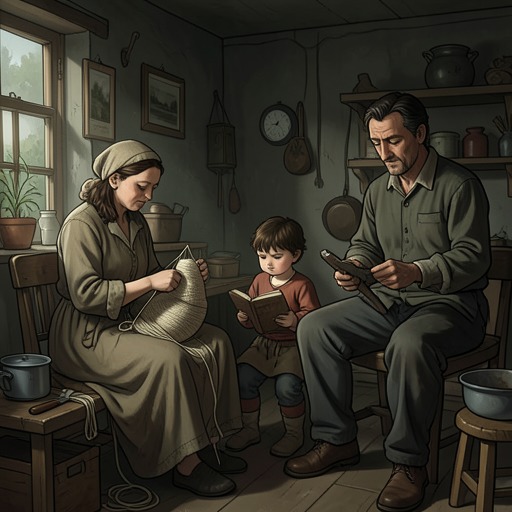
When Dr. Boekman’s conversation with Hans turns to the boy’s future, Hans explains why he prefers medicine to the other calling under discussion. He sees a surgeon’s work as a way to cure the sick and crippled, save human life, and do for others what the doctor has done for his father. His father’s treatment gives the aspiration its force: Hans is not speaking about an abstract profession, but about a form of service he has witnessed at close range.
Dr. Boekman initially answers sternly. He warns that surgery is an ugly business requiring patience, self-denial, and perseverance. Hans takes the frown as a rebuke; his cheeks flush and tears gather, while the doctor turns away to confer privately with Laurens. The exchange tests whether Hans’s enthusiasm will survive a less idealized description of the work. The doctor’s warning does not end the discussion. Instead, he turns back and asks Hans’s age: fifteen.
The offer and its conditions
Dr. Boekman asks whether Hans wants to become a physician, then sets out the commitment the plan would require. With his parents’ consent, Hans would devote himself to study, attend university, and in time become a student in Dr. Boekman’s office. The doctor also asks whether Hans might grow restless and change his mind after the doctor has set his heart on preparing him as a successor. Hans answers that he would not change his decision.
Dame Brinker supports that assurance. She says Hans is steadfast once he has decided, and points to his recent dedication to books; he has already begun to manage Latin. Her intervention matters because the plan depends not only on Hans’s ambition but on the family’s consent and confidence in his constancy. Dr. Boekman concludes that nothing prevents them from carrying it out if Raff Brinker agrees.
Raff responds with pride, while acknowledging that his own preference is for an active outdoor life. He accepts that Hans may study to become a physician, but notes that money is the obstacle. He imagines the family earning what is needed through the labor of two strong pairs of arms, rather than assuming that the opportunity can be taken for granted.
Support for two families and a new future
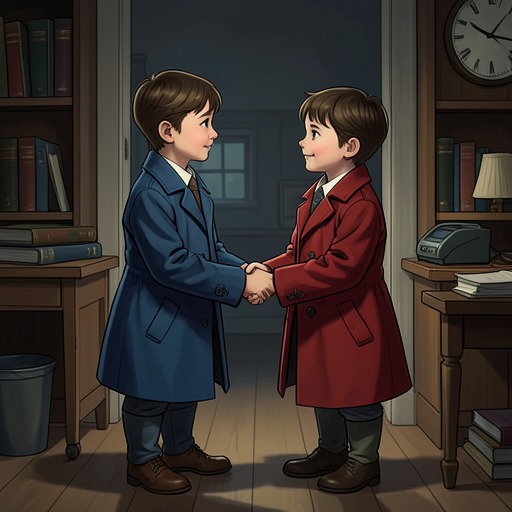
Dr. Boekman removes the financial barrier: if Hans is taken away from his father’s work as a right-hand man, the doctor says, he will pay the cost. He frames the arrangement as gaining the equivalent of two sons—Laurens as a merchant and Hans as a surgeon—and says it would make him the happiest man in Holland. He asks Hans to come the following morning so that they can settle the plan at once. Hans bows, too moved to speak.
The doctor then extends the practical arrangement to Raff. When Laurens opens his warehouse in Amsterdam, he will need a trustworthy and capable man to oversee its affairs and ensure that the workers do their duty. This proposed position answers the family’s financial concern while giving Hans the chance to leave his father’s immediate service for study. The offer therefore joins educational sponsorship to paid work and family support: Hans’s future is opened without treating his father’s needs as irrelevant.
Significance
The episode converts several earlier acts of honesty and self-denial into recognition and responsibility. Hans has declined a share of Peter’s money and surrendered his skate strap to help Peter compete; now Dr. Boekman offers him money, education, and a place in the profession that Hans admires. The exchange is not presented as payment for those individual acts, but they help establish why Peter and the doctor regard Hans as worthy of trust.
The proposed future also rests on a distinction between wishing and committing. Hans’s declaration that surgery is noble is tested by the doctor’s account of its difficulty, by the requirement of years of study, and by the possibility of leaving his present work. Hans answers each condition with resolve, while Dame Brinker confirms that his recent habits support his promise. The ending does not show him already trained or practicing; it establishes a plan, dependent on his father’s agreement, with the doctor ready to arrange it the next morning.