Hilda van Gleck
Hans Brinker, or The Silver SkatesHilda van Gleck is the rich burgomaster’s daughter whose kindness gives practical force to the story’s contrasts between social privilege and hardship. She uses her position not merely to notice the poor Brinker children, but to help them: first by giving them money for race skates, then by caring for Gretel when she is stranded outside in the cold. Hilda is also an accomplished skater in her own right, and her eventual marriage to Peter van Holp completes a relationship first glimpsed on the ice.
Identity and Introduction
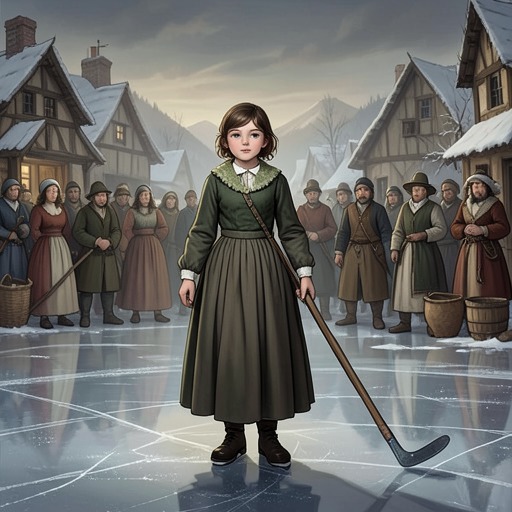
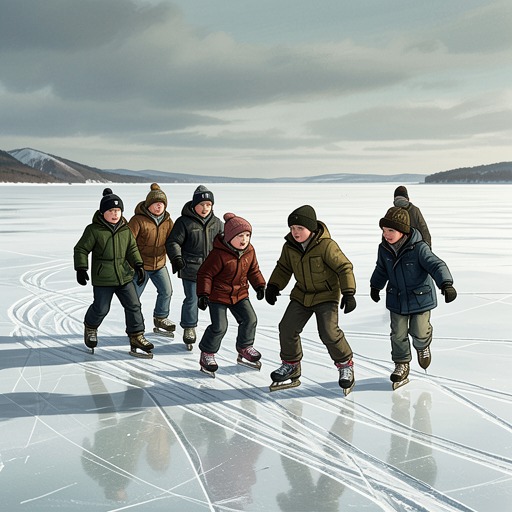
Hilda first appears among a lively company skating along a canal on a cold December morning. Her costly furs and loose-fitting velvet sack distinguish her as the daughter of a wealthy burgomaster, while Annie Bouman’s coarse scarlet jacket and blue skirt mark a very different social station. The passage sets Hilda within an animated public scene: children race and play, while workers and market women use the same frozen waterways to travel to their daily tasks. Skating is both recreation and ordinary transport, and Hilda moves confidently among people whose circumstances differ sharply from her own.
The skating party’s excitement has a purpose. Rychie Korbes explains that a grand match is planned for the twentieth, on Madame van Gleck’s birthday, and that the best skater will receive a pair of silver skates. The prize is presented as splendid and desirable, and Hilda is identified as the person behind the plan. Her connection to the event is therefore more than that of a participant: her family’s occasion provides the setting, while her initiative helps create an opportunity for the young skaters.
A Gift That Opens the Race
At school, Carl Schummel mocks Hans Brinker and Gretel as ragpickers when he sees them approaching on the ice. Hilda answers without joining in the insult. She calls attention instead to their patience in learning on makeshift skates and observes that Hans may have made his own. Her defense is gentle, but it unsettles Carl; she does not pretend that the children are not poor, yet she refuses to make poverty a reason for contempt.
Hilda turns that sympathy into material help. When she learns that both Hans and Gretel hope to race, she explains that she cannot buy each of them a pair of skates, or even one good pair. She gives Hans eight kwartjes and asks the siblings to decide which of them has the better chance of winning, so they can buy skates accordingly. The gift is deliberately limited, and she regrets that it cannot buy better equipment; still, it gives the children a choice and a possible way into the competition. Hilda hands the money to Hans and glides away to rejoin her companions. As he stumbles after her, one skate string untied, the difference between their ease on the ice and his precarious equipment remains visible.
The next day, Gretel skates in a warm jacket Hilda has given her. Dame Brinker has mended Gretel’s burst-out shoes, and the new runners carry her through the crowd with growing confidence. Gretel is absorbed in the pleasure of skating and unaware of the wondering looks directed at her. From the side, Peter van Holp admires her dexterity; Carl remarks that the shining skates are Hilda’s gift. The clothing and skates do not erase the difference in the girls’ circumstances, but they let Gretel enter the scene on her own skill rather than being excluded by what she lacks.
Care for Gretel
Hilda’s concern for the Brinker family becomes more urgent when Gretel runs from the cottage during the doctor’s visit to her father. Gretel is overwhelmed by fear and confusion, and Hilda finds her outside, lying on a mound in the cold. She lays a firm hand on the girl’s shoulder and urges her to get up, move, and lean on her so that she can warm herself. Gretel resists returning to the cottage because she believes the doctor has sent her away. Hilda does not press her for an explanation; she concentrates on getting her moving and keeping her safe.
When Gretel says that her father may be dying and that two doctors are with him, Hilda runs to look into the cottage. Gretel directs her to a window at the south end, where torn paper leaves a place to see inside. Through it, Gretel sees her father lying still with his head bandaged and the family gathered around him. She takes off her heavy wooden shoes with a quick movement and rushes inside to her mother. Hilda cannot accompany her then because the school bell is ringing, but Gretel remembers the bright, pitying smile with which Hilda turns away.
Hilda does not simply leave the family’s crisis behind when she returns to school. She stays near the cottage until she hears Dame Brinker laugh and Hans greet his father. Only then does she go back to her lessons. Her lateness and imperfect recitations earn her a severe reprimand. The cost is small but revealing: the concern that drew her out of class has occupied her so completely that she cannot attend to schoolwork. In both the gift of the race money and this vigil, Hilda’s compassion appears through specific acts and their consequences, not as a general declaration of good feeling.
Skating and Relationships
At the great race, Hilda competes as well as watches. In the girls’ one-mile contest, Katrinka Flack initially leads, but Hilda passes her as she goes by the Van Holp pavilion and waves to her mother. Katrinka later moves ahead again, while another girl gains on the field. Gretel remains in contention and ultimately passes the others to win. The result places Hilda among the strong skaters, but the scene does not make her victory the only measure of the contest: Gretel’s triumph is made striking by the contrast between her earlier poverty and the skill she now displays.
During the boys’ race, Hilda sits with Annie Bouman and Gretel on a long crimson bench. As the skaters approach the finish, the three rise in shared excitement. Hilda quickly sits again, trying to hide how closely she is following the contest; Peter wins. Her restrained reaction makes her interest legible without turning it into a public declaration. The race gives an early shape to the partnership later confirmed by the story’s ending: Hilda and Peter, who had skimmed side by side over the frozen river, eventually marry.
Change and Narrative Significance
The adult Hilda belongs to the settled future the ending imagines for the young skaters. Peter van Holp and Hilda join hands and glide through life together, extending the image of their earlier skating into a lasting partnership. The account does not supply a detailed courtship or explain how their relationship develops between the race and marriage; it presents the marriage as an outcome consistent with their shared place in the skating scenes.
Hilda’s role also links the book’s public and domestic worlds. The race displays skill before crowds, judges, and pavilions; the Brinker cottage makes visible the labor, illness, and uncertainty behind the children’s participation. Hilda crosses between those settings. Her wealth is established through her clothes and family position, but her significance lies in what she does with the access that position gives her: she helps Gretel reach the ice, defends the children against ridicule, and recognizes their distress when others might have passed by. Her kindness does not solve the Brinkers’ hardships, but it changes what Gretel can do and ensures that, in a moment of fear, she is not alone.