Laurens Boekman
Hans Brinker, or The Silver SkatesLaurens Boekman is the son of Dr. Boekman, a surgeon whose long separation from him began with a medical mistake and a tragic misunderstanding. Believing that an error in preparing medicine had made him responsible for a patient’s death, Laurens left home before his father could explain that the dangerous dose had never been given. In Birmingham he lived for years under the name Thomas Higgs, building a new life while remaining separated from his family. The truth eventually reaches his father through Raff Brinker and a watch associated with Laurens; their reunion resolves the mystery of his disappearance, though Laurens chooses a future outside his father’s profession.
Identity and Background
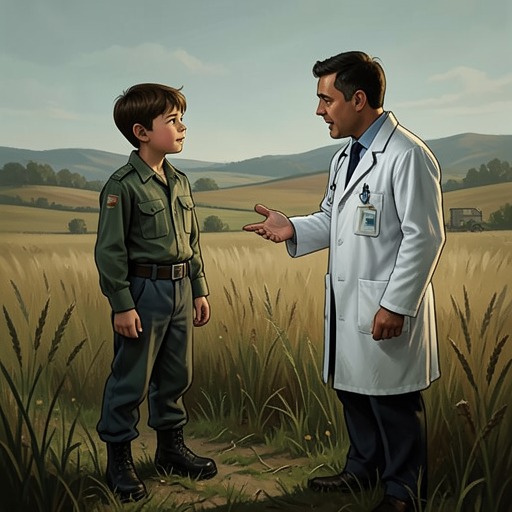
As a young man, Laurens worked as his father’s assistant. His practical connection to medicine became the source of his exile when he portioned out the wrong medicine for a patient. The substance was deadly poison, but Dr. Boekman discovered the error before it was administered. The patient nevertheless died that day, and Laurens did not know that the death was unrelated to his mistake. He left with the conviction that he had committed a grave wrong.
The separation was compounded by circumstance. Dr. Boekman was occupied with other serious cases and did not reach home until the following evening. By then his son was gone. The doctor later understood that Laurens had believed the apparent connection between his mistake and the patient’s death, and that the boy had feared he could not return to Holland unless he could clear himself. The text presents the departure not as a considered break with his father, but as a flight founded on incomplete knowledge and an anguished misreading of what had happened.
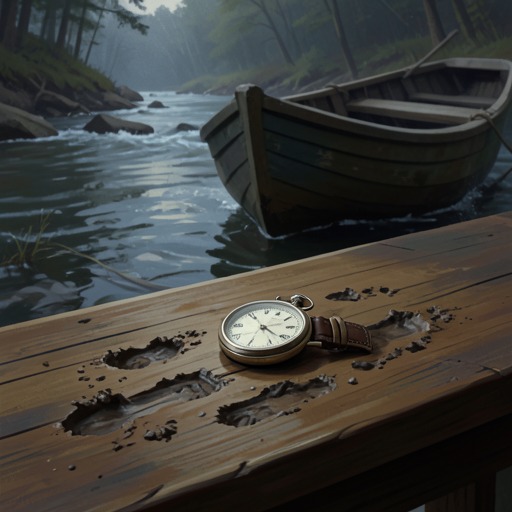
Laurens’s mother had died when he was ten. A small portrait of her, kept inside his watch, becomes a quiet sign of the family bond that survived the years apart. When the watch is opened, the picture is missing: Raff explains that Laurens had removed it before handing the watch over and had kissed it as he put it away. Dr. Boekman takes this as evidence that his son had not forgotten his mother. The object thus carries more than a practical connection to Laurens; it helps make visible the family attachment that his disappearance had obscured.
The Disappearance and the Thomas Higgs Identity
In Birmingham, Laurens was known as Thomas Higgs, a name that concealed the identity and history of the young man who had arrived there years earlier. The factory that he eventually owned became a subject of local speculation. It was a modest building, but the people who discussed its proprietor knew little about where he came from. He appeared to them like a gentleman, though they also knew he had risen through apprenticeship; his notably capable handwriting added to the impression of a man whose past was difficult to place.
The public outline of his life in Birmingham was one of steady advancement. He arrived as an eighteen-year-old, learned his trade faithfully, and gained his employer’s confidence. After his apprenticeship, he was taken into partnership. When the old proprietor, Willett, died, Laurens assumed control of the business. These steps made him a settled and successful factory owner, but they did not reveal his true name or explain why he had first come to the city. The account of Thomas Higgs therefore gives the earlier mystery a second dimension: Laurens had not merely vanished from his father’s home; he had become a figure whose origins remained unknown even to those who saw him prosper.
Recognition and Reunion
The route back to his family runs through the watch and the message Raff delivers to Dr. Boekman. When the doctor recognizes the initials associated with his son, he turns at once toward the possibility of a reunion. The watch’s inner paper, decorated with blue forget-me-nots, initially disappoints him because the portrait he expects to find is gone. Raff’s explanation changes its meaning: Laurens had kept the picture of his mother and had kissed it before parting with it. The doctor recognizes that the absent image had remained precious to his son.
The truth of the old medical incident then becomes plain. Laurens had prepared the wrong medicine, but Dr. Boekman caught the mistake in time to prevent the poison from being administered. The patient died, yet Laurens’s error did not cause the death. The father’s delayed return and the son’s departure left no opportunity for this clarification when it mattered. Dr. Boekman’s account makes clear that Laurens had been innocent of the harm he feared he had caused, while his grief over the years without contact shows how deeply the misunderstanding had cost them both.
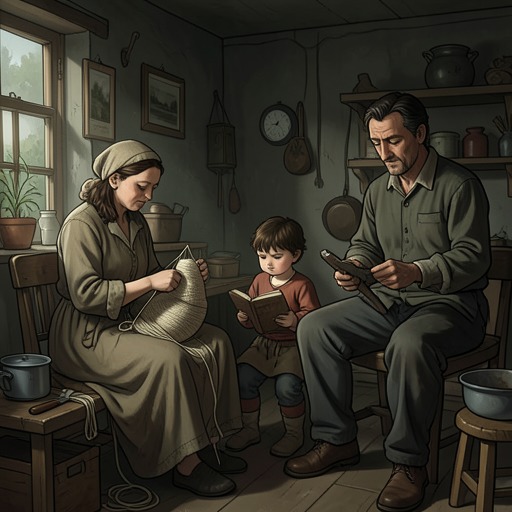
On a snowy January day, Laurens visits the Brinker family with his father. The household is at ease: Raff is resting, Gretel tends the hearth, Dame Brinker spins, and Hans studies beside the window. The visit is the visible aftermath of the message’s delivery, with father and son together again at Raff’s hearth. Raff is satisfied that the message reached its destination and that Dr. Boekman has his son safe. He also registers the passage of time: the young man he had once hoped to clasp by the hand has grown into a heavier adult. Reunion repairs the separation without pretending that the lost years can be recovered.
A Different Future
Dr. Boekman’s happiness appears to renew him. His face looks younger and brighter, and he tells Raff that Laurens will sell his factory that month and open a warehouse in Amsterdam. He jokes that this arrangement will provide his spectacle cases without cost, making the new business a domestic benefit as well as a change in Laurens’s career.
Hans assumes that Laurens will return to his former role as his father’s assistant. Dr. Boekman corrects him: Laurens has had enough of that work and wants to become a merchant. The choice marks the limit of the reunion’s restoration. Laurens is home and reconciled with his father, but he will not simply resume the professional life he left behind. The ending gives him a future shaped by his own preference rather than by the accident that once drove him away.
Narrative Role
Laurens’s story is built around the gap between an event and what its witnesses believe it means. A mistake was made; a patient died; but the poison was never administered. Because Laurens left before learning this, an innocent error became the basis for years of exile. The late disclosure reorders the reader’s understanding of both the disappearance and the apparently mysterious factory owner in Birmingham.
The objects and names associated with him hold the two halves of his life together. The name Thomas Higgs belongs to the successful Birmingham proprietor whose origins puzzled his neighbors; the watch and the saved portrait connect him to the family he left. When those traces reach Dr. Boekman, the hidden identity becomes a son again. Yet the resolution is not a simple return to the past: Laurens’s decision to become a merchant shows that recognition and forgiveness can restore a relationship without erasing the independent life formed during separation.