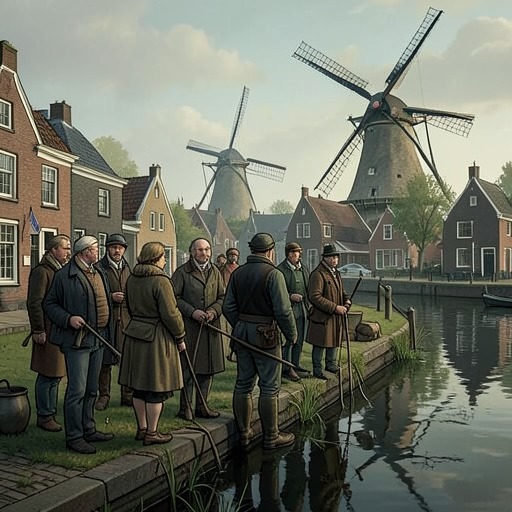
States General of the Netherlands
Hans Brinker, or The Silver SkatesThe States General of the Netherlands is presented as the public authority that intervenes when tulip speculation in Holland has become a socially widespread gamble. Its appearance is brief but consequential: the intervention is followed by a collapse in prices and the refusal of the law to enforce debts made through gambling.
Identity and Scope of the Account
The novel does not describe the States General’s membership, internal structure, or ordinary work. It introduces the institution through a historical account of the tulip craze, related by Lambert van Mounen during a skating journey and listened to with interest by Ben. Its role in this episode is practical and regulatory: it steps into a market that has grown from fashionable collecting into reckless speculation.
Intervention in Tulip Speculation
The account traces the mania across social ranks. Bargemen, rag women, chimney sweeps, and wealthy merchants all speculate; buyers resell bulbs for profit without ever seeing them. Prices had reached extraordinary levels: individual roots could fetch between one and four thousand florins, while a Semper Augustus bulb reportedly sold for five thousand five hundred. As ready money ran short, people wagered land, houses, cattle, clothing, jewels, and finery on further gains.
The States General intervenes as the public response to this escalating disorder. The account links that intervention to a sudden reversal: people recognize the folly of the speculation, tulip prices fall, and the market’s apparent prosperity gives way to financial ruin. The institution is not credited with a detailed program or with any particular individual decision; the narrative emphasizes the effect of its intervention rather than its procedure.
Legal Aftermath and Narrative Significance
When creditors try to collect the old tulip debts, they take their claims to law, but the law refuses to enforce debts incurred through gambling. The consequence is stark: thousands of speculators who had seemed rich are reduced to beggary in an hour. The episode therefore presents the States General’s intervention alongside a legal limit on creditors’ claims, distinguishing speculative wagers from binding obligations.
This compact account makes the institution a counterweight to a craze that had drawn in the whole society, from working people to wealthy merchants. Lambert recounts the episode as a cautionary history; Ben’s attentive response keeps its extravagant prices and sudden collapse vivid within the boys’ conversation. The States General’s significance here lies in that public interruption of speculation and in the legal aftermath that prevents its debts from being collected.