Brinker family’s financial recovery
Hans Brinker, or The Silver SkatesBrinker family’s financial recovery is the return of the thousand guilders that had vanished from the household ten years earlier. More than a sudden windfall, it reverses a condition in which the family’s survival depended on exhausting labor, careful provisioning, and care for an incapacitated husband and father; its lasting measure is the Brinkers’ comfortable life in Amsterdam in later years.
Poverty and the Missing Savings
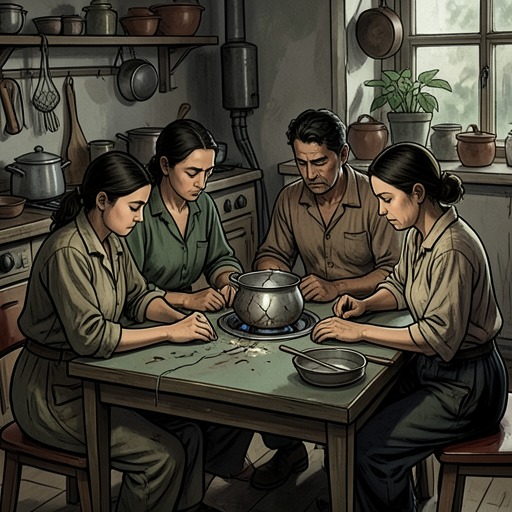
The recovery matters because the family’s hardship is woven into its daily work. Dame Brinker supported the household by raising vegetables, spinning, and knitting, and had previously worked on canal barges and hauled a towing rope. As Hans Brinker grew strong enough to take on that work, he insisted on doing the heaviest labor in her place. He and Gretel Brinker also gathered peat for fuel; Hans earned a few stivers riding towing-horses on the canals, while Gretel tended neighboring farmers’ geese. Their father’s condition further burdened the household: he needed constant care and could be difficult for Dame Brinker to control.
The missing money had been gone since the day before Raff Brinker was injured. Dame Brinker had searched the cottage so thoroughly that Hans remarked she had nearly pulled it apart, but the search brought no result. On Saint Nicholas’s Eve she still hoped that the thieves might be made to return it, or that the family might somehow discover its hiding place. Her hope was not abstract: the lost savings represented a possible end to the scarcity that shaped the family’s work and choices.
The Money Returns to the Household
The decisive change comes when the thousand guilders are found and locked safely in the big chest. Before Raff awakens that evening, the money is already secure, and the family is eating meat, white bread, and wine. The contrast with their former meals and their shortage of necessities makes the recovery visible at once in the household’s table, not merely in a sum of money.
The following day, the family brings Raff into the news. While Gretel follows her mother’s instruction to clean the cottage, Hans and Dame Brinker go to Amsterdam to buy peat and provisions. Dame Brinker is delighted but also beset by the many new needs that prosperity seems to have awakened; Hans, by contrast, is content and puzzled by how little the family actually brings home. The scene presents recovery as practical replenishment rather than unbounded spending: fuel and food come first, and the money is treated as a resource to preserve.
The recovered savings also become a family secret that is gradually shared. Dame Brinker tells the children the story of the watch as much as she thinks prudent, acknowledging that they have kept the secret since they were old enough to understand it. When Dr. Boekman visits, she tells him that the thousand guilders lost for ten years have been found. Raff adds that the news is to remain among them, trusting the doctor to keep it confidential. The money’s return thus changes not only what the family can afford but what it can safely disclose.
A Changed Home and a Lasting Outcome
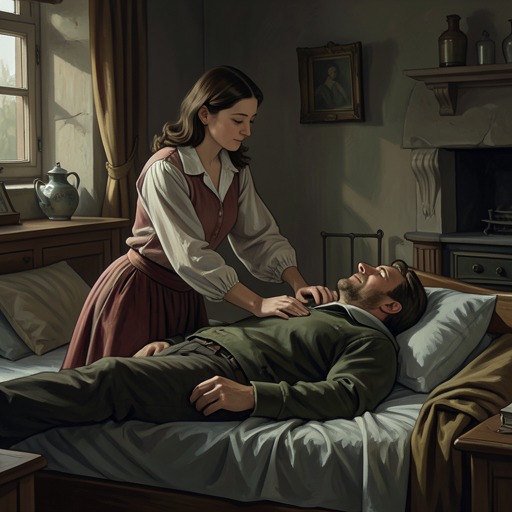
The next-day visit from Dr. Boekman reveals the immediate transformation in the cottage. He finds Dame Brinker knitting beside the bed, Raff sleeping quietly, and Gretel kneading rye bread. The home has a cheerful, comfortable air that contrasts with the earlier scene of Gretel tending the fire, melting ice for her mother, and trying to make her rest while Raff lay moaning. The recovery of the savings coincides with a household beginning to regain both material security and ordinary domestic calm.
That security has limits at first. Raff remains weak, and the doctor says he needs nourishment. Hans promises to bring meat and wine, offers to sleep in the straw, and answers his mother’s worry that the peat is running out by proposing to cut down the willow tree for fuel. The returned money therefore enters a family still facing illness and immediate needs; it does not erase the care and labor that recovery requires.
In the longer view, however, the improvement lasts. Raff and Dame Brinker live comfortably in Amsterdam for many years, remaining faithful and happy together and straightforward in their good fortune, as they had been patient in darker days. They often visit a summer house near the old cottage with their children and grandchildren. The movement from a home strained by lost savings, fuel scarcity, and illness to this continuing family life gives the recovery its fullest significance: the money restores not just provisions but the possibility of a stable future shared across generations.