Raff Brinker’s Operation and Awakening
Hans Brinker, or The Silver SkatesRaff Brinker’s Operation and Awakening is the turning point in which a medical intervention gives Raff back to his family after ten years of unconsciousness. The scene moves from uncertainty over whether Dr. Boekman can save him, through Dame Brinker’s consent, to Raff’s first words and recognition of his loved ones. His recovery is not presented as an instant return to ordinary life: the doctor insists on quiet and careful aftercare. But the change is decisive. A household long organized around his incapacity can again address him as husband and father.
The crisis and the decision
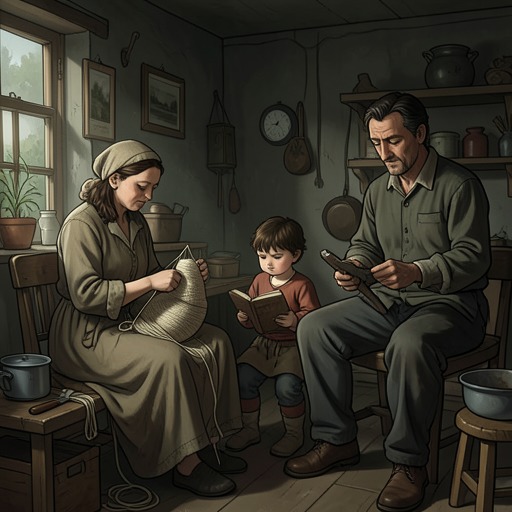
Four days after the family’s previous vigil, the Brinker cottage remains a place of care and waiting. Dame Brinker and Gretel are still beside the unconscious Raff. His fever has gone, and he is paler, but he has not shown awareness of what is happening around him. The interval marks the persistence of the crisis rather than its resolution: a physical change offers no assurance that he will recover.
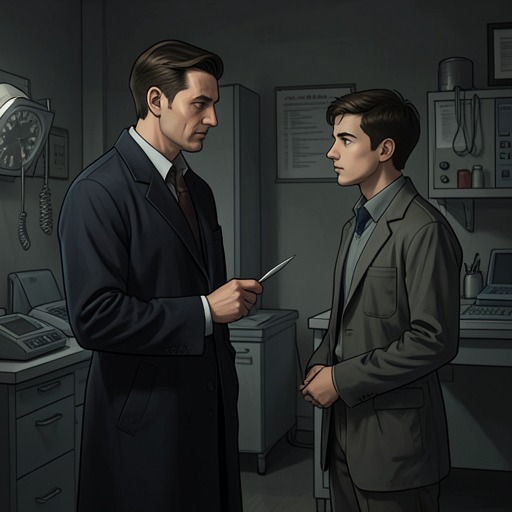
Dr. Boekman has arrived with his student and assistant, while Hans waits respectfully near the window. The doctor begins discussing Raff’s case with the assistant, but the question of the patient’s prospects brings the consultation back to its human stakes. Asked whether he can save Raff, Dr. Boekman answers with hope, not certainty. The assistant’s confidence in the doctor underscores both the seriousness of the case and the family’s dependence on his judgment.
The decision belongs to Dame Brinker. Dr. Boekman asks whether the intervention should be done; she first asks whether it will cause Raff pain, then gives her consent. That exchange places the family’s fear inside a practical choice: the doctor cannot promise an easy outcome, yet refusing to act would leave Raff in his present condition. Gretel watches as Dr. Boekman prepares his instruments, and the family waits while the procedure takes place. The narrative does not describe the operation itself in detail; it concentrates instead on the decision to proceed and on what follows.
Awakening and recognition
When movement finally comes from the bed, it is slight. Raff raises a hand to the bandage on his head, and the doctor watches closely. The gesture is presented as more than restless motion: it seems questioning, an early indication that Raff may be aware of himself and his surroundings. The family’s long vigil turns, in that moment, toward the possibility of recognition.
Dame Brinker moves to him and calls him by name. Raff answers by recognizing her as Meitje and describing himself as having been asleep and hurt. He then asks where little Hans is. Hans identifies himself as his father’s son, but Dr. Boekman holds him back, restraining the family’s first rush of joy while Raff’s condition remains uncertain. Dame Brinker immediately understands the significance of his response: he knows them.
Raff’s next question, about whether the baby is asleep, makes the extent of the lost time plain. Gretel is now the child he remembers as a baby, and Hans is still his little boy in his mind. Dame Brinker identifies the gap as ten years during which Raff knew nothing. His awakening therefore brings recognition and estrangement together: he returns to the family, but his memories have not kept pace with the lives they have lived while he was unconscious.
Family, faith, and aftercare
The scene distributes its relief across the family. Hans and Dame Brinker laugh and cry as they gather around Raff; Gretel watches in startled happiness. Dame Brinker thanks Dr. Boekman for saving them, while he points upward rather than accepting the moment as his alone. The family kneels beside the bed and prays. Their gratitude is expressed through a shared gesture, linking the medical recovery to their faith without suggesting that the doctor’s work was unnecessary.
Dr. Boekman immediately follows the moment of celebration with instructions. The household must keep perfectly quiet; Raff is to have no food that day, and the doctor will return the next day. His departure does not close the recovery but establishes its next condition: the family must protect the fragile improvement by following his directions. Hans leaves the cottage as well, while Dame Brinker signals that Raff is asleep. Hope has replaced the earlier uncertainty, but care and watchfulness remain necessary.
The event in the book’s wider pattern
The scene’s emphasis on vigilance resonates with the book’s accounts of a country exposed to danger and dependent on people who respond to it. A school lesson about the Hero of Haarlem explains how dikes and sluices protect low-lying land, and how neglect of a sluicer’s duty could bring ruin. The account of the 1570 flood describes a catastrophe in which tens of thousands died within hours; the Spanish governor Robles then worked to save lives and introduced improvements to dike construction. These episodes are not causes of Raff’s illness, but they place the family’s sustained attention to a threatened life within a broader narrative of danger met by practical effort and collective care.
The story also recalls Leiden’s siege, where the people endured shortages and plague rather than surrendering. Against such public histories of endurance, the cottage scene makes rescue intimate: the endangered life is one husband and father, and the people waiting for him are his wife and children. The operation’s decisive result is not simply that Raff moves or speaks, but that he recognizes his family after a decade of absence. The joy of his return is inseparable from the knowledge of what he has missed, while the doctor’s instructions keep the ending hopeful but still conditional.