Raff Brinker’s amnesia
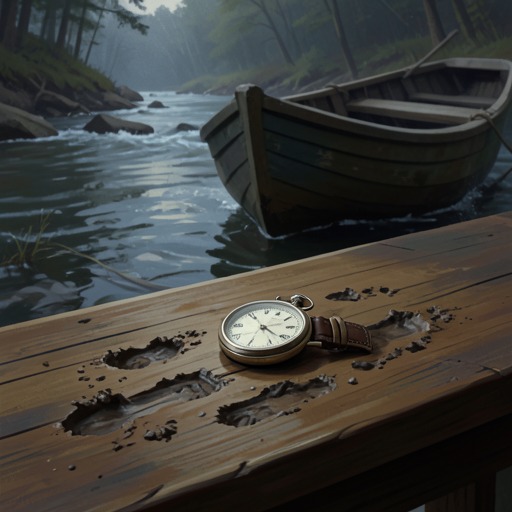
Hans Brinker, or The Silver SkatesRaff Brinker’s amnesia is not a total erasure of the past but a painful failure to retrieve the crucial details of one remembered encounter. He can picture the young man who entrusted him with Laurens Boekman’s watch and recall the promise attached to it, yet the name and address needed to carry out that promise remain beyond his grasp. The memory returns in fragments, briefly yields a name, and then recedes again, making the recovery of the past as uncertain as the reunion it might enable.
The Memory’s Shape
Raff can recall that the young man was fleeing his country and had handed him the watch before jumping from a boat. He remembers the request: deliver it to the father after a week, explain that his unhappy son had sent it, and say that he would brave everything and return if his father ever wanted him back. But the message’s destination has disappeared from Raff’s mind. The promise survives; the practical means of fulfilling it does not.
The recollection is vivid in some particulars and inaccessible in others. Raff can still see the young man’s face and unusually large eyes. He remembers him opening the watch, snatching something from inside, and kissing it, but cannot recover what else happened or what was taken. When he tries to think further, he describes a rushing-water sound overwhelming him. His account makes the failure feel less like a simple blank than an obstruction: images remain sharply present while the identifying information that would connect them to the present is submerged.
This unevenness shapes the family’s attempts to help. Dame Brinker asks for the man’s name and where his father can be found, hoping Raff might provide enough for her to take the watch while he rests. Raff tries, but in vain. Her suggestions do not restore the missing information, and even the watch itself offers only a possible route forward: Raff asks whether there are letters on it that might guide them. The object is both a physical reminder of the encounter and a clue that cannot, by itself, supply the forgotten destination.
The Name Returns, Then Slips Away
After Dr. Boekman’s aid has recently awakened Raff’s memory, the doctor pleads with him to think again. The appeal carries unusual urgency because Raff’s recollection concerns a homeless wanderer who may be suffering far away, and because the watch has brought the father’s loss into the room. But Raff still cannot summon the place where the letter was to go. The renewed effort exposes the limits of his recovery: remembering the encounter does not mean he can command its details when another person urgently needs them.
Later, during a happier gathering at the Brinker cottage, Raff suddenly springs up, snaps his fingers, and flourishes with delight. The name Thomas Higgs has come to him like a flash. He asks Hans Brinker to write it down, turning a fleeting recollection into something that can be preserved outside his failing memory. The suddenness of the breakthrough contrasts with the long, frustrating attempts to think; for a moment, what had seemed irretrievable becomes clear enough to announce.
That clarity does not last. When Peter van Holp visits, Raff is again repeating Thomas Higgs’s name under his breath and wishing that he could remember the place as well. Hans hastily writes the name on the edge of a time-worn almanac by the chimney. Raff asks what has been written and hopes that seeing it might bring back the rest, but soon exclaims in dismay that the name is gone again. The written record prevents the recovered name from vanishing altogether, yet it cannot restore the address. Memory and inscription preserve different parts of the clue, and neither completes the task alone.
The Unfinished Errand
The central consequence of Raff’s amnesia is that he cannot yet tell Dr. Boekman where Laurens Boekman’s watch should be sent. Even when he recognizes the remembered name as Thomas Higgs, the destination remains unknown. Hans is eager to go into town on an important errand, but Dame Brinker insists that he not travel to Amsterdam that night, when his legs are aching, and urges him to wait until daylight. The practical next step therefore remains pending, dependent on information Raff has not recovered and on a journey that has not yet begun.
The family’s care keeps the missing knowledge in circulation. Dame Brinker questions Raff cautiously and lets him rest; Hans writes down the name as soon as it returns; and Dr. Boekman presses him to think because the answer could reconnect a father and son. Raff’s impairment affects more than his private recollection: it holds other people at the threshold of action. Their concern does not make the information appear on demand, but their attention gives each fragment a chance to survive the next lapse.
Narrative and Thematic Significance
Raff’s memory is presented through recurrence and interruption rather than through a single complete account. The watch, the young man’s face, the name Thomas Higgs, and the still-missing place each return with different degrees of certainty. The repeated name marks a genuine advance, but its immediate disappearance prevents that advance from becoming a resolution. This pattern keeps the reader aware of both what Raff knows and what the story still cannot do with that knowledge.
The state also makes the watch more than a keepsake: it is the material remainder of a promise Raff remembers but cannot yet fulfill. His failure is not indifference; he is sorrowful about the message never being sent and distressed when the name slips away. The gap between his evident willingness and his unreliable recall gives the scene its tension. Thomas Higgs can at last be named, but the address—and therefore the route from a separated son to his father—remains outside Raff’s reach.