The Brinker Family Finds Its Thousand Guilders
Hans Brinker, or The Silver SkatesThe Brinker family’s recovery of its buried thousand guilders ends a painful uncertainty by turning Raff Brinker’s returning memory into a practical clue. The discovery depends not on a lucky guess but on interpreting a changed landscape: the place Raff remembers is near a willow, yet the tree he buried the money beside has since been cut down. Hans eventually understands the difference, digs beside the stump, and brings the family’s long-lost savings back into their home.
The Memory That Reopens the Mystery
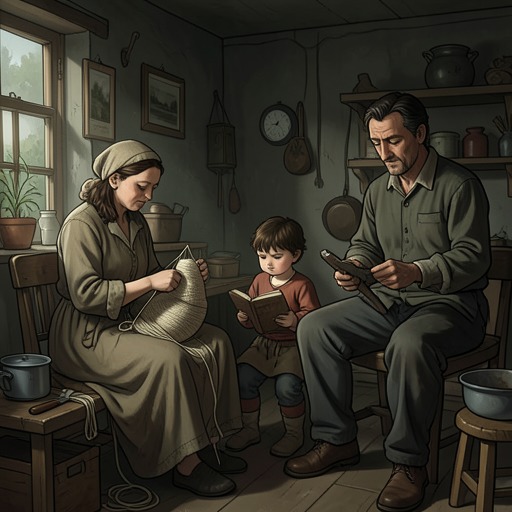
For years, the missing money has shadowed the Brinker household. After Raff’s injury, his family had no reliable account of what became of their thousand guilders. While he sleeps after supper, Dame Brinker reflects that they had hoped to hear something about the money but have received no news; she concludes that Raff knows nothing about it. Her remark makes the lost savings seem like a settled absence rather than an unanswered question.
Raff’s faint response from the bed overturns that assumption. He recalls that he buried the money, and explains that he did so just before daylight on the day he was hurt. The evening before, something Jan Kamphuisen said had made Raff distrust him. Jan was the only person still living besides Dame Brinker who knew the family had saved a thousand guilders, so Raff chose to hide it. His recollection also carries regret: he now calls it foolish to have suspected an old friend. The revelation changes the problem from an unexplained disappearance into a search for a known hiding place.
Hans manages the fragile exchange with care. When Dame Brinker reacts, he takes her arm and quietly urges her to be cautious. He returns to Raff with questions, giving his father time to remember rather than pressing him into a prolonged conversation. Raff identifies the location as close to the willow sapling behind the cottage and then specifies the south side. The family now has a particular place to investigate, and the clue seems precise enough to offer immediate hope.
The Failed Search
The family cannot simply go out and look without disturbing the others. After Raff and Gretel are asleep, Hans and Dame Brinker make hurried preparations and leave with a broken spade and a rusty implement that Raff had once used in his work on the dikes. Their equipment links the search to the family’s former working life, while the frozen ground makes the task far harder than the remembered location first suggests.
Mother and son dig through the night. They search thoroughly around the tree, working south, north, east, and west; the hole grows larger and deeper as the hours pass. By the time the moon and stars have faded and daylight begins to appear, they have found nothing. Their failure is decisive because it seems to discredit the clearest evidence they have: Raff remembers the willow, and he has identified its south side, yet the money is not there.
The explanation lies in a detail of the cottage grounds that neither has connected to Raff’s account. The willow he remembers was cut down the previous spring because its shade fell over the potatoes. The small tree he named was not yet there when he buried the money. The first search has treated the remembered willow as if it were still standing; the lost savings remain hidden because the landscape has changed while the memory has survived.
From a Wish to a Clue
Later, while Annie plays at being a fairy godmother and offers Hans and Gretel wishes, Hans names the thing he had been searching for the night before. The wish does not locate the money by magic. Instead, the playful exchange brings the failed search back into the conversation, and Hans soon acts on a better understanding of Raff’s words.
He rushes into the cottage for the spade and the ice-breaking tool, then identifies the stump as the remains of the old willow. The change from tree to stump resolves the apparent contradiction between Raff’s recollection and the empty hole: the family had searched around the wrong version of the landmark. Hans now digs on the south side of the stump, the direction his father had specified, and calls Dame Brinker to see what he has found.
The family’s return to the ground is therefore a second, more informed search rather than a repetition of the first. The decisive new clue is not another statement from Raff, but Hans’s recognition that the willow’s disappearance matters. What had looked like a failed memory proves to be accurate in its own terms; the obstacle was the family’s assumption that the remembered tree had remained unchanged.
Recovery and Its Meaning
Dame Brinker drops to her knees as Hans draws out an old stone pot. Inside, he finds pieces of brick, then a stocking and a pouch, black and moldy but still filled with the long-lost treasure. The money has remained buried rather than been spent, stolen, or irretrievably lost. Its preservation answers the household’s central question with a tangible object: the savings are present, and the family can count them again.
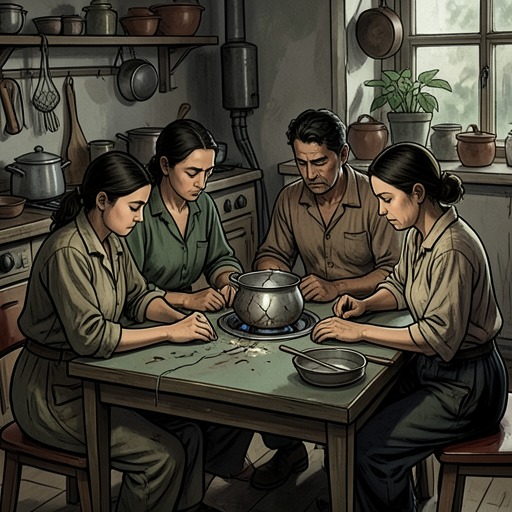
The recovery changes the tone of the cottage at once. Hans and Dame Brinker laugh and cry as they carry out the discovery; once inside, they count the money. Their supper is no longer constrained by the need to save every delicacy. Raff, still asleep, does not witness the celebration, but his dreams are pleasant and he smiles. His recalled act has enabled the recovery even though he is not awake to see its result.
The episode brings together the family’s practical persistence and the costs of incomplete memory. Raff’s recollection supplies the place and direction, but only Hans’s attention to the changed willow makes those details usable. The first search ends in disappointment; the second turns the same testimony into success. In a story where Dutch life is repeatedly framed by the need to resist loss and keep watch over what might disappear, the family’s recovery gives that struggle an intimate domestic form: a buried resource, a changed piece of ground, and the determined work required to bring what was hidden back into use.