
Poverty’s Escalation
Hansel and GretelThe family’s poverty first prompts one abandonment, briefly appears to ease after the children return, and then worsens into the second attempt.
increasing Bearing strength in each event
 decreasing
Bearing strength in each eventdecreasingFirst Famine
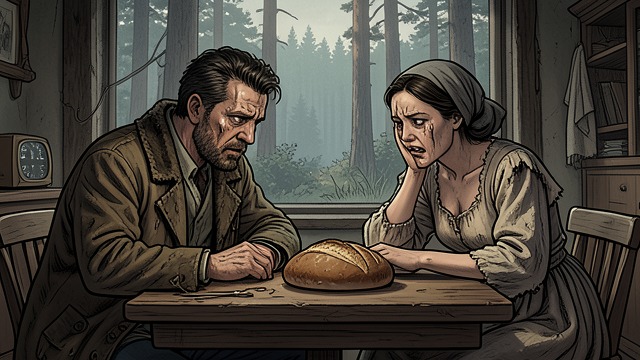
First Famine
Scarcity enters the home
A terrible famine strikes the region, leaving the Woodcutter’s family with almost nothing to eat. The household’s poverty becomes an urgent survival problem.
The Stepmother interprets the shortage as proof that four people cannot endure another winter. Her proposed answer is to leave the children in the forest.
An ethical crisis
Hunger does not merely threaten the family’s bodies. It also tests whether the adults will preserve their children’s safety when resources fail.
Temporary Improvement
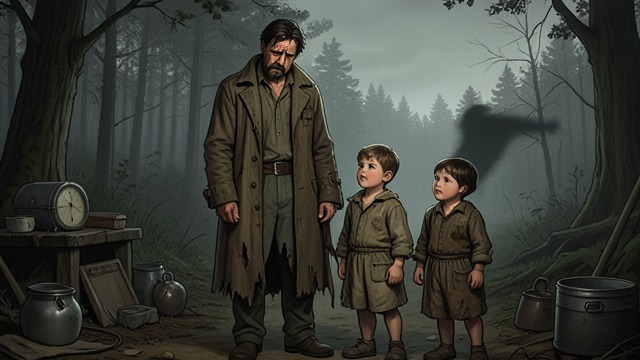
Temporary Improvement
A family reunited
The children return by following White Pebbles, and the Woodcutter is glad to see them. The family lives together again for a while.
Their reunion creates a temporary impression that the immediate crisis has passed. Yet the story gives no lasting solution to the shortage of food.
Danger remains
The family’s poverty continues beneath the relief. When famine becomes worse, the same desperate logic returns with greater force.
Worsening Hunger

Worsening Hunger
Crisis renewed
A more terrible famine devastates the region. The Woodcutter again faces the possibility that the family will not survive together.
The Stepmother renews her proposal, and he once more agrees. The second attempt shows how unresolved poverty can reproduce an earlier moral failure.
Material resolution
The children eventually bring home jewels and pearls from the Witch’s house. Their wealth promises an end to the need that had driven the abandonment plans.
early in the story
after the first return
days after the first return
