
Food as Threat and Rescue
Hansel and GretelFood begins as the scarcity behind abandonment, becomes a false promise at the candy house, and finally gives way to treasure and security.
increasing Bearing strength in each event
 decreasing
Bearing strength in each eventdecreasingBread and Hunger
Bread and Hunger
Scarcity at home
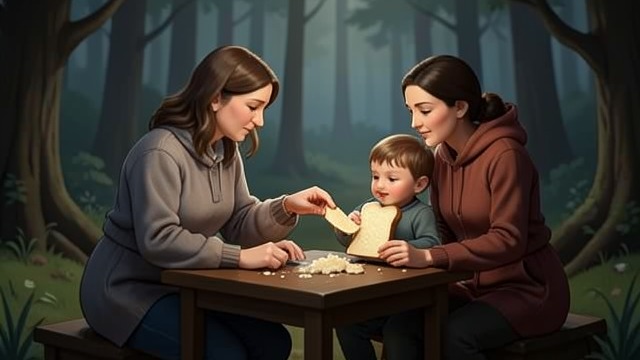
The famine leaves the family with almost nothing to eat. The Stepmother gives each child a piece of bread before the first forest journey.
That small provision accompanies a much larger betrayal: the children are sent away rather than protected. Food scarcity shapes the decision but does not excuse it.
Need as pressure
The family’s hunger makes survival seem like a choice between members. The story’s later resolution will challenge that premise through unexpected wealth.
Sweets as Lure
Sweets as Lure
Immediate relief
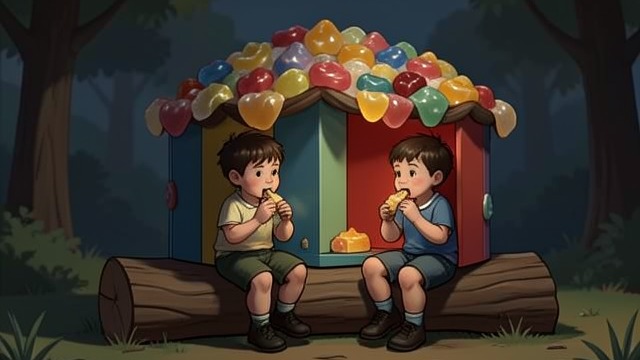
Lost and hungry, Hansel and Gretel discover the candy house and eat from its walls and roof. The sweets offer instant relief after a failed return.
The Witch’s invitation turns this food into bait. What appears to answer their need instead brings them into a captor’s control.
Appetite and danger
The children’s hunger is real, but the house is not a safe solution. The story makes the promise of easy food inseparable from hidden risk.
Treasure at Home
Treasure at Home
Leaving with wealth
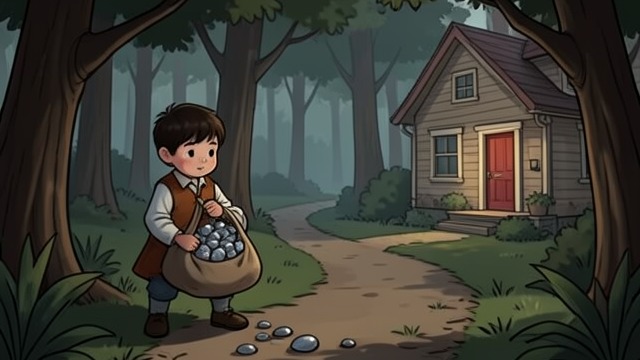
After the Witch dies, Hansel and Gretel find bags of precious stones and pearls. They fill their pockets before leaving the forest.
The treasure differs from the candy: it can be carried away and used beyond the dangerous house. Their discovery gives their escape lasting material consequences.
Hunger answered
At home, the Woodcutter is astonished by the riches. The story ends with the family no longer needing to suffer poverty, resolving the scarcity that began the crisis.
before the first abandonment
after the second abandonment
from the Witch’s defeat to the ending
