
The Two Trails
Hansel and GretelThe contrast between durable stones and edible crumbs traces Hansel’s changing resources and the limits of planning against forces beyond his control.
increasing Bearing strength in each event
 decreasing
Bearing strength in each eventdecreasingDurable Markers
Durable Markers
Planning before danger
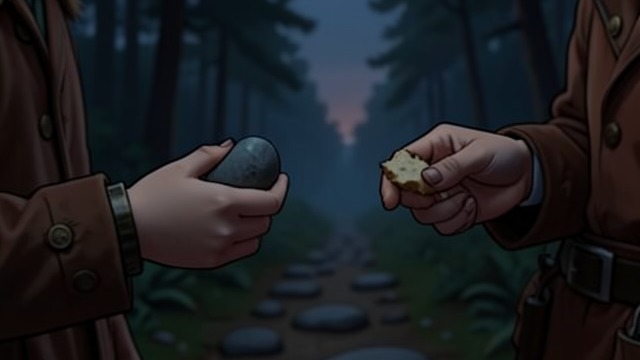
Hansel gathers White Pebbles after hearing the abandonment plan. Their preparation turns a frightening journey into one with a possible route back.
The stones remain on the ground and shine in the moonlight. Their durability is essential to the children’s return.
Ingenuity rewarded
The first trail suggests that foresight can counter adult wrongdoing. Hansel’s success offers safety, though it does not cure the family’s hunger.
Fragile Substitute
Fragile Substitute
Fewer choices
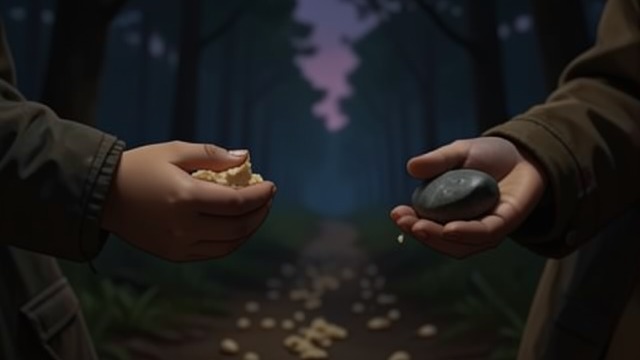
The Stepmother locks the door, preventing Hansel from gathering more White Pebbles. He substitutes Bread Crumbs for the stones.
The crumbs seem to serve the same purpose, but they can be eaten. Birds remove the trail before the children can use it.
Limits of cleverness
The failure does not make Hansel foolish. It shows that a plan can be sound in intention yet vulnerable to forces its maker cannot control.
Beyond the Trail
Beyond the Trail
A different path to survival
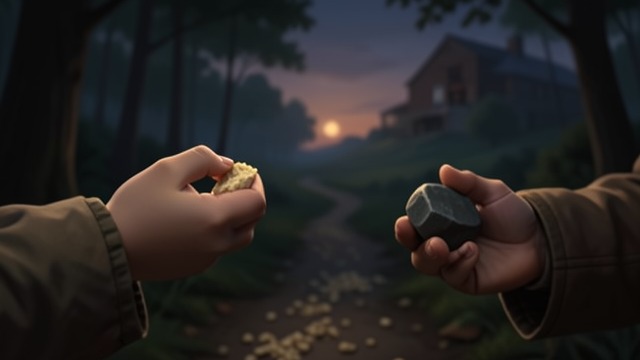
Without markers, the children cannot return directly home. Their wandering takes them to the candy house and into the Witch’s power.
The lost trail shifts the story from navigation to endurance and direct confrontation. The children must survive rather than simply retrace their steps.
New resources
Gretel’s observation and courage eventually accomplish what the trail could not. Survival depends on adapting when a first strategy fails.
during the first forest journey
during the second forest journey
after the crumbs disappear
