
Temporary Safety
Hansel and GretelThe fire, the first return, and the candy house each seem to offer safety, but only the children’s escape and final reunion provide a lasting resolution.
increasing Bearing strength in each event
 decreasing
Bearing strength in each eventdecreasingWarmth by the Fire
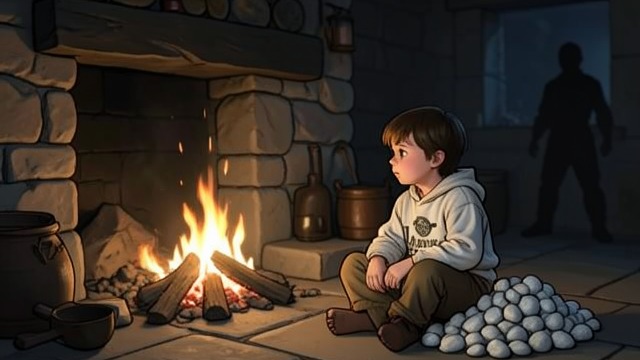
Warmth by the Fire
A place to sit
The adults leave Hansel and Gretel beside a fire and tell them to wait. The warmth and familiar instruction make the site seem temporarily secure.
The children wait as evening passes, listening to what they think is their father’s axe. The apparent safety rests on a false belief that the adults are still close.
Leaving the fire
Once the moon reveals the White Pebbles, the children leave the site. Their safety comes from the route they follow, not from the fire itself.
A Brief Homecoming
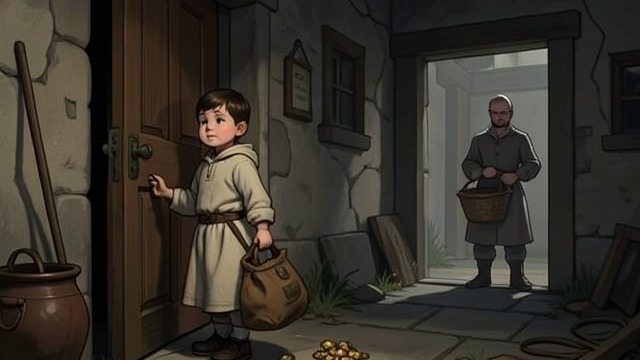
A Brief Homecoming
Back at the door
The children follow the White Pebbles and return home. The Woodcutter is happy to see them, and the siblings live with the family again for a time.
The house looks like a refuge after the forest. Yet the famine remains, and the Stepmother soon proposes another abandonment.
Safety proves temporary
The first reunion cannot secure the children against a repeated decision. Their return is real but not yet lasting.
The Candy House’s Promise

The Candy House’s Promise
Apparent shelter
The children find a sweet house after wandering hungry. Its food seems to meet the need that has driven them through the forest.
The Witch invites them in, but then captures them and threatens to eat them. The seeming refuge is more dangerous than the open woods.
Lasting safety elsewhere
Only after Gretel defeats the Witch can the children leave and return home. Safety becomes durable through escape, reunion, and the treasure they carry.
the first evening in the forest
after the first forest journey
after the second abandonment
