
Remorse Across the Two Returns
Hansel and GretelThe Woodcutter’s response to the children’s first and final returns shows how relief grows into a reckoning with the harm he caused.
increasing Bearing strength in each event
 decreasing
Bearing strength in each eventdecreasingRelief After the First Return
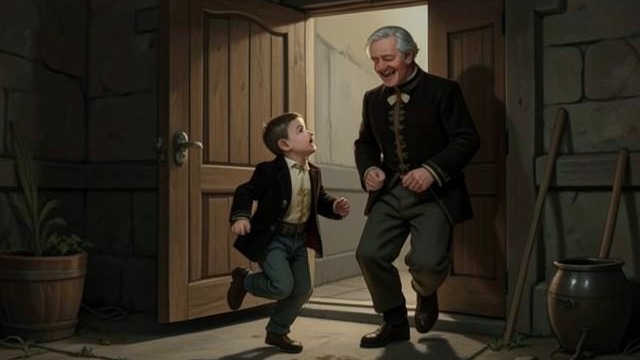
Relief After the First Return
Children at the door
Hansel and Gretel return by following the White Pebbles and call to their father. The Woodcutter is immensely glad to see them.
His reaction indicates that he has not stopped caring for them. Yet the Stepmother’s anger and the family’s continuing hardship leave the underlying danger in place.
Regret without change
The reunion brings emotional relief, but not a new solution to poverty. The Woodcutter’s regret has not yet prevented a second abandonment.
A Second Departure
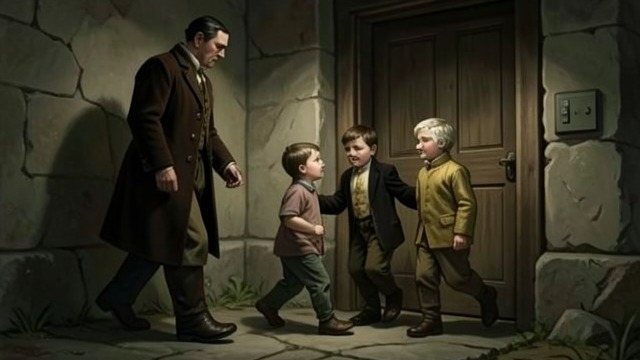
A Second Departure
Care overwhelmed again
A worse famine returns, and the Stepmother persuades the Woodcutter to leave the children once more. He agrees despite the earlier return.
His choice makes his affection complicated: he is glad when the children return, but fails to keep them from being sent away again.
Consequences intensify
This separation lasts longer and leads the children to the Witch. The Woodcutter’s repeated failure creates a deeper absence before the final reunion.
Confession at Reunion
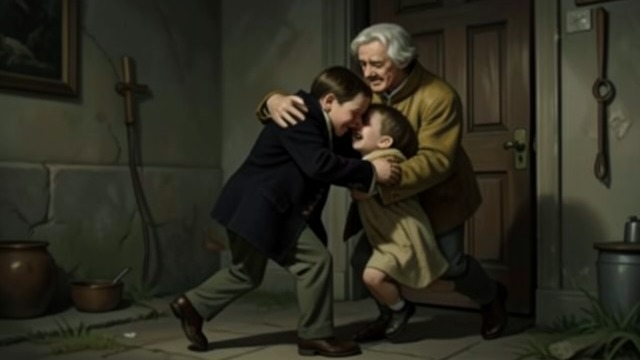
Confession at Reunion
Regret made explicit
The Woodcutter tells Hansel and Gretel that he regretted abandoning them every day. His happiness at their arrival is inseparable from his recognition of the choice he made.
The children run to embrace him. Their action accepts the reunion without erasing the fact that they had to survive alone.
A household changed
The Stepmother is gone, and the children bring wealth from the Witch’s house. The family’s future is materially different, while the Woodcutter’s regret remains part of the reconciliation.
the morning after the first abandonment
days after the first return
at the children’s final return
