
The Branch and the Axe
Hansel and GretelA branch’s imitation of the Woodcutter’s work briefly masks the children’s abandonment and reveals how fragile their confidence in adult protection has become.
increasing Bearing strength in each event
 decreasing
Bearing strength in each eventdecreasingA Sound in the Distance
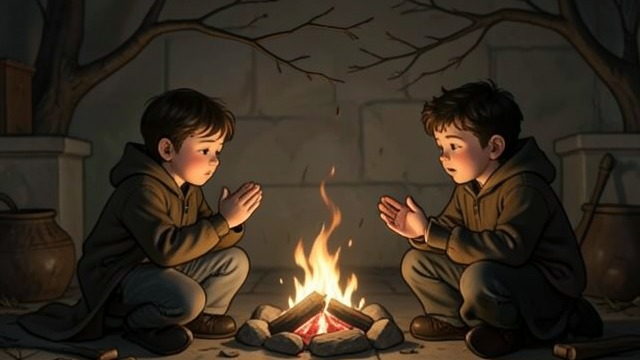
A Sound in the Distance
Children listening
Hansel and Gretel sit by the fire after the adults leave them. In the distance, they hear a repeated clapping sound.
They interpret it as their father’s axe still at work. That explanation lets them believe they have not yet been wholly deserted.
Hope maintained
The sound gives the children a reason to wait. Their belief depends on what they hear rather than any direct sight of their father.
The Branch’s Source
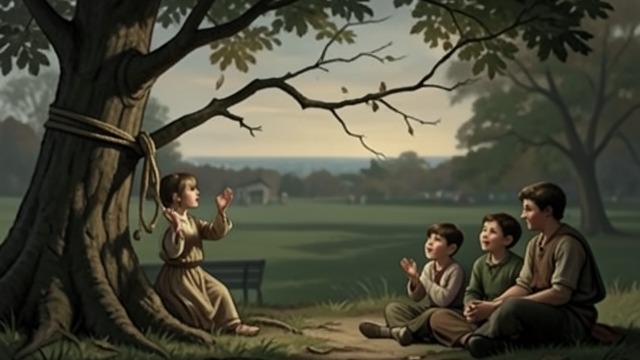
The Branch’s Source
A manufactured signal
The sound does not come from the Woodcutter. Their Stepmother has tied a branch to a tree so the wind will make it clap.
The false signal is deliberate and keeps the children waiting. It makes the adults’ absence harder to recognize while delaying their attempt to return.
Deception within the forest
The children are surrounded not only by darkness but by a sound designed to mislead them. The branch turns an ordinary natural movement into part of the abandonment plan.
The Truth at Nightfall
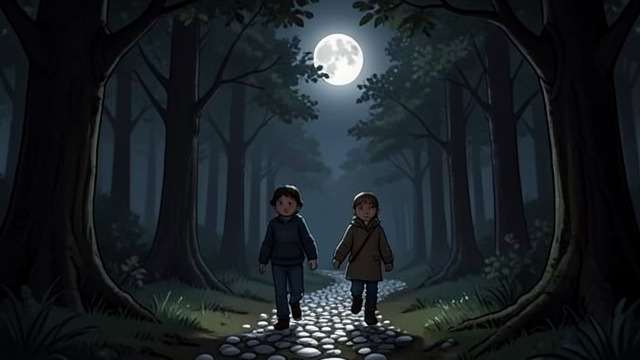
The Truth at Nightfall
The sound loses power
Night grows darker, and Gretel decides it is time to return. Hansel waits until the moon rises so he can see the White Pebbles.
The children leave the false sound behind and rely on the visible trail. They move from mistaken trust in an apparent parent to a route Hansel prepared himself.
Independence begins
Following the stones takes them home. Their survival depends on their own interpretation and choices rather than the adults’ misleading reassurance.
the first evening at the forest site
during the first night
later that first night
