
Father and Children
Hansel and GretelThe Woodcutter’s affection is visible in his opposition and regret, even as his choices expose the children to danger before he welcomes them home.
increasing Bearing strength in each event
 decreasing
Bearing strength in each eventdecreasingLove Against the Plan
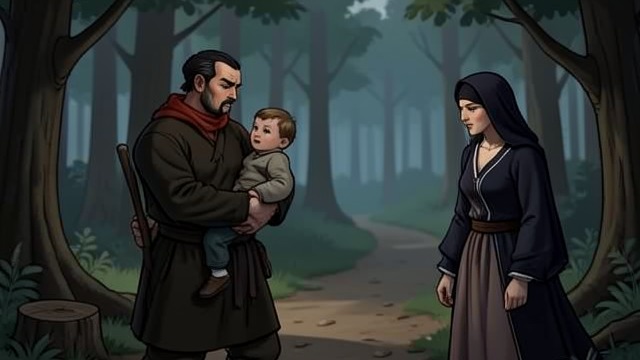
Love Against the Plan
A father’s resistance
The Woodcutter objects to leaving Hansel and Gretel in the forest. He loves them and fears that wild animals or hunger will kill them.
His opposition shows a real emotional bond, but it is not strong enough to overcome the Stepmother’s arguments. Love exists alongside a serious failure of protection.
A painful consent
The Woodcutter finally agrees to the plan. His choice turns his affection into something the children cannot rely on to keep them safe.
Welcome After Return
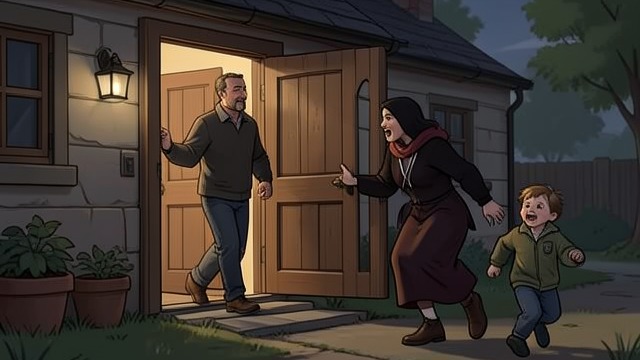
Welcome After Return
Relief at the door
Hansel and Gretel return by following the White Pebbles. Their father is immensely glad to see them, while the Stepmother is furious.
The contrast reveals the Woodcutter’s attachment to the children, though his welcome follows rather than prevents their abandonment.
A fragile reunion
They live together again for a time. The renewed family closeness remains vulnerable because the famine persists.
Joy Mixed with Remorse
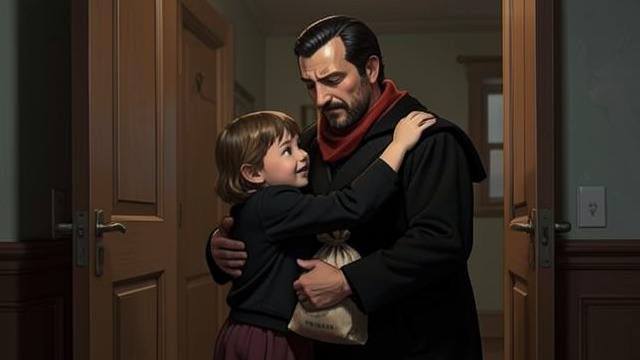
Joy Mixed with Remorse
A long absence
After the Witch’s defeat, Hansel and Gretel find their father. He says that he has regretted abandoning them every day.
His joy at their return gives the children a welcome that was missing in the forest. His confession also recognizes the emotional cost of his earlier decision.
Reunion with hope
The children bring riches, and the family can expect to escape poverty. The reunion binds affection to a changed material future.
the first night of hunger
the morning after the first abandonment
at the final homecoming
