
From Dependency to Initiative
Hansel and GretelThe children begin as dependents whose fate is decided by adults, then acquire initiative through planning, observation, and action.
increasing Bearing strength in each event
 decreasing
Bearing strength in each eventdecreasingAdults Decide
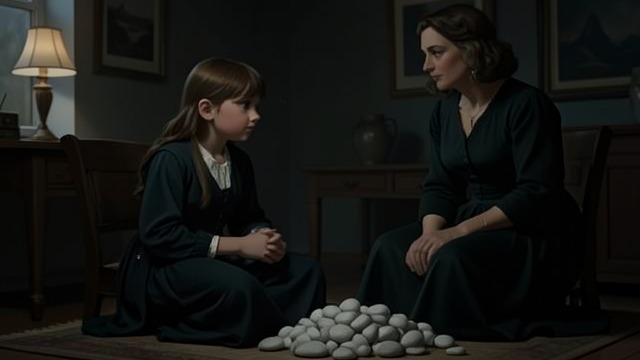
Adults Decide
Children without control
The Stepmother proposes abandoning Hansel and Gretel, and the Woodcutter eventually agrees. The children’s lives are shaped by a decision they did not make.
They depend on adults for food and shelter, yet those same adults take them into the forest. Their vulnerability is rooted in the household structure.
First initiative
Hansel secretly gathers White Pebbles after overhearing the plan. He begins to exercise agency within severe limits.
Learning Through Failure
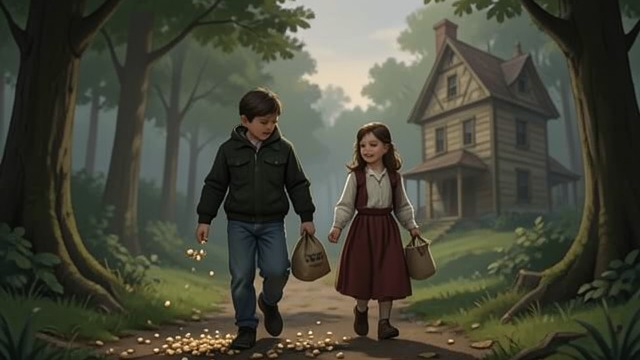
Learning Through Failure
A failed route home
Hansel uses Bread Crumbs when he cannot access White Pebbles. Birds eat the crumbs, and the children lose their way.
The failure forces them to respond to a world that does not follow their plans. They must rely on observation rather than a prepared route.
A new kind of problem
At the candy house, their challenge is no longer simply how to return. They must recognize the danger and survive it.
Initiative in Captivity
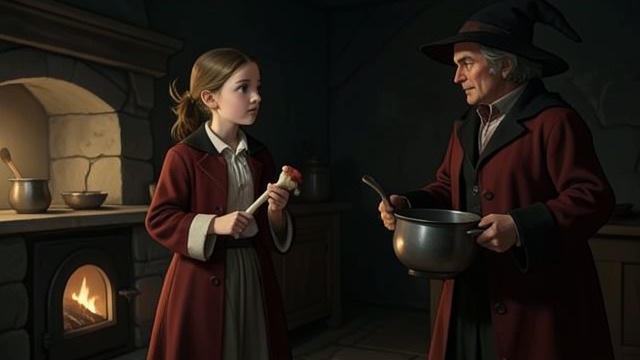
Initiative in Captivity
Small acts of resistance
Hansel uses a chicken bone to mislead the Witch, while Gretel helps devise the trick. They make use of the captor’s poor eyesight to buy time.
When the Witch turns to the Oven, Gretel creates the decisive opportunity. She changes from helper under coercion to the person directing events.
Return by their own effort
Gretel frees Hansel, and they escape together. Their return home is the result of initiative exercised under danger, not adult protection.
at the beginning of the famine
after the second abandonment
from the bone ruse to the Witch’s defeat
