Bread Crumbs
Hansel and GretelBread Crumbs are Hansel’s short-lived attempt to mark a way home after he and Gretel are abandoned in the forest for a second time. Their failure reverses the success of Hansel’s white-pebble trail: every crumb is eaten by birds, and the children are left without a route back, setting them on the path to The candy house and the danger waiting there.
Use on the Second Journey
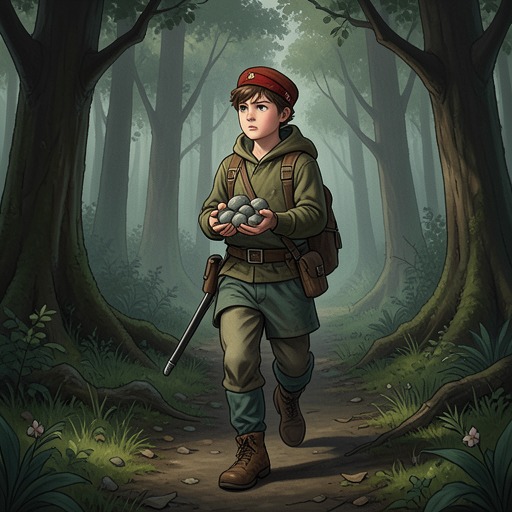
The Bread Crumbs enter the story after a famine worse than the first has again persuaded the Woodcutter to leave his children in the forest. This time the Stepmother has locked the door, preventing Hansel from going outside to gather white pebbles. He must improvise with what he has: as the family travels into the woods, he drops pieces of the bread given to the children before they leave, laying markers along the route.
The crumbs echo Hansel’s earlier method but are materially different. White pebbles remain where they are placed; these markers are edible and exposed to the forest. Hansel’s plan depends on their still being there when the children turn back, a condition he cannot control.
The Trail Disappears
After the children are left beside a fire deep in the forest, they wait until dusk and try to return. They discover that the birds have eaten every crumb. The trail has vanished completely, so the markers cannot guide them home as the pebbles had on the first journey.
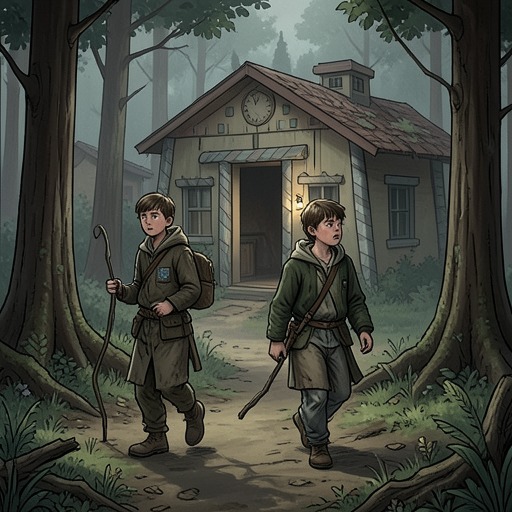
The loss leaves Hansel and Gretel alone, hungry, and frightened in a dense, dark forest. They wander for many hours without finding the way out. The crumbs’ failure thus changes the direction of the episode: instead of returning to their father’s house, the children continue through the forest until they reach a clearing and see The candy house.
Narrative Function
The Bread Crumbs turn a familiar means of sustenance into a failed navigation tool. Bread is supplied for the journey, but Hansel divides it between eating and marking a route; once the birds consume the markers, the resource cannot serve either as a reliable map or as food for the children. Their disappearance links the family’s hunger to the children’s exposure and onward movement.
The contrast with Hansel’s white-pebble trail makes the reversal especially clear. Both trails are deliberate attempts to undo the abandonment, but only the first survives until the children need it. The Bread Crumbs leave no lasting sign, and their absence brings the children to a house that appears to answer their hunger with sweets, before the Witch reveals that the apparent feast is part of a threat to eat them.