Hansel
Hansel and GretelHansel is the Woodcutter’s son and Gretel’s older brother, a child whose ingenuity repeatedly answers dangers created by adults. His White Pebbles first make a way home from abandonment; later, trapped by the Witch, he relies on Gretel’s plan and is freed by her. His story moves from hunger and separation through captivity to a homecoming that brings both family reunion and material security.
Identity and Background
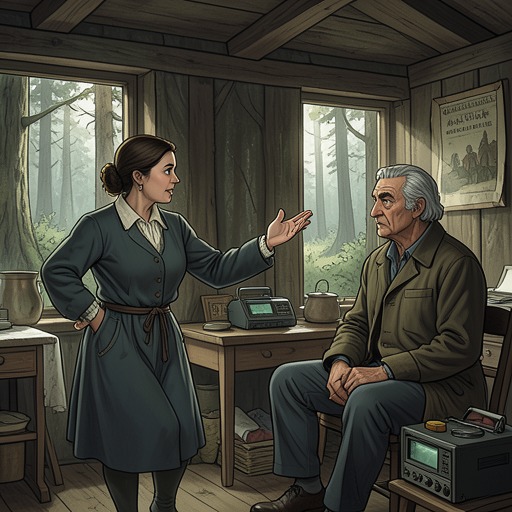
Hansel grows up in a poor household with Gretel and their father, the Woodcutter. After their mother dies, the Woodcutter marries again. A famine leaves the family with almost nothing to eat, and the Stepmother argues that abandoning the children is necessary for the others to survive. The Woodcutter loves his children and fears that they will die in the forest, but the Stepmother persuades him to go along with her plan. Hansel and Gretel overhear the decision while still awake, so Hansel knows that their danger comes not from getting lost by accident but from a deliberate choice by the adults responsible for them.
The Two Abandonments
Before the first journey into the forest, Hansel slips into the garden at night and fills his pockets with White Pebbles. As the family walks, he drops them one by one, quietly marking a route back. The Woodcutter and Stepmother leave the children beside a fire, telling them to wait while the adults work. Hansel and Gretel remain there until dark, hearing a clapping sound that they take for their father’s axe. In fact, the Stepmother has tied a branch to a tree so the wind will make the noise. When Gretel wants to leave, Hansel waits for the moon; its light makes the White Pebbles shine like a silver path. Following his trail, the children reach home the next morning. The Stepmother is furious, while the Woodcutter is overjoyed and regrets what he has done.
The return is temporary. A worse famine strikes within days, and the Stepmother again persuades the Woodcutter to abandon the children. This time she has locked the door, preventing Hansel from going out to collect more White Pebbles. He reassures Gretel that he will find another solution, then drops pieces of Bread Crumbs along the route as they walk. The adults again leave the children beside a fire deep in the forest. At dusk, Hansel and Gretel discover that birds have eaten every crumb. Unlike the shining stones, the Bread Crumbs leave no usable way home. Hansel’s resourcefulness has not disappeared, but the second plan is defeated by the forest’s living environment, and the children are left hungry, frightened, and unable to find their way out.
Captivity and Rescue
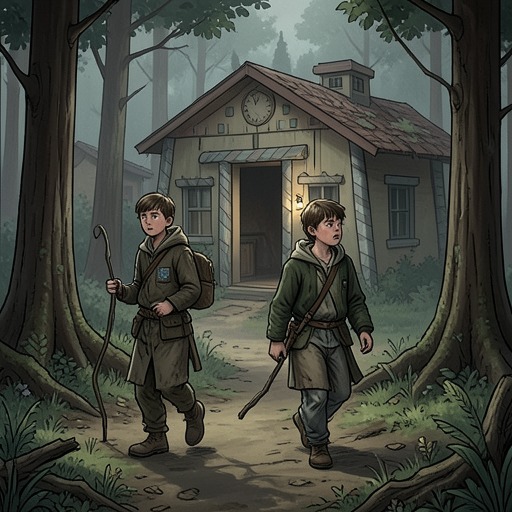
After wandering for hours, Hansel and Gretel come upon The candy house in a clearing. Its chocolate roof, marzipan walls, candy windows, nougat doors, and path of sweets turn the children’s hunger into the immediate attraction of a seemingly edible refuge. They begin eating it without noticing the Witch approaching. She welcomes them only to declare that she intends to eat them instead. She imprisons Hansel in a tiny room, judging him too thin to be worth eating, while assigning Gretel to help her fatten him.
Hansel and Gretel make a plan together. Because the Witch is shortsighted, Gretel tells him to extend a chicken bone through the bars whenever the Witch asks to feel whether he has grown plump. The Witch feels the bone rather than Hansel’s hand and repeatedly delays eating him. This deception buys time, but it cannot end the captivity indefinitely: the Witch eventually complains that Hansel remains thin despite eating constantly. She lights the Oven and orders Gretel to climb inside to check whether it is hot. Gretel recognizes the danger and pretends not to know how to do it. When the Witch demonstrates by entering the Oven herself, Gretel shuts its heavy door, trapping her in her own device. The Witch dies there, and Gretel runs to release Hansel. His survival depends on his own earlier trick and, at the decisive moment, Gretel’s clear perception and action.
Return and Significance
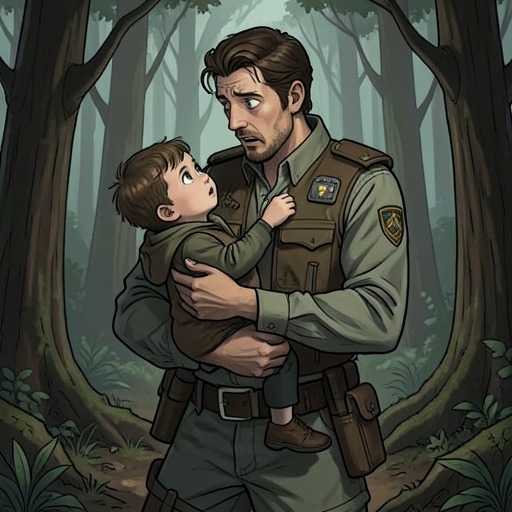
In the Witch’s house, Hansel and Gretel find bags filled with precious stones and pearls. They fill their pockets and leave the enchanted forest, walking without rest until they reach their father’s house. The Woodcutter welcomes them with joy and tells them that the Stepmother has died and will never harm them again. He has regretted abandoning them every day since it happened. The children embrace him, then empty their pockets before his astonished eyes; the treasure means that he will never again have to live in need.
Hansel’s arc is marked by two contrasting routes through the forest and two kinds of dependence. The White Pebbles offer a reliable return, while the Bread Crumbs vanish, forcing the siblings into a danger Hansel cannot solve simply by retracing his steps. In the Witch’s house, he survives through a small, repeated deception, but Gretel’s intervention breaks the confinement and makes reunion possible. The final homecoming therefore answers the story’s opening poverty not only with the children’s return but with a lasting change in the household’s material circumstances.