Oven
Hansel and GretelThe Oven is the Witch’s weapon and the setting for the story’s decisive reversal: she means to use its heat to kill Gretel, but Gretel tricks her into entering it and shuts her inside. What the Witch presents as a simple test of readiness becomes the means by which the children escape her control.
From Hunger to Threat
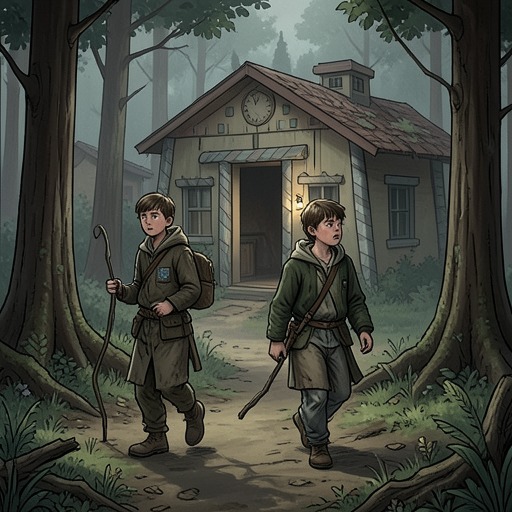
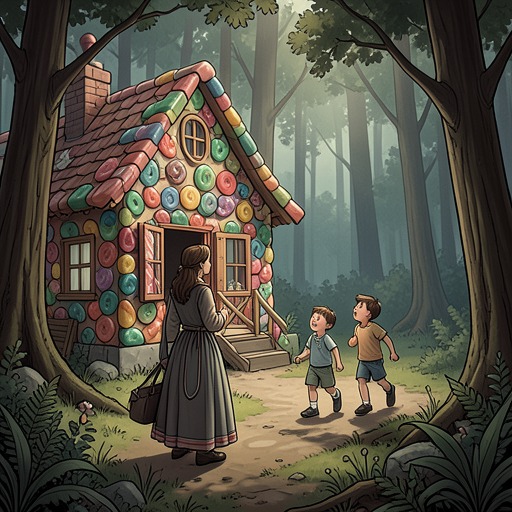
The Oven enters the story after Hansel and Gretel, lost and hungry in the forest, discover The candy house and begin eating its edible walls and windows. The Witch who lives there turns the children’s hunger against them: she imprisons Hansel so he can be fattened for eating, while assigning Gretel the work of helping her. In this setting, an oven is not merely part of preparing food. It belongs to the threat that the Witch has attached to eating and captivity.
The Witch’s plan depends on judging Hansel’s body. Gretel helps him resist by advising him to offer a chicken bone when the Witch asks to feel his finger and decide whether he has grown fat enough. The deception delays the killing, but only temporarily. Eventually, tired of waiting for Hansel to gain weight despite his eating, the Witch lights a huge Oven and orders Gretel to go inside to see whether it is hot.
The Reversal at the Oven
Gretel recognizes that the Witch intends to trap her in the Oven and eat her too. Rather than obey, she claims she does not know how to enter it. The Witch, impatient and scolding, insists that the task is easy and offers to demonstrate. Her confidence makes the trap possible: when she climbs inside, Gretel shuts the heavy door, leaving the Witch caught in the very danger she had prepared for Gretel.
The Witch cries out for release, but Gretel does not open the door. The Witch dies burned in the Oven. The episode reverses their positions at once: the captor becomes the one confined, and the child whom she meant to consume gains the power to end the threat.
Consequences and Significance
After closing the Oven, Gretel runs to Hansel and frees him from his prison. The Oven’s function in the story is therefore bound to a concrete change in the children’s circumstances: it marks the end of the Witch’s control and makes their escape possible. Their later discovery of precious stones and pearls in the Witch’s house, and their return to their father, follow the defeat made possible by Gretel’s quick reading of the Witch’s command.
The reversal also sharpens the story’s recurring contrast between food as relief from hunger and food as an instrument of danger. The children first approach The candy house as something to eat; the Witch then makes Hansel’s eating part of a plan to consume him. At the Oven, Gretel turns that logic back on the Witch. The device intended to complete the Witch’s predation instead ends it.