Woodcutter
Hansel and GretelThe Woodcutter is Hansel and Gretel’s father, a loving but impoverished man whose decision to abandon them makes him complicit in the danger they face. Twice he yields to the Stepmother’s insistence that the children be left in the forest during famine; twice the children’s resourcefulness determines whether they can return. His remorse is established after the first return, while the final reunion brings his separation from the children to an end and, through the treasure they bring home, relieves the household’s need.
Identity and Family Circumstances
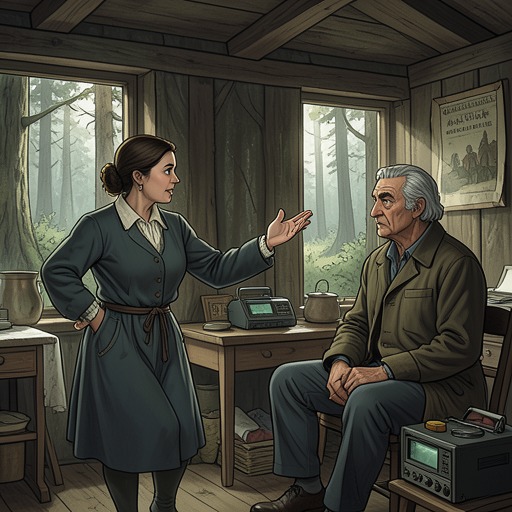
The Woodcutter is introduced as very poor and as the father of two children: Hansel, a boy, and Gretel, a girl. Their mother has died, and he has married again. The account distinguishes his affection for his children from the vulnerability of the household: he loves them, but famine leaves the family with almost nothing to eat. The crisis is not described as a private dispute alone; hunger has devastated the region, making the family’s poverty part of a wider emergency.
The first famine places the Woodcutter between his attachment to his children and the Stepmother’s proposed solution. She argues that the four of them cannot survive another winter and urges him to take the children deep into the forest and leave them there. He initially refuses, anticipating that they could starve or be killed by wild animals. His objection makes clear that he understands the physical danger of the plan; his eventual agreement is therefore not presented as ignorance of its consequences.
First Abandonment and Return
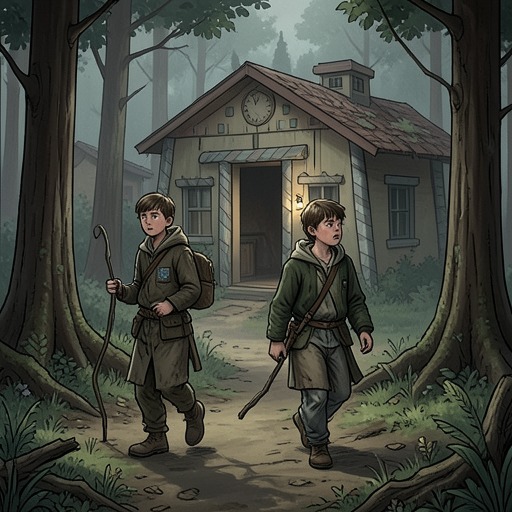
The Stepmother persists until the Woodcutter agrees. The next morning, she gives each child a piece of bread, and the adults take them into the forest on the pretext of going to work. At the forest’s deepest point, the Woodcutter and his wife light a fire, seat Hansel and Gretel beside a fallen tree, and tell them to wait while the adults finish working. The instruction turns a shared journey into abandonment: the children are left alone while their father departs with the Stepmother.
For hours, the children wait by the fire. They hear a repeated clapping sound in the distance and suppose that the Woodcutter is still working with his axe. In fact, the Stepmother has tied a branch to a tree so that the wind will produce the sound. The detail sharpens the Woodcutter’s absence: the reassurance the children take from the apparent work is false, and their father is not returning to collect them. The narrative does not describe his thoughts during this interval, but it does make his responsibility for leaving them plain.
Hansel has secretly collected White Pebbles and dropped them along the way to mark a route home. When moonlight reveals the stones, he and Gretel follow the trail back and reach their father’s door the next morning. Their triumphant return contrasts with the adults’ expectation that the children would be unable to find their way. The Stepmother is furious, but the Woodcutter is immensely glad to see them. The account explicitly says that he regrets what he has done, making his joy more than simple relief: he recognizes the cost of the choice he made, even though the story does not show him resisting the next proposal successfully.
Renewed Famine and Second Separation
The family lives together again for a time, but within days a famine worse than the first devastates the region. The Woodcutter does not want to part from his children, yet the Stepmother once more persuades him that abandoning them is the only solution. This repetition matters: his affection is still present, but it does not prevent him from again consenting to the plan. The narrative sets his reluctance against his actions rather than treating good feeling as sufficient protection for Hansel and Gretel.
This time, the children hear the adults discussing their fate, but Hansel cannot gather White Pebbles. The Stepmother has locked the door to prevent them from escaping, closing off the method that saved them on the first journey. Hansel instead drops pieces of Bread Crumbs from the ration he receives before departure. The adults again leave the children by a fire deep in the forest. As dusk approaches, Hansel and Gretel discover that birds have eaten every crumb, and their route home has vanished. The second abandonment thus repeats the first in its destination and outcome for the family, but reverses the children’s prospects: the trail that once made return possible no longer exists.
Reunion and Ending
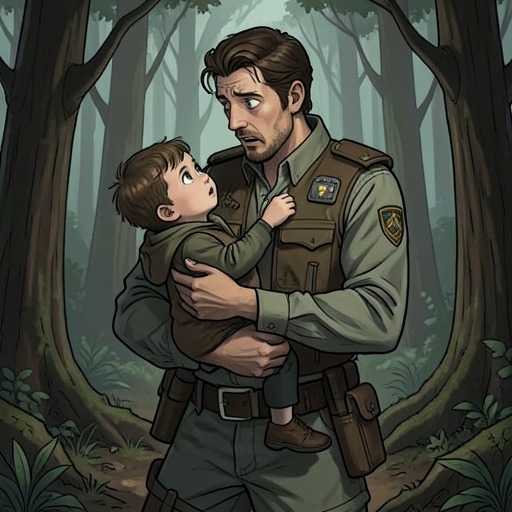
Lost, hungry, and frightened, Hansel and Gretel wander through the dark forest until they encounter the candy house and the Witch. The story follows the children’s ordeal there; it does not describe the Woodcutter’s actions or whereabouts during their captivity. When the children finally leave the forest, they walk without resting until they find their father’s house. The Woodcutter receives them with great joy, and the narrative says that from the day he abandoned them he had not passed a single day without regretting his decision.
At the reunion, the Woodcutter tells the children that the Stepmother has died and will never hurt them again. Hansel and Gretel then empty their pockets, revealing the precious stones and pearls taken from the Witch’s house. Their father looks on in disbelief, and the treasure ensures that he will never again have to suffer need. The ending alters the family’s circumstances materially as well as emotionally: the children return alive, the Stepmother is no longer a threat, and the recovered wealth answers the poverty that helped precipitate their abandonment.
Narrative Role
The Woodcutter is neither the children’s rescuer nor a wholly indifferent parent. His stated love and repeated remorse coexist with his failure to protect Hansel and Gretel when the Stepmother presses him to leave them behind. That tension gives his role its force: family affection is real in the story, but it does not by itself overcome fear and deprivation. The children, rather than their father, devise the means of return and survive the forest’s dangers; his final welcome is a reception of their achievement, not the cause of it.
The structure also makes his two decisions distinct. After the first, the White Pebbles bring the children home and the Woodcutter’s joy appears to close the crisis, but worsening famine leads him to consent again. After the second, the Bread Crumbs fail, and the children’s return is delayed until after the Witch’s defeat. Only then does the household’s situation change decisively. The Woodcutter ends the tale reunited with Hansel and Gretel and freed from need, but the account leaves the contrast between his love for them and his repeated abandonment of them unresolved rather than erasing it with the happy reunion.