
The Two Hospital Worlds
HappeningThis contrastive thread traces Annie Duchesne’s movement from a clandestine procedure to institutional care and judgment.
increasing Bearing strength in each event
 decreasing
Bearing strength in each eventdecreasingThe Informal Apartment
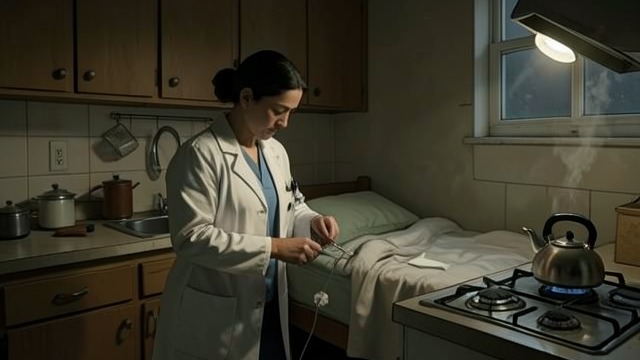
The Informal Apartment
Domestic Setting
Madame P-R prepares for the procedure in a cramped apartment with household furniture and boiling water. The setting is private, practical, and medically precarious.
A Substitute for Care
Annie Duchesne entrusts her body to a stranger because legal options are closed. The apartment stands in for a clinic the law has made unavailable.
The Journey Home

The Journey Home
A Careful Escort
After the procedure, Madame P-R walks Annie Duchesne to the station. The gesture is compassionate but also shaped by the fear that Annie might collapse nearby.
Uneasy Dependence
Annie wants to be alone, yet accepts the help. The brief escort reveals an unstable mixture of care, risk, and social distance.
Hemorrhage

Hemorrhage
A Crisis at the Dormitory
After the expulsion, Annie Duchesne loses blood rapidly. O tries to help, but the situation exceeds what they can manage without medical care.
The Threshold Crossed
Annie calls for a doctor despite her earlier determination to avoid one. The emergency ends the possibility of keeping the consequences entirely private.
Judgment at Admission
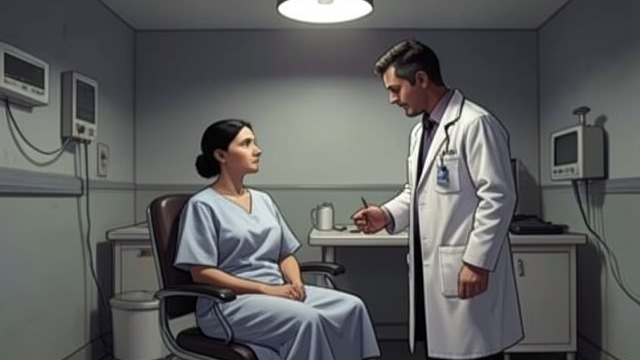
Judgment at Admission
Interrogation
The night doctor demands to know why and how Annie Duchesne acted. She begs not to die, while his authority turns urgent treatment into an ordeal of exposure.
Unequal Regard
The doctor later recognizes she is a student, and a nurse suggests she should have disclosed her social position. Care is filtered through class assumptions.
Aftercare and Discharge
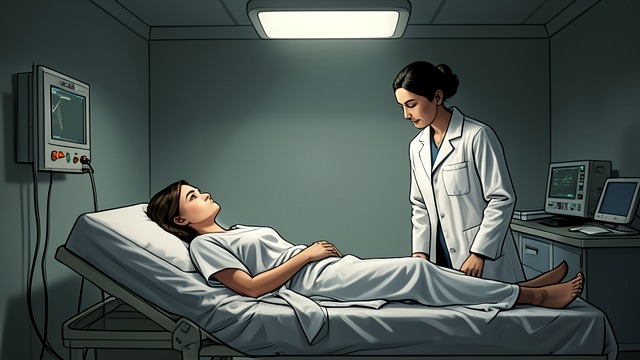
Aftercare and Discharge
Bodily Treatment
Hospital staff curette Annie Duchesne and bind her breasts as lactation begins. Medical intervention saves her while leaving her feeling exposed and altered.
Exit Without Resolution
She leaves after five days and returns to her parents’ home. Institutional care has addressed the hemorrhage, not the social conditions that produced the danger.
January 15, 1964
January 15, 1964
Late night, January 20–21, 1964
January 21, 1964
January 21–25, 1964
