
The Three-Week Survival Test
Happiness for BeginnersThe expedition turns a romanticized wilderness challenge into a practical ordeal in which Helen learns skills, makes consequential decisions, and earns her place in the group.
increasing Bearing strength in each event
 decreasing
Bearing strength in each eventdecreasingThe Rulebook
The Rulebook
A harsh welcome
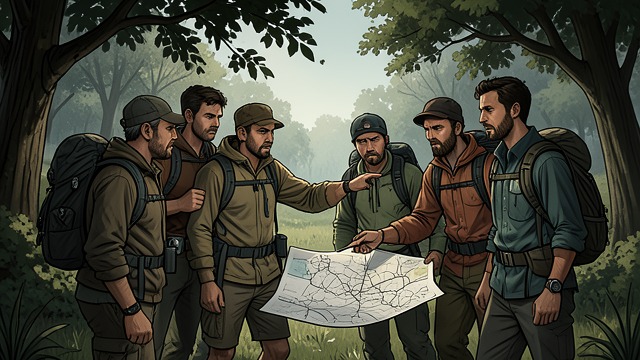
Beckett describes a course of long hikes, tarp camps, limited supplies, strict waste rules, and wilderness hazards. The participants must rely on their packs and what they can learn on the trail.
Helen discovers that the program is more demanding and less fully explained than she expected. The mismatch between her imagined retreat and Beckett’s blunt instructions increases her anxiety.
A real test
The rules are not decorative atmosphere: they shape the group’s safety and the choices that will matter later. Helen begins the course uncertain whether she can meet them.
The First Uphill Day
The First Uphill Day
Pain at the outset
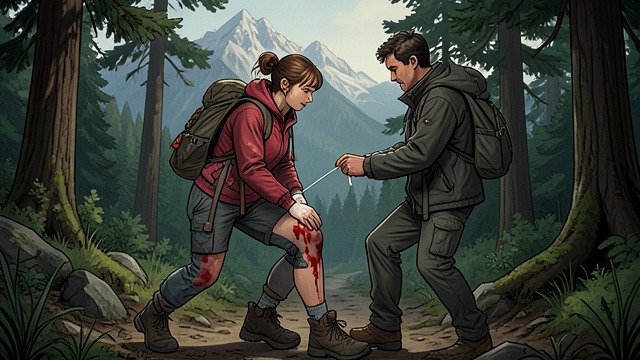
Helen cuts her knee while putting on her heavy pack, then develops blisters as the group climbs. She tries to hide the pain so she will not slow the others.
Jake treats the injury and insists that she attend to the blisters. His care gets her moving again, while the experience shows that ignoring a small problem can make wilderness travel more dangerous.
The course begins
Helen is far behind the strongest hikers, but she has begun learning the essential discipline of the trip: notice trouble early and act on it.
The Map Becomes a Strength
The Map Becomes a Strength
A hidden aptitude
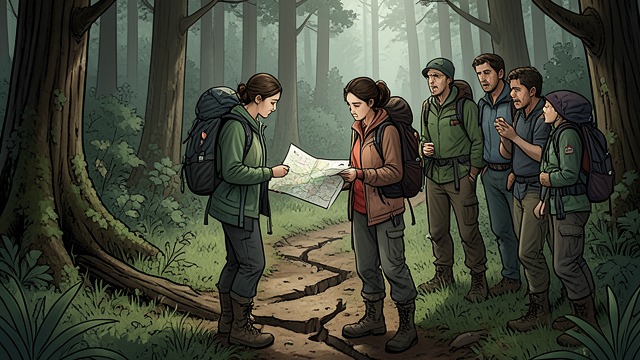
While the group treats contour maps as confusing marks, Helen can picture their terrain in three dimensions. She does not initially make much of this ability, partly because she already feels like the least capable participant.
Her map-reading becomes important when the group takes a wrong turn after Hugh’s accident. Helen recognizes the mismatch between the route and the landscape and retraces her steps.
Competence through attention
The wilderness reveals that Helen’s strengths do not have to resemble those of the fastest hikers. Careful study, patience, and spatial reasoning can be survival skills.
The Painted Meadow Rest
The Painted Meadow Rest
A reward in the landscape
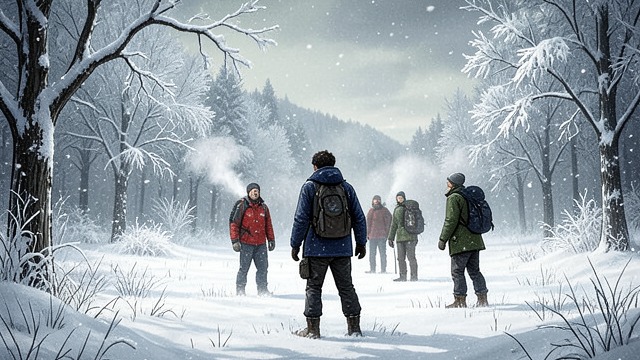
After a punishing stretch of hiking, the group reaches Painted Meadow. Helen finds the landscape more beautiful than she had imagined and experiences a rare sense of quiet.
A summer-solstice snowfall abruptly changes the meadow and forces the group to adapt. The temporary beauty does not make the wilderness predictable; it makes attentiveness and group preparation more important.
Reframing the journey
The meadow supplies a moment of awe rather than a simple cure. Helen can value the experience even while carrying jealousy, exhaustion, and unresolved longing.
The Solo Navigation Crisis
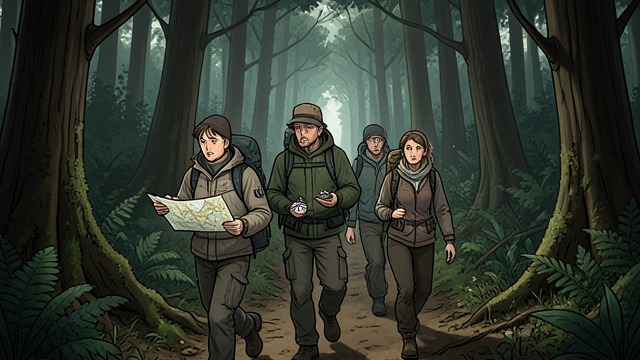
The Solo Navigation Crisis
Leaving the marked route
Mason takes the map and leads Helen, Jake, and Dosie away from the intended trail, believing a shortcut will be easier. Once the trail disappears, the group discovers that it has lost its bearings.
Helen takes back the map, orients it with her compass, and establishes what the group knows about the hills and the stream. They bushwhack until they find the trail and eventually reach water.
A new authority
The crisis confirms that the ability Beckett identified in Helen is real. She can lead without being the fastest person in the group and can make progress while still afraid.
Orientation day
The first morning on the trail
During the first week of hiking
Near the end of the second week
During Helen’s twenty-four-hour Solo
