
The Stories Helen Tells Herself
Happiness for BeginnersHelen repeatedly discovers that her confident explanations of rejection, family, and happiness are incomplete, and learns to revise them with greater compassion.
increasing Bearing strength in each event
 decreasing
Bearing strength in each eventdecreasingThe Dull Name

The Dull Name
A name reclaimed
Helen is relieved to return to her birth name, Carpenter, after taking Mike’s surname during their marriage. She sees the change as a small recovery of an identity she had set aside to create a shared family.
Her reflection on the name Dull shows how readily she turned a relationship choice into a judgment about herself. The marriage did not make her less worthy, even if it left her feeling diminished.
Identity beyond labels
The name change marks a real transition, but it cannot by itself repair Helen’s sense of self. That work will require new experiences and a kinder reading of her past.
The Badass Fantasy

The Badass Fantasy
A chosen persona
Helen hopes the course will turn her into a tougher, less vulnerable person. Her list promises that she will rise from her ashes, become awesome, and kick the wilderness’s ass.
The goal is understandable after years of grief, but it rests on the belief that she must replace her ordinary self. The course will show her that capability need not require becoming hard or untouched.
A promise under strain
The list gives Helen direction, but also ties her hope to an impossible performance. She has to learn whether she can change without rejecting the person she already is.
The Confession of Blame
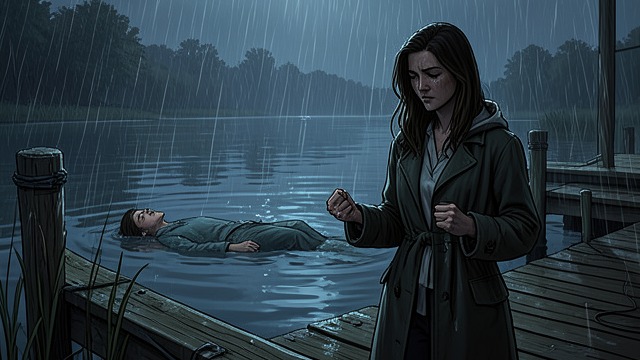
The Confession of Blame
Nathan’s absence
Helen tells Jake that Nathan drowned after leaving a gathering to go to the docks. Helen was a child herself, yet she has spent years believing she should have gone with him because she was his older sister.
She also describes the grief and family breakdown that followed. Jake helps her see that the family’s tragedy cannot be reduced to a single child’s failure or a single sibling’s presence.
A more complete account
Helen recognizes that her guilt has helped preserve a bond with Nathan, but it has also kept her trapped. Speaking about him makes room for grief without treating self-punishment as loyalty.
The Childhood Story Changes

The Childhood Story Changes
From rejection to crisis
Grandma GiGi explains that Helen’s mother did not simply abandon the children; she was found after a suicide attempt and later remained too fragile to care for them. Helen’s understanding of her childhood shifts dramatically.
The truth does not undo the years of separation, and Helen still feels anger that the story was hidden. But she can distinguish a mother who could not care for her from a mother who did not want her.
New questions become possible
The revelation allows Helen to consider contacting her mother and to speak honestly with Duncan. Her past becomes complicated rather than settled, opening the possibility of repair.
A Story Chosen with Care

A Story Chosen with Care
Memory as meaning
Helen reflects that a life contains grief, loss, ordinary kindness, beauty, and joy. Remembering only pain would produce one story; attending to other moments makes another story possible.
She does not claim that good memories cancel suffering. Instead, she chooses to keep the moments that remind her what happiness feels like, including the beginning of her life with Jake.
An honest ending
The epilogue closes on love without pretending that future hardship has disappeared. Helen’s revised story makes room for difficulty and companionship at once.
After Helen’s divorce
Before Helen reaches the wilderness
During the night beside the tarp
The morning after the expedition
In the epilogue
