
What It Means to See
Happiness for BeginnersJake’s failing eyesight makes vision a physical vulnerability and a metaphorical question about the ways people notice, understand, and remain present with one another.
increasing Bearing strength in each event
 decreasing
Bearing strength in each eventdecreasingLooking Past the Old Image

Looking Past the Old Image
A changed face
Helen recognizes Jake only gradually because her mental picture of him has not kept pace with his changes. She admits that she has seen him many times without truly looking at him.
Jake, by contrast, has paid close attention to Helen for years. Their difference in knowledge begins the story’s contrast between visual familiarity and emotional recognition.
Seeing as a choice
Helen’s first change is not about Jake’s eyes. It is learning to notice a person outside the role she has assigned him.
The Medical Secret

The Medical Secret
A problem concealed
Jake wears glasses and struggles in low light, but he asks Helen not to discuss his night blindness. He has entered a wilderness course without passing its medical requirement and has hidden his condition from the group.
His secrecy allows him to pursue experiences he fears will soon be impossible. It also prevents other people from understanding the risks he is taking and the anxiety driving his choices.
Sight and control
Jake treats disclosure as a loss of control over his future. Helen’s growing concern makes it harder for him to maintain that isolation.
The Creekside Disclosure
The Creekside Disclosure
A fear made immediate
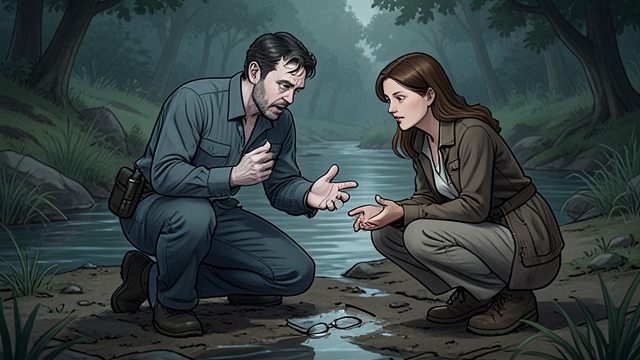
Jake loses his glasses by the stream and panics because he cannot search the ground clearly. Helen crawls toward him, speaking calmly until he lets her help.
The crisis prompts Jake to explain that his inherited retinal disorder will progressively reduce his vision. He has researched the condition and believes there is no treatment that can stop its course.
A shared reality
Helen cannot cure the illness, but she can listen and help him through the immediate fear. Their intimacy grows from the truth Jake has been withholding, not from a promise that the truth will be harmless.
Finding Helen by Touch
Finding Helen by Touch
An altered way of seeing
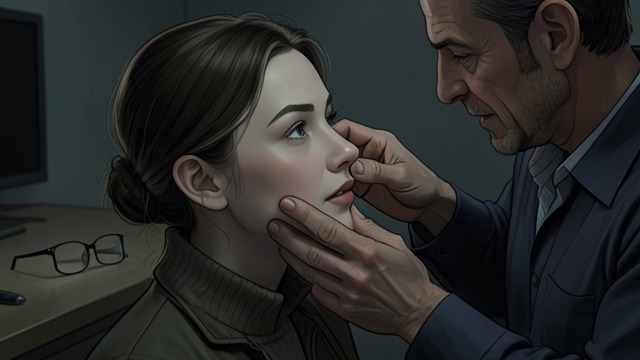
Helen takes Jake’s hands and guides them over her face. Unable to rely on clear vision in the fading light, Jake recognizes her through touch and says that he has found her.
The moment is intimate because Helen does not ask him to pretend he can see normally. Jake attends to her in another way, and she allows herself to be known through it.
Presence beyond eyesight
The scene does not make blindness beautiful or easy. It suggests that perception and recognition can involve more than the eyes, without denying the loss Jake faces.
The Vision of the Heart

The Vision of the Heart
GiGi’s reassurance
Helen tells Grandma GiGi that Jake is losing his sight. GiGi says that his ability to understand people will remain, even if he cannot see them as before.
Helen recognizes this quality in Jake, who has noticed her needs and remembered her words long before she returned his attention. His emotional vision has shaped their relationship throughout the expedition.
Love without denial
The reassurance does not promise that Jake’s condition will stop or that love will be simple. It helps Helen understand that his value and identity are not reducible to what he can see.
The night Helen meets Jake again at the party
During the first week of the course
During the Solo group’s water collection
Immediately after Jake explains his diagnosis
The evening Helen returns home
