Do Not Leave the Marked Trail Without Permission
Happiness for BeginnersDo Not Leave the Marked Trail Without Permission is a BCSC wilderness-course rule made vivid by a shortcut that takes a hiking group away from its planned route. When Mason leads the group off the marked trail, the boundary between an efficient-looking detour and a genuine wilderness hazard disappears: the group loses its way among animal paths and spends hours trying to find the trail again. The episode turns attentiveness to the route from a general safety expectation into a practical necessity, with consequences that include exhaustion, bleeding, lost time, and a difficult crossing still ahead.
The Rule and Its Setting
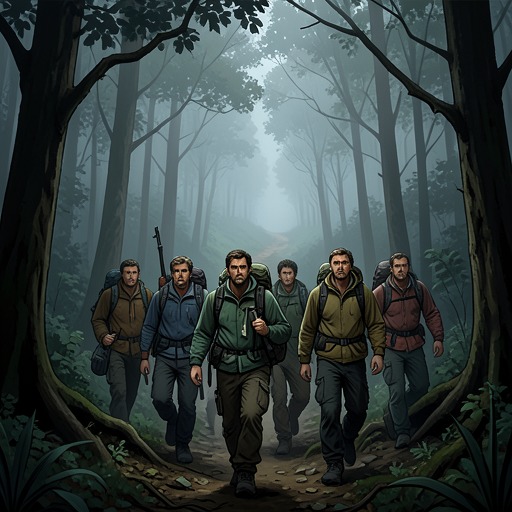
The rule’s clearest expression comes during the hike, when Helen realizes the group is crossing a hill that was not on their planned route. Mason explains that he has taken a shortcut. Jake recalls that Beckett had specifically told the group not to do that. The exchange establishes the relevant boundary: a traveler’s decision that a detour seems reasonable does not make it an authorized route.
The setting gives that boundary weight. Helen had signed about fifty waivers acknowledging possible life-threatening or life-ending situations, including bear attacks, avalanches, hypothermia, and even fatal diarrhea. BCSC was known for steep slopes, rocky paths, and remote locations; reports of broken collarbones, rockslides, bear attacks, missing hikers, and hypothermia had helped make the course notorious. Those details do not explain the rule’s full administrative procedure, but they place the marked route within a course where mistakes can carry serious risks.
The Shortcut and the Lost Trail
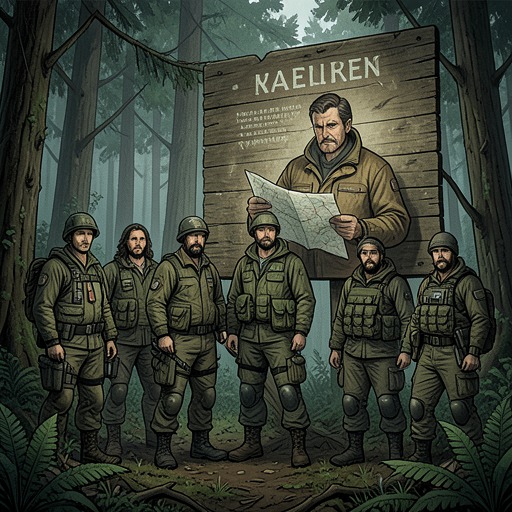
Mason has taken the group off course by the time anyone identifies the problem: he estimates that they left the trail two or three hours earlier. He shows Helen the map’s oxbow-shaped route, which curves around a hill, and argues that crossing the hill is a shorter way through. He says he followed a trail, but Helen recognizes the distinction that matters: it is an animal track, perhaps made by deer, Elk, or moose, not a human trail or a National Park trail.
The group’s loss of the marked route is compounded by its inattention. Helen and Jake had been talking and flirting, and Jake had been telling Chuck Norris jokes; Helen admits that his humor had made her laugh when she had not laughed like that in a long time. Mason turns that lapse back on the hikers, arguing that they should have noticed where they were going. He calls their failure to pay attention rule number one. His point does not erase his responsibility as the leader, which Helen stresses, but it makes the incident more than a simple case of one person’s bad navigation: the shortcut succeeds because the group does not notice it in time.
When the hikers turn around, there is no obvious trail to retrace. Small animal tracks crisscross the dry ground, replacing the clear route they had expected to find. Helen tries to reason from the map: the trail should run between two hills, and because they have been going up one hill, descending should eventually bring them back to it. That plan gives the group a direction, but not an immediate return to safety.
Recovery and Its Cost
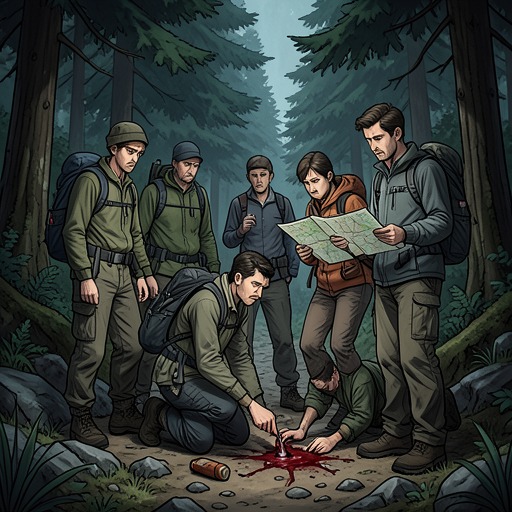
It takes four hours for the group to reach the trail again. The hikers are breathless and bleeding, yet they hug with relief when the marked route finally reappears. Their reunion with it is not the end of the ordeal. They have backtracked and rejoined the trail at a place they had already passed, leaving about a mile to the stream crossing. It is already five in the afternoon, and that final mile takes another hour.
The map shows a stream crossing, but the group then discovers what the map had not made apparent to Helen: the stream lies at the bottom of a steep ravine, roughly a hundred feet below, and the trail crosses it on a rickety rope bridge. The detour has therefore cost more than time and energy. It has brought the group to a demanding obstacle later in the day, after the strain of recovering their route. The account does not state that anyone is injured by the shortcut, but the group’s bleeding and exhaustion, and the difficult crossing that follows, make the consequences tangible.
Safety Beyond the Detour
A separate lost-group episode reinforces the practical stakes of being off the trail. When Jake considers searching for the missing hikers at night, Beckett looks at the sky and refuses to proceed: the group is somewhere off the trail, its location is unknown, and the darkness makes a search unsafe. He says an evacuation cannot begin until morning and that waiting about an hour will make no difference. The scene does not restate the marked-trail rule, but it shows how losing the route can constrain what rescuers can safely do.
The shortcut episode gives the rule its narrative force through reversal. Mason chooses the shorter-looking line around the mapped curve; instead, the group wanders among indistinguishable tracks, spends four hours finding the trail, and reaches the ravine crossing after further delay. The rule is thus not presented as a mere preference for orderly hiking. Within BCSC’s remote and hazardous setting, staying on the marked route preserves the group’s ability to know where it is and what lies ahead.