Duncan Carpenter
Happiness for BeginnersDuncan Carpenter is Helen Carpenter’s younger brother and, for much of her life, the person onto whom she displaced grief and resentment she could not face directly. Their relationship changes when Helen learns the truth about their mother’s crisis and hears Duncan describe Pickle’s death: what had seemed like proof of his failures instead reveals his effort, vulnerability, and capacity for love.
Family Background and Childhood
Duncan was born into a family already devastated by the death of Helen’s other brother, Nathan. Helen remembers their mother becoming frantic after Nathan drowned, searching for him even after he had been found; two months later, she was pregnant. Helen came to believe that the pregnancy was an attempt to replace Nathan, though she understood that he was irreplaceable. In her account, Duncan’s arrival therefore became bound up with a loss that preceded him and could not be repaired.
The family broke apart soon afterward. Within a year, Helen and Duncan’s parents had separated, and their father moved to San Diego and remarried. Their mother remained in Evanston for two years, trying to raise the children alone, but the household deteriorated: bills went unpaid, water and electricity were repeatedly shut off, laundry accumulated, meals were forgotten, and the lawn and pool fell into neglect. Helen tried to take on domestic tasks, but when she was nearly thirteen, their mother drove the siblings to Grandma GiGi’s house and left them there.
Helen’s later recollection makes clear how Duncan became entangled in her sense of being abandoned. She remembered him first as a colicky baby, then as an exhausting toddler and mischievous child, while she was expected to babysit him from the age of thirteen until she left for college. She had blamed him for the changes that followed Nathan’s death: their father’s departure, their mother’s decline, and the attention Helen felt she had lost. Once away from home, she did not revisit that judgment; she treated Duncan’s irritating behavior as the whole explanation for their estrangement.
Helen’s Resentment and Duncan’s Guilt
During a late-night conversation with Jake, Helen admits that she has not forgiven Duncan for not being Nathan. The thought surprises her as she says it aloud, but it exposes the unfair burden she has placed on her younger brother. Duncan had not chosen to be born into the family’s crisis; he was caught in the same upheaval as Helen. Her resentment had turned him into the problem, though the losses and instability that shaped both siblings were not his doing.
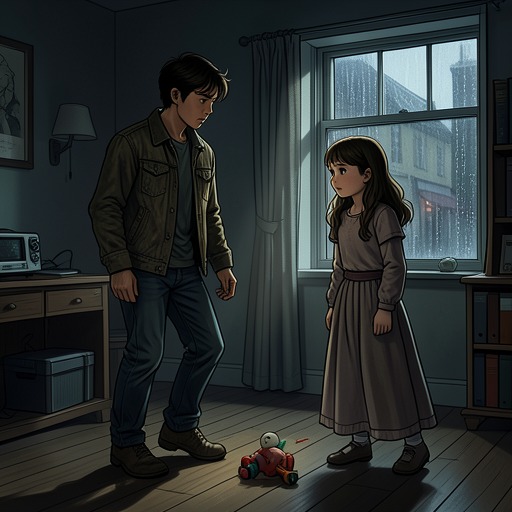
Years later, Helen tells Duncan that their mother tried to kill herself. She has learned from Grandma GiGi that, on the night of the attempt, their mother took a bottle of painkillers and climbed into bed with Nathan’s teddy bear. Grandma GiGi found her in time. When Helen tells Duncan, in the hallway of the childhood home he remembers as his only home, he goes white. He asks why Helen is telling him then, and she explains that she asked their mother about it.
The disclosure also overturns Duncan’s own private explanation of the past. He had believed their mother left because he had been a difficult child. Helen answers that his behavior as a child had, in fact, helped save their mother: the night Grandma GiGi went home to retrieve Helen’s Softie, she found their mother and was able to intervene. The revelation does not undo what happened, but it gives the siblings a different account of their mother’s departure and of Duncan’s place in the family’s survival.
Pickle and a Shared Grief
Duncan’s account of Pickle’s final illness shows Helen a kind of devotion she had not credited to him. He explains that he had applied for a job at Pickle’s veterinary clinic while signing her out and had been working there ever since. When Pickle was dying in his apartment, he was at the clinic. His car had been immobilized by a parking boot, so he cradled her in one arm and rode his bicycle twenty-two blocks back to work. They were nearly hit by a bus. He kept reassuring her on the way, but she died in his arms before he reached the clinic.
Pickle had slept beside Duncan every night, burrowing under his Budweiser blanket. Helen had regarded the dog as horrible, but Duncan loved her, and his grief makes that attachment unmistakable. Helen accepts the depth of his love and embraces him. For the first time they can remember, the siblings have something good in common: a shared affection that is not organized around Nathan’s death, their mother’s collapse, or Helen’s old accusations.
Reconciliation and Narrative Role
The change in Helen’s view is not a sudden claim that the past no longer matters. Rather, she recognizes that her picture of Duncan had been reductive. A month earlier, she would have treated the circumstances of Pickle’s death as final evidence that he was useless and impossible to care about. Now she sees the ways he has been trying, and she recognizes something of her own struggle in that effort. She tells him that he did his best, and they share another embrace—their second that day and their second in a decade.
Duncan’s importance in the story lies partly in how the sibling relationship carries the family’s unresolved grief forward. Helen’s early blame makes him a stand-in for everything that went wrong after Nathan died; her later knowledge shows how little either sibling understood about the crisis that shaped their childhood. Duncan’s account of Pickle then gives their renewed relationship a present-tense foundation: they can meet not only as children marked by the same family history, but as adults capable of recognizing one another’s care and pain. Helen’s movement from contempt to understanding does not erase their difficult past; it changes what that past allows her to see.