Helen and Duncan bury Pickle
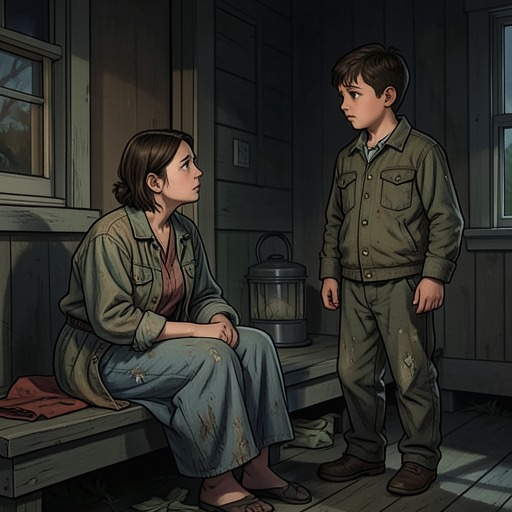
Happiness for BeginnersHelen and Duncan bury Pickle in Grandma GiGi’s backyard after Duncan makes clear that the dog is dead and Helen can no longer hold on to the possibility that she might recover. The burial is a small, improvised family funeral, but its significance reaches beyond the loss itself: mourning Pickle gives the siblings a shared grief and, for a moment, something good they can hold in common.
Background and Acceptance of Pickle’s Death
The burial follows a last attempt to imagine another possibility. Helen wonders whether Pickle could be unconscious, with an exceptionally slow heartbeat, but Duncan insists that the dog was already dead when he put her in the bag. His certainty ends the argument. Helen accepts that Pickle, whom she regards as both the worst pet in the world and her favorite, is gone.
That double description captures the attachment the funeral honors. Pickle is not remembered as an easy or ideal pet; the affection is inseparable from her difficult character. Earlier, when Duncan defended his love for her, Helen recognized that he meant it and embraced him. They admitted to loving the same unruly dog, and the moment gave them something good in common for what felt to Helen like the first time in their lives. The burial follows that recognition by turning shared affection into shared action.
The Backyard Funeral
Helen heads for the back door with the intention of burying Pickle and tells Duncan to get the cooler. The scene becomes an awkward, tender procession into Grandma GiGi’s backyard: Helen is in a pink party dress and heels, while Duncan carries Pickle’s body, wrapped like a duct-taped mummy. His face is shiny with tears, and his shirt is wet from the ice water he has been holding against her.
They choose a place beside the grave of their childhood bulldog, Lambchop, hoping the two animals can be friends in Heaven. Helen does the digging, although she recognizes that Duncan, in his dirty sneakers, would have been the more sensible person to do it. Neither of them, she reflects, has much sense in that moment. The physical details make the farewell unceremonious but intimate: black soil piles beside the hole while Helen digs in her party clothes, and the siblings stay together through a task neither can make easier for the other.
As the grave deepens, one of Helen’s hair buns comes loose and her strappy heels break and smear with mud. Duncan kneels to place Pickle in the hole, then backfills it while Helen runs upstairs, having kicked off her ruined shoes, to retrieve the daisy chain Windy made for her. She lays it over the grave. The gesture brings a personal keepsake into the burial, making the grave not only a practical resting place but a site of deliberate farewell. After they say a few words, Duncan puts his arm around Helen’s shoulders, and they walk back to the house together.
Sibling Grief and Reconciliation
The burial’s emotional force rests on the history the siblings bring to it. Helen has described Nathan’s drowning and the guilt she carried as his older sister; for years, she also blamed Duncan for the upheaval that followed Nathan’s death. In a conversation with Jake, she finally named a deeper resentment: she had not forgiven Duncan for not being Nathan. Jake’s response helped her see that Duncan had been born into the same family catastrophe without choosing it, and that he, too, had been a motherless child seeking attention.
That changed perspective does not erase the past, but it alters what Helen can recognize in the present. At Pickle’s death, she sees Duncan’s tears and understands the sincerity of his attachment. Their funeral is not presented as a complete resolution of their strained relationship; it is a concrete moment of companionship within it. Duncan carries Pickle, Helen digs, he lowers and covers her, and then he places an arm around his sister. Grief supplies a form of closeness that neither sibling has to explain.
Meaning and Narrative Significance
The burial turns an ordinary backyard into a place where the family’s losses and attachments meet. Pickle is laid beside Lambchop, linking the present farewell to the siblings’ childhood, while Windy’s daisy chain marks the moment with an object Helen carries from her life beyond the grave. The broken heels, fallen hair bun, muddy dress, and ice-soaked shirt keep the scene grounded in its ungainly physical reality; mourning here is not staged as a polished ceremony, but made from whatever the siblings can manage.
In the epilogue, Helen reflects that loss and suffering matter, but that she does not want them to be the moments she chooses to dwell on. What people hold on to becomes the story of their lives, and she is determined to make hers a good one. The backyard burial is not itself presented as happiness. Its importance is that the grief contains tenderness, memory, and a renewed bond with Duncan. That shared farewell becomes one of the smaller, specific moments through which Helen’s chosen story can include sorrow without being defined by it.