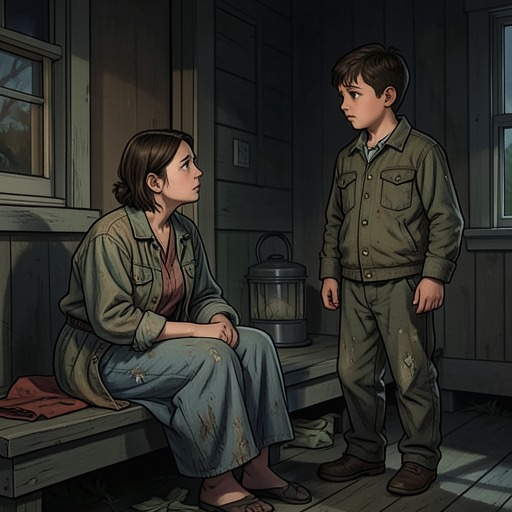
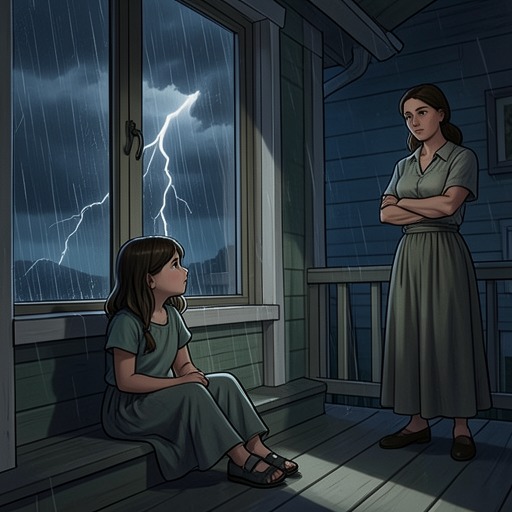
Helen and Duncan learn the truth about their mother
Happiness for BeginnersHelen and Duncan learn the truth about their mother when Grandma GiGi finally explains that, after Nathan died, their mother took painkillers in an attempt to kill herself. The disclosure recasts a family history that Helen and Duncan had understood as abandonment: their mother had been in crisis, and Grandma GiGi had kept the children with her because she believed they were safer there.
Background and Family Crisis
Nathan’s death left their mother frantic. Helen remembers her searching the lake even after Nathan had been found in the water, then waking at night and pacing the house. Two months later, their mother was pregnant. Helen believed she may have been trying to replace Nathan, though she understood that he could not be replaced.
Within a year, Helen’s parents separated. Her father moved to San Diego and remarried, while their mother stayed in Evanston with Helen and Duncan. For two years she tried to raise them alone, but the family’s household and finances deteriorated: bills went unpaid, the water and power were repeatedly shut off, laundry accumulated, and the backyard pool turned green with algae. Helen tried to compensate by folding clothes and making simple meals. Not long after Helen turned thirteen, their mother drove the children to Grandma GiGi’s home and left them there. Helen carried that separation as a story of being forgotten, without knowing the crisis that had shaped it.
Grandma GiGi’s Disclosure
The explanation comes years later, when Grandma GiGi is painting. She stops, puts down her brush, removes her smock, and sits beside Helen on the green sofa, taking her hand. The change in her attention signals that what follows is a memory she has not previously shared.
Grandma GiGi recalls that, on the night in question, Duncan’s crying had worn her down. When Helen asked her to go home and fetch Softie, Grandma GiGi welcomed the break. She drove back and let herself into the house, where she found their mother in bed with Nathan’s teddy bear after she had taken a bottle of painkillers. Grandma GiGi says she found her in time and that their mother went to the hospital. When Grandma GiGi returned at four in the morning, Helen was asleep on the sofa in her clothes, while Duncan was tucked into bed.
Helen names what the account means: their mother had tried to kill herself. Grandma GiGi confirms it, then explains that she found a place where their mother could try to recover. Their mother stayed there for six months. Even after returning, she was too fragile to resume caring for the children. Grandma GiGi persuaded her to sell the house and start again in a small apartment, where only a one-bedroom place was affordable. Their mother spoke continually about getting Helen and Duncan back; Grandma GiGi went along with that hope, but believed the children were better off with her and their mother was better off elsewhere.
What the Truth Changes
Grandma GiGi’s account does not erase the separation or the years Helen and Duncan spent apart from their mother. It changes what the separation signifies. What Helen had experienced as being left behind becomes part of a decision made amid an acute mental-health crisis, followed by a prolonged period in which their mother could not safely resume parenting. Grandma GiGi had withheld the explanation because she believed it was not her story to tell.
The disclosure also reshapes Duncan’s understanding of his childhood. He admits that he had always thought their mother left because he had been a difficult child. Helen answers that, by being difficult, he had saved their mother: his crying was the reason Grandma GiGi went back to the house that night and found her. The painful memory thus acquires a second meaning. Duncan’s childhood behavior, which he had treated as evidence of blame, had led to the intervention that kept their mother alive.
Aftermath and Significance
The revelation reaches both siblings through separate conversations: Grandma GiGi tells Helen what happened, and Helen then tells Duncan. For Helen, it fills a crucial gap in the story of why their mother could not take them back. For Duncan, it directly challenges a long-held belief that he caused her departure. The siblings can now understand the family’s separation not as a simple rejection but as the aftermath of Nathan’s death, their mother’s suicide attempt, and the limits of her recovery.
The event turns silence into a revised family history. Grandma GiGi’s decision not to disclose the attempt had protected a confidence she considered private, but it also left Helen and Duncan to make sense of their mother’s absence without its defining context. Once spoken, the truth does not restore the household they lost; it changes the meaning of the loss and loosens the blame each child had carried.