Helen and Jake's cross-country drive to Wyoming
Happiness for BeginnersHelen’s cross-country drive to Wyoming begins as an attempt to reclaim a life of her own and turns, almost before the car leaves, into an unwelcome journey with Jake. She had meant the Back Country Survival Company course to mark her recovery after the worst year—or six—of her life. Instead, Jake, a friend of her brother Duncan, reveals that he is going to the same course and has been promised a ride. Their trip makes the distance between Boston and the wilderness more than a matter of miles: it is the first sustained test of the boundaries Helen wants to keep and the companionship she has not chosen.
The trip Helen meant to take alone
Helen considers the course a major undertaking: BCSC courses are hard-core, grueling, and sometimes life-threatening. She imagines it as a spiritual journey and a sign that she is beginning to bounce back. Going alone matters to her; Jake’s presence threatens not only her quiet but the sense that this is something she has arranged for herself. Her resistance is sharpened by the feeling that her life is proceeding without her consent again.
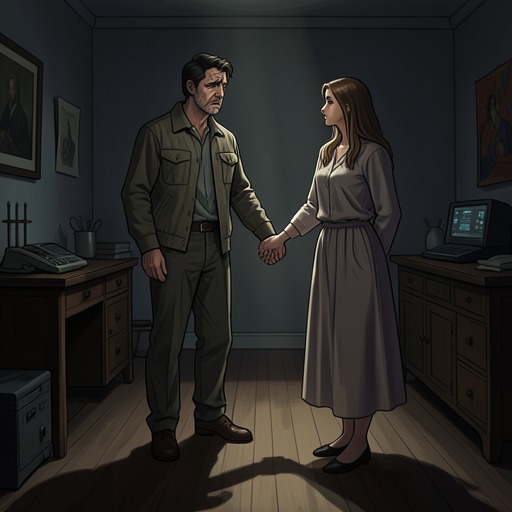
Jake’s expectation of a ride arrives as a surprise. He thanks Helen for it, and she turns back to ask what ride he means. When he explains that he is leaving for Wyoming the next day, she assumes Duncan must have conveyed the details of her plans. Jake says they are headed to the same place and that Duncan told him she would not mind driving him. Helen tells him that the trip is something she is doing alone. Jake points out that the course has twelve participants plus an instructor, but the fact that she will not literally be alone does not answer her objection: she had not invited him.
A reluctant agreement
Helen tries to refuse. Jake offers to stay in the back seat, keep quiet, and leave the music to her; he even jokes about being strapped to the roof rack. His efforts to make himself unobtrusive only make the negotiation harder to dismiss. Helen tells him that she cannot give him a ride and that he will have to find another trip. When he says the booking is non-refundable, she suggests a bus or another solution. He raises hitchhiking, and Helen forbids it in her teacher’s voice. For a moment she thinks she has won; Jake takes her prohibition as permission to ride with her, adding that it is what she insists on.
The exchange establishes the imbalance that will accompany the journey: Helen controls the car and wants distance, while Jake treats the shared plan as settled. Yet his presence is not simply imposed by circumstance. He is prepared to adapt, and Helen’s eventual agreement follows her own concern that he should not hitchhike. The ride starts as a concession rather than an invitation, leaving the two travelers to negotiate what their proximity will mean as they go.
Fifteen hours on the road
The distance from Boston to Evanston is roughly 1,001 miles, a drive Google estimates at fifteen hours and twenty-two minutes. Helen had wanted to leave before sunrise and had arranged for Pickle to stay with Duncan the night before. An early start would also let her spend time with Grandma GiGi, who had raised Helen and Duncan after their mother lost interest in them. Helen describes her grandmother with affection: she wears a bun held by chopsticks, and Helen adores her. The drive therefore carries a family purpose alongside the Wyoming course.
Once they set off, Helen lays out the distance and the late start: it is already 9:11, thanks to Duncan, and she does not expect them to reach Grandma GiGi’s in time for dinner. Jake brings her a cappuccino and is willing to pee in a bottle if that will help get them there on time. His can-do manner and the cheerful morning sunshine soften Helen’s expectation that the drive will be miserable. She had imagined a thousand miles of songless silence while Jake played games on his phone; singing freely is not something she does in front of a stranger or her brother’s friend. Still, she admits to herself that she likes the rest of his plan.
The conversation quickly tests that tentative ease. Jake asks how life is without Helen’s ex-husband, and she chokes violently on her coffee. He takes the cup and grabs the wheel, handling the immediate danger while his blunt question exposes how little privacy a long drive allows. The journey moves between practical cooperation and uncomfortable intimacy: they must share the road even when they have not agreed on how much of themselves to share.
Arrival and the road into the course
The trip proceeds faster than Helen expects. Jake does not want to drive at night because of his new glasses, so he takes the remaining daylight shifts after a rest stop and keeps the car at ninety miles an hour. Once the sun goes down, Helen slows to sixty-five. They arrive at Grandma GiGi’s before nine, ahead of their expectations, and high-five; the celebration ends in an accidental hug. For the first time, their closeness is physical as well as logistical, though the embrace is unplanned.
Grandma GiGi is not there to greet them. Helen searches the garden for the hidden key, and inside they find a note saying that she has gone to book club because Duncan had told her they would be late and miss dinner. The actual early arrival does not undo the small disappointment of finding the house empty. The contrast captures the trip’s uneven rhythm: the travelers can beat their own schedule and still arrive to a plan that has changed without them.
At course check-in, Jake keeps an anonymous distance behind Helen; later, when she goes upstairs with her belongings, he does not watch her leave. At orientation that afternoon, she sits near the back and he takes a seat up front, acting as though they do not know each other. Their attempt to become strangers again is not evidence that the drive meant nothing. It shows instead how sharply Helen distinguishes the reluctant ride from the public, demanding world of the course they have reached together.
From passengers to partners
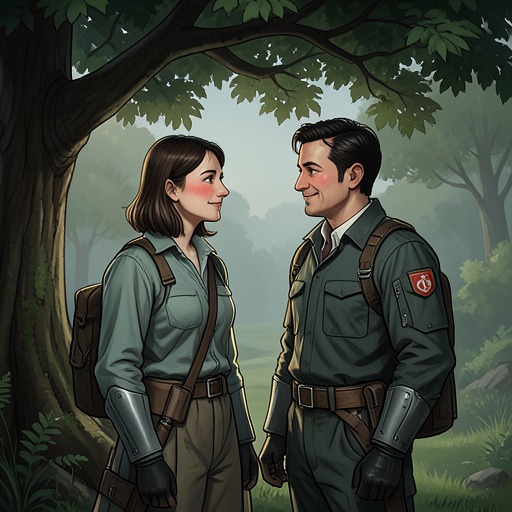
The course gives their shared arrival a longer consequence. Other participants quickly acquire nicknames: the Sisters become Uno and Dosie, Mason becomes Flash, and the quiet Hugh becomes Huey Lewis. Helen is left as Helen—or sometimes misnamed Ellen—and feels that nobody has recognized her well enough to give her an identity within the group. That contrast makes Jake’s connection with her significant beyond the car: he is not merely one more participant in the crowd but someone whose presence is repeatedly tied to her experience of being seen and supported.
Later, Beckett explains that he assigned Jake to Helen because she is headstrong and accident-prone and Jake is the medic; because she is the group’s best map reader and he is nearly blind; and because Helen does not believe in herself while Jake finds a way to believe in her. The team assignment turns the accidental-seeming ride into the start of an enduring practical partnership, without erasing the tension of how it began. The course also demands collective care: when Hugh falls and must be evacuated, Jake says he will splint Hugh’s whole body, while Beckett organizes the group to dismantle pack frames and make a litter. On the final morning, the participants leave the wilderness after a minute of silence and a farewell prayer, a ritual that makes the course feel far removed from Helen’s original idea of a private journey. The drive is the threshold into that shared ordeal: Helen sets out wanting solitude, but the road delivers Jake, and the course repeatedly makes their complementary strengths matter.