Hugh’s Wilderness Accident and Evacuation
Happiness for BeginnersHugh’s Wilderness Accident and Evacuation is the turning point in the BCSC expedition when a disregarded trail-safety rule becomes a severe injury and a collective rescue. Hugh’s fall leaves Helen, despite her uncertainty about first aid, making urgent decisions; the group’s improvised litter then turns a dangerous extraction into a prolonged test of shared endurance.
The Fallen Trees and Hugh’s Fall
The accident begins on a section of trail cluttered with fallen trees. The forest there is sunnier and more open than the surrounding woods, and the dead trunks lie across the path as if some earlier flood or drought had brought them down. The cause is uncertain, but the obstacles are immediate. Beckett has warned the group not to step on fallen logs, explaining that repeated crossings risk putting weight on one that has rotted through. Hugh steps on them anyway. The earlier warnings have become easy to discount, and the group does not stop him before the rule becomes consequential.
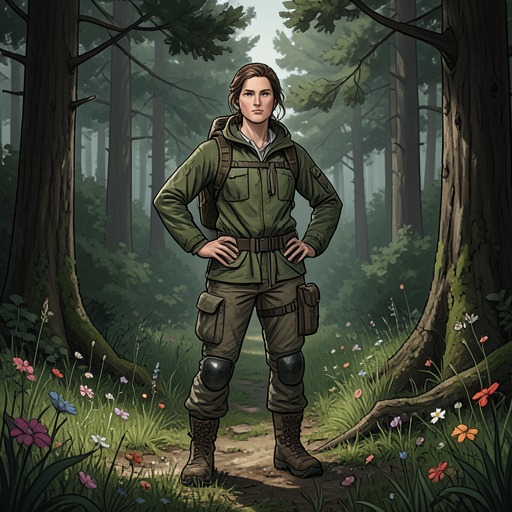
Helen sees the fall unfold: Hugh steps onto another log, its surface crumbles beneath his foot, and he pitches forward across a second trunk that is sound. He screams, then collapses in an inverted V over the log, pinned by his pack. The suddenness of the change—from walking through the woods to a body trapped and badly hurt—leaves the others still with shock. Helen gets her own pack off and tries to remember the first-aid lesson, but freezes over the competing risks of a possible head injury and an injured leg.
Her first concrete decision is to remove Hugh’s pack. As she reaches beneath his hips to undo the hip belt, he wakes and protests. Helen continues, and the pack falls to the ground. She then refuses to leave him folded over the trunk. With two women taking his shoulders and Helen holding his thighs, they count together and flip him onto a clear, flat patch of trail. Hugh screams through the lift and loses consciousness again halfway through it. The rescue begins not with certainty about his injuries, but with the group committing to a necessary action despite uncertainty and pain.
Helen Seeks Help
Hugh’s face has lost its color; his skin is cold and dotted with sweat. Helen recognizes that he is going into shock and asks who will go for help. The others tell her to go. Though she considers carrying only a daypack so she can move faster, she chooses her larger pack in case she gets lost, injured, or encounters a bear. The choice reflects both the danger of the terrain and the limited margin for error in the wilderness.
Her first attempt does not go according to plan. A girl still holds Helen’s hand as she sets off, and Helen reassures her that she will return with help. But the trail soon looks unlike the route Helen remembers from the map. Earlier, discussion of how much Jake was in love with Windy had distracted her, and she now recognizes that the group has been angling down a ravine when the route should have followed a flat, straight stretch. Applying the three-dimensional map-reading skill Beckett taught in class, she sees that the terrain around her does not match the route she should be following. The trail markers are sparse and difficult to spot this far into the wilderness; the group has been going the wrong way for some time.
The navigation error gives the emergency a second dimension. Hugh needs help, but Helen’s departure is not yet a straightforward route to rescuers: she has to interpret the terrain and the map before she can reliably retrace the way. When the group gets back to Hugh, three hours have passed. He is alert and sipping soup the women have made, a fragile sign of steadiness rather than evidence that the danger has passed.
Assessment and an Improvised Litter
Jake goes to work assessing Hugh, cutting away his pants and socks with shears so he can examine the injury. The bruising extends from Hugh’s waist to his knee, and he cannot bend his leg. One leg also appears longer than the other. From these signs, Jake suspects that Hugh may have both a fractured and a dislocated hip, though he is conscious. The distinction matters: the group is no longer simply helping someone who has fallen, but preparing to move a badly injured person over miles of difficult trail.
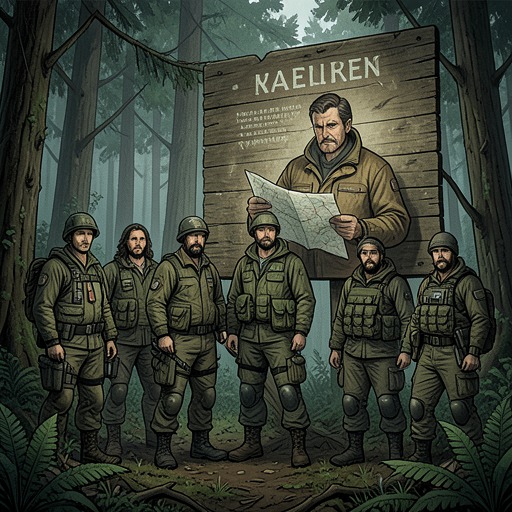
Beckett organizes the evacuation by dividing the rest of the group into two teams. He has three people empty external-frame packs and redistribute their belongings, then dismantles the aluminum frames. Several flat nylon lashings woven around the frames make a supporting surface; Beckett spreads a sleeping bag over it for padding and tests the construction himself. The makeshift litter is a practical answer assembled from equipment the group already carries, not a substitute for professional care. Before lifting, Jake and Mason prepare to move Hugh, while Helen steps between them and takes Hugh’s hand when she reads the terror in his face. Jake uses that moment to call the lift, and Hugh screams before passing out again. They zip him into the sleeping bag for warmth and protection and lash him securely to the frame so he will not slide.
The Carry to the Trailhead
The litter has six lashings around its edges, allowing the carriers to hold the frame with one hand and draw a strap over a shoulder with the other. Beckett demonstrates how to wrap and straighten the straps. The method distributes the load, but it cannot make Hugh light: when the group lifts, Helen’s muscles urge her to set him down. She keeps carrying because the others do and there is no alternative. The extraction will cover three miles, uphill and downhill, with Hugh’s weight shared across the group.
A slick patch left by a summer shower makes the trail especially difficult. The drenched ground slides underfoot, turning each step into a struggle to maintain footing. After a lunch pause, the group reaches a river swollen by the day’s melting snow. The water stands mid-thigh on the men and at Helen’s hip, and its cold current pushes at their legs. They must keep Hugh’s litter high enough to clear the water. The crossing takes twenty minutes; afterward, Helen’s legs are bright red from the cold and both shoulders cramp so intensely that they feel as if they are burning. The physical cost of the evacuation is measured not abstractly but in the strain required to hold one injured person above the river.
The group reaches the trailhead at three in the afternoon. Beckett’s earlier estimate has proved accurate: a brief hope of arriving earlier gives way to the mud and the difficult crossing. Neither the BCSC administrator nor the ambulance has arrived, so Beckett decides that some members should stay with Hugh while the others go ahead to set up camp and make dinner. Jake, the EMT, is assigned to stay, and Beckett asks Helen to remain because Hugh likes her best. Hugh’s teasing qualification—that he likes her better than most—softens the scene without diminishing the seriousness of his condition.
Paramedic Transfer and Significance
When the paramedics arrive, transferring Hugh from the homemade litter to their truck takes a long time. They have to redo the group’s work properly, and Helen stays close even when she is not allowed to touch him. Once Hugh is secured on the professional gurney, she presses close and gives him a small kiss, telling him to be brave. Hugh answers that he will, then directs the same encouragement toward Jake. Helen says she expects Hugh will be out of the hospital before she can visit after the group returns; the exchange offers hope, but does not establish what happens to him afterward.
The episode links an avoidable mistake to the difficult cooperation required to respond to it. Hugh’s decision to step on fallen trunks violates Beckett’s warning, but the accident’s aftermath is not reduced to blame: Helen makes decisions while frightened, Jake assesses the injury, Beckett designs the litter, and the group bears its weight together. Helen’s mistaken route also makes her competence more complicated than simple confidence. She can recognize the terrain from a map and act under pressure, yet distraction and poor trail marking have already helped put the group off course. By the time paramedics take over, the evacuation has exposed both the limits of their wilderness training and what that training, combined with persistence, allows them to do.