Jake’s six-year crush on Helen
Happiness for BeginnersJake’s six-year crush on Helen is a history of desire held at a distance, disclosed only when he can no longer keep its length or cost to himself. His confession reframes their connection: Helen had not known he was there, while he had spent years wanting her and trying to accept that wanting could not become a relationship. By the time he finally speaks, his impending blindness has made the future he imagined feel as if it is disappearing too.
Duration and Secrecy
Jake tells Helen that he has had feelings for her for six years. For much of that time, she did not even know he was in the room; she was also married, leaving him no realistic opening to ask her for coffee. He says he made the best of the situation and was fine, presenting the crush as something he had managed privately rather than pursued.
His account does not describe six years of courtship. Instead, it emphasizes the distance between his sustained attention and Helen’s lack of awareness. During the trip, he says, she was the person he thought about, worried about, and wanted to be near. The contrast makes the duration meaningful: what Helen experiences as a sudden confession has, for Jake, a long history she could not see.
Illness and a Vanishing Future
Jake’s attachment unfolds alongside the discovery that he has an inherited vision disorder that cannot be fixed. He had first canceled the trip because of problems with his eyes; examinations and tests established the diagnosis, and night blindness was one part of it. He describes spending the past year examining the available information and arriving at an irreversible conclusion: all he can do is wait for the light to go out.
That prognosis had altered what he believed he could offer Helen before he told her about his feelings. Jake says that once the diagnosis was certain, he could not breathe or eat, and his whole future seemed to disappear. Becoming a doctor, having children, and learning to scuba dive had all belonged to the life he expected; in the moment of certainty, he felt those possibilities were gone. He places that crisis on the day before Helen arrived at a party with Pickle, tying the beginning of their renewed closeness to a time when his own future had become newly frightening.
The Future He Had Imagined
Jake’s ideas about what might still be worth seeing and doing give concrete shape to the future his diagnosis threatens. His list includes returning to his childhood home, visiting the merry-go-round at a park Grandma GiGi used to take him to, and going to Texas to look through his father’s historic photographs of their relatives. It also includes experiences he has not yet had: scuba diving, driving a race car, and riding the world’s scariest roller coaster.
These wishes sit beside, rather than erase, the ambitions he believes he has lost. His father’s nickname for him is Doc, and Jake explains that his father sees him as the high-achieving, hard-working, valedictorian son he has always intended him to be. The disclosure shows another pressure on Jake’s imagined future: the life he fears losing is bound up with a role his father expects him to fulfill. The evidence does not make that expectation the cause of his silence about Helen, but it clarifies how much of his identity and aspiration is unsettled when he finally speaks.
Confession and Its Stakes
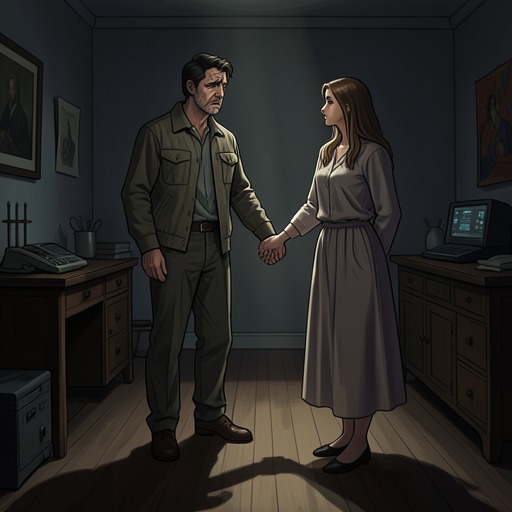
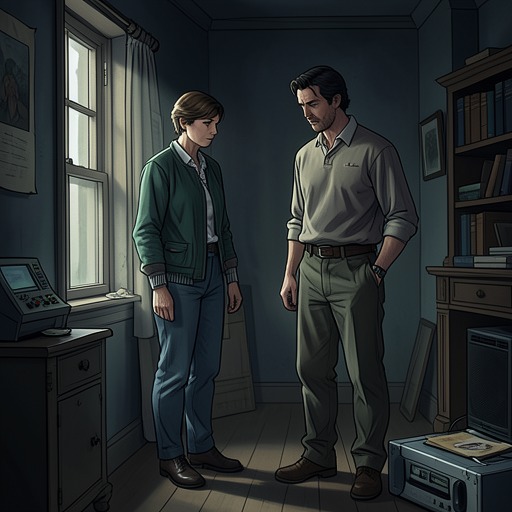
In the elevator conversation, Jake tells Helen that the obstacle is not wanting things he cannot have in general, but wanting her in particular. He describes the attachment as an addiction he cannot break and says that he had not asked her out while she was married. When he explains why he is telling her now, he admits that his vision will go dark within the next few years and that nothing can change that fact. He says he should leave her alone, but cannot, and identifies his reason for coming as the need to be brave and tell her the truth.
The confession therefore joins two forms of belatedness: six years of unspoken love and a diagnosis Jake had carried while imagining a future without light. Its disclosure does not establish what Helen will choose or resolve the uncertainty of his illness. Instead, it changes what she knows about the past and makes Jake’s present decision unmistakable: despite believing that his future has collapsed, he chooses to tell her that he loves her. The elevator drops moments later, physically interrupting the scene at the instant his carefully withheld truth has been spoken.