Mike’s alcoholism and recovery
Happiness for BeginnersMike’s alcoholism is both the cause of his marriage to Helen’s collapse and the thread that keeps them emotionally entangled after divorce. The novel presents recovery not as a clean reversal of the damage, but as a precarious effort that includes a near-relapse, belated honesty, and a plea for reconciliation that comes too late for Helen to receive as the answer she once wanted.
The Marriage and Its Breaking Point
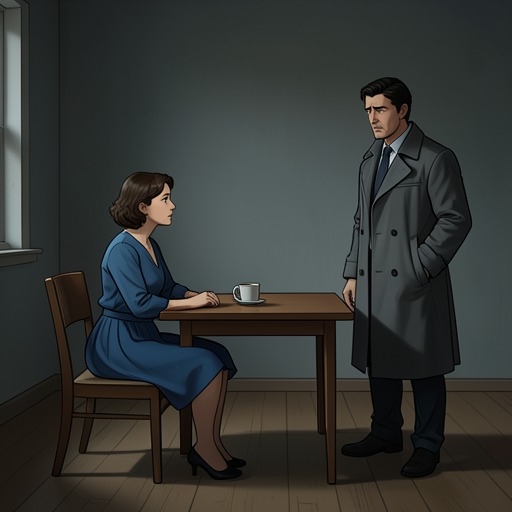
Helen describes the progression of Mike’s drinking as a problem that eventually began to affect their marriage. In recounting the failed relationship, she adopts her Mary Poppins voice, a practiced performance of comforting certainty that she had reserved for talking about the marriage. The contrast between that cheerful manner and the facts she relates makes the account feel contained rather than resolved: Mike became a raging alcoholic, she gave him several chances to pull himself together, and he did not manage it. Her controlled delivery and composed sip of coffee mark the end of the story as she wants to present it, even as the history beneath it remains painful.
The decisive rupture came on a day that should have centered on a pregnancy checkup. Helen went expecting ultrasound images; instead, she learned she was miscarrying. The nurse said her body had shut down production, and the doctor warned that cramping would follow, advising her to find someone to bring tea and hot-water bottles. Mike should have been that person, and should have accompanied her to the appointment, but he had forgotten to show up.
Helen later learned that Mike had been drinking at a business lunch, fooling around at work while tipsy, and then going to happy hour with coworkers. The evening continued into late-night carousing, and he did not get home until after she had fallen asleep. Helen drove herself home from the appointment in a blur; that night, the miscarriage began in earnest. His drinking is therefore tied not simply to a general marital decline but to a particular absence at the moment she needed care, followed by a night in which she faced the physical loss alone.
The next morning, Helen woke Mike and told him what had happened, then ended the marriage. She made the decision in about ten minutes, without tears or visible sorrow; those feelings came later. Mike was hungover and humbled, and he kept his eyes down and nodded rather than arguing. Once they were separated, Helen remained certain that asking him to leave had been right. She felt hollowed out and lost, but believed life with him would have been worse. Their subsequent phone calls and logistical meetings did not become serious attempts by Mike to restore the marriage.
A Near-Relapse and an Unexpected Confession
During Helen’s trip, Mike called in a state of distress because he could not reach his sponsor. His voice trembled as he told her he had taken a swig of a Jack and Coke, his favorite drink. The circumstances mattered: at a party, he had picked up someone else’s half-finished, melted drink from beside the sink and poured it into his mouth, then coughed it back out without swallowing. The call records a frightening return to the immediate presence of alcohol, but also a limit Mike managed to hold: he spat it out.
Helen was with Jake when the call came. She met Jake’s eyes, gave him an apologetic shrug, and then went into the bathroom to speak privately with Mike. When Mike said he felt like hell, Helen reassured him that spitting out the drink was a good thing. The exchange placed her once again in the role of responding to his crisis, despite the end of their marriage. Her compassion did not erase the history between them; it showed that the history still gave his distress a claim on her attention.
The call shifted when Mike told Helen how much he loved hearing her voice. She believed him and expressed sympathy for how hard he was struggling. Then, for the first time in their six years of marriage, Mike began to cry. He cried with an intensity Helen had never heard from him, and did not stop until he was spent. Helen remained in the bathroom for more than an hour. This moment of emotional openness was at once a genuine connection and a destabilizing return to intimacy: after years in which she had not heard him cry, his grief arrived while she was away, trying to become someone new. The timing leaves her wondering why he had opened up then, without establishing that his tears were a deliberate attempt to change her course.
Recovery, Regret, and the Late Appeal
Later, Mike described the separation as a necessary choice at the time and said he was better now, having pulled himself together after a severe wake-up call. Helen pointed out that the wake-up call had been a legal document. The distinction captures the unevenness of his account: he presents recovery as a personal turnaround, while Helen recalls the external consequence that made their separation real.
Mike told her he was like his old self, only better, and could be good for her now. Helen recognized the painful lateness of hearing the words she had long wanted only after it was firmly too late. He also said that he had been dating constantly for the previous six months and that nobody compared with her. His dating history complicates the apparent simplicity of his appeal: he had spent months seeing other people before concluding that Helen remained unmatched, while she was no longer positioned to hear that conclusion as a promise that could undo the marriage’s damage.
What the Story Makes of Recovery
Mike’s recovery is presented through a tension between effort and consequence. In the party episode, he resists swallowing the drink, but the near-relapse is real enough to prompt a call to his former wife when his sponsor is unavailable. In the later conversation, he claims to have pulled himself together and offers Helen the steadiness she once needed. Neither episode cancels the other: the first shows vulnerability in the present, while the second exposes how late his proposed renewal is in relation to the marriage’s breakdown.
The arc also refuses to make Helen’s compassion equivalent to reconciliation. She comforts Mike during a crisis and believes his declaration of love, yet she had already become certain that ending the marriage was right. His tears create a rare moment of mutual tenderness, but do not reverse the day he missed her pregnancy appointment or the drinking that culminated in that absence. Recovery may alter Mike’s account of what he can offer; it cannot restore the moment when Helen needed him to be there.