Nicknames and Belonging
Happiness for BeginnersNicknames and Belonging charts how a wilderness-course group turns names into signs of recognition, teasing, and friendship. For Helen, the difference between being left unnamed and being called Holdup marks a shift from feeling like an outsider to becoming a recognizable part of the group. The nickname does not begin as a compliment: its meaning changes through repetition, Windy’s imaginative reframing, and the group’s willingness to take up the joke together.
Naming as Recognition
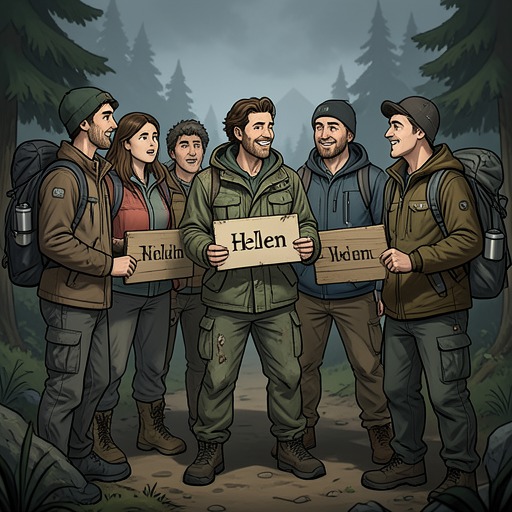
At the BCSC orientation, Helen sees herself as fundamentally separate from the young participants around her. She takes in their similar clothes and appearances and contrasts their apparent sameness with her own age, divorce, and distinctive appearance. Her expectation that the other students will be shallow intensifies the sense that there are only two categories in the room: everybody else and Helen. That early distance gives social recognition particular weight. A nickname can suggest that others have noticed an individual, while having no nickname can feel like evidence that nobody has noticed at all.
As the course continues, names begin to mark the group’s internal relationships. Windy becomes Heartbreaker, or HB, because the boys have a running system of points for sitting near her, speaking with her, or making physical contact. The boys call out the scores aloud; Windy finds the game mildly funny and does not seem especially concerned by it. The nickname and its accompanying points make her a focus of group banter, though this attention differs from the more reciprocal recognition Helen later receives.
Other labels emerge from repeated habits or recognizable roles. The Sisters become Uno and Dosie; the strongest cook becomes Cookie; Mason, who hikes too fast for the rest of the group, becomes Flash. The large men are called Hound Dog, Caveman, and Vegas, while Hugh, usually quiet except when speaking with Helen, becomes Huey Lewis. These names are not all equally intimate or flattering. Their common feature is that they distinguish people within the group: each label attaches a person to a shared observation or joke.
Helen’s Exclusion and First Nickname
Helen notices that everyone seems to have acquired a nickname except her. She is still called Helen, or sometimes Ellen, a mistake that sharpens rather than resolves her sense of being overlooked. To her, a nickname should indicate that other people know something about a person; it gives that person an identity the group recognizes. By contrast, being left without one feels like the opposite of being known. She imagines that even if a hawk carried her away, nobody might notice.
Rather than continually feeding that grievance, Helen remembers Windy’s observation that the things a person thinks about shape what the person goes on thinking about. She decides to focus on the wilderness instead. A waterfall, elk scat by a stream, a salmon leaping out of a creek, an eight-colored sunset, and the gradual point at which her dirty face no longer feels dirty give her attention somewhere else to rest. This does not immediately give her a place among the students, but it changes how she responds to feeling excluded.
Her nickname arrives during the exhausting three-day push toward Painted Meadow, after Hugh has been evacuated. Tired and demoralized, Helen repeatedly stops to adjust her boot, pack, ponytail, or hat. Beckett, hiking at the back, asks what the holdup is whenever she slows down. By midday, Holdup has become her name; Beckett calls it out in front of the others, and the group takes it up. The boys approach her to repeat it, so the recognition she had wanted arrives first as a joke at her expense. Helen gets a nickname, but not the one she would have chosen.
Reframing Holdup
Windy offers Helen a way to reinterpret the name: Holdup could sound like a tough-guy demand rather than a complaint about delay. She accompanies that suggestion with imaginary pistols, and the gesture turns the nickname into a performance. From then on, Windy does not say Holdup without making finger guns. Sometimes she imitates a gunslinger calling for Holdup; sometimes she points her imaginary weapons at someone while asking for her. What changes is not the word itself but the manner in which it is used and the role it invites Helen to inhabit.
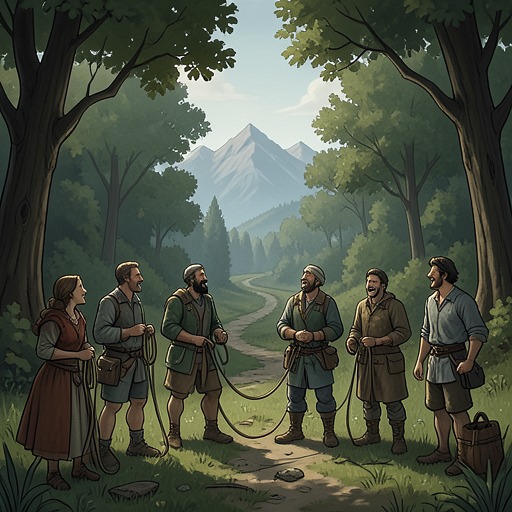
The group gradually joins in. Before they reach Painted Meadow, Helen has become its Annie Oakley: dinner, bear-hanging, slow mornings, and a steep climb all provide occasions for Old West jokes. Beckett, who first attached the nickname to her repeated stops, praises her progress up the steep trail by calling on her to use her spurs. Vegas greets her with finger guns; Caveman adds a two-fingered shooting gesture; Jake tips an imaginary ten-gallon hat. The gestures make the name a shared bit of play, and the jokes now accompany Helen’s contributions as well as her delays.
The change is not that Holdup ceases to refer to the original complaint. Instead, that complaint becomes material the group can reuse affectionately, with Windy’s reframing helping Helen participate in the joke rather than simply endure it. The nickname gathers new associations as Helen cooks, helps with the bear hang, and climbs without stopping. Its repeated use makes her recognizable, while the shifting situations prevent it from remaining only a verdict on her slowness.
Friendship, Change, and Return
The course also loosens Helen’s assumption that a nickname must have one profound or consistent explanation. In a conversation with Jake about the names people use, she concludes that almost any word—or even a non-word—can become a nickname for almost any reason. The labels’ meanings matter, but not because they form a tidy system: they are made through shared use. For Helen, accepting their silliness becomes part of understanding what they do socially.
That understanding leads her to think about Duncan and Jake. She sees their goofy names as substitutes for friend and feels grateful that the two men have each other. When she tells Jake that Duncan is lucky to have him, Jake replies that he is the luckier one and points a finger like a pistol at her. The gesture links their exchange to the group’s Holdup joke, while the words disclose a personal affection that is not merely another nickname. A familiar comic sign can thus carry different weight in a particular relationship.
The group’s recognition of Helen becomes especially visible during the Solos. After Helen’s group makes it back first, Beckett praises the group and singles out Calamity Jane; Helen answers by raising her finger guns and miming smoke from their barrels. The response depends on a shared vocabulary the group has built around her. Later, the course’s certificate vote asks students to consider leadership, compassion, commitment, and virtue, and Beckett urges them to notice how their hiking companions have changed since arriving. The emphasis on observing one another’s development gives a more serious counterpart to the casual nicknames: belonging is also expressed through attention to what people do.
On the final morning, the participants hold a minute of silence at sunrise and join hands for Beckett’s farewell prayer. By then, the wilderness group is leaving together, with the rituals and names formed during the course behind them. Holdup began as a public notice of the delay Helen caused; through repeated play and shared experience, it became evidence that she was known. The names do not erase the participants’ differences. They make those differences available to the group as material for recognition, teasing, and, at their best, friendship.