No Hiking at Night
Happiness for BeginnersNo Hiking at Night is a practical safety constraint in the BCSC wilderness course, where darkness turns ordinary movement and rescue into serious risks. The rule is voiced by Jake as reassurance, but the story gives it sharper meaning through his concealed visual impairment and a later decision to postpone action until daylight.
A rule within a high-risk course
The course is presented as unusually hazardous: BCSC is known for steep slopes, rocky routes, and remote locations, and Helen has signed waivers covering dangers including bear attacks, avalanches, hypothermia, and even fatal diarrhea. Against that background, Jake states the rule plainly: “We don’t hike at night. I’ll be fine.” The first sentence establishes a limit on travel; the reassurance that follows makes the limit personal as well as procedural.
The rule is not presented as a complete account of BCSC’s safety policy. Its clearest evidence is Jake’s statement and the group’s later decision not to venture into darkness to locate hikers who are off the marked trail. Together, those moments show the restriction operating as a judgment about conditions and uncertainty, not merely as a slogan.
Jake’s sight and the reassurance
Before Jake reveals the full nature of his condition, Helen asks whether darkness contributed to an incident involving a branch and whether his night blindness affected what happened. Jake says he slipped, then asks her not to mention his night blindness to anyone. He explains that they are strangers, so she could not possibly know. His appeal to the rule follows this guarded exchange: he insists that they do not hike at night and that he will be fine.
Helen does not share his confidence. She feels anxious at the prospect of him not being fine, even while their relationship is strained and he has disrupted her trip. Later, Jake explains that he canceled and then rejoined the trip after learning that he has an inherited vision disorder that cannot be fixed. He identifies it as retinitis pigmentosa and says that, over the next few years, he will lose his sight. That disclosure gives the earlier exchange added weight: his assurance came from someone whose ability to see in dim conditions was already affected, though Helen did not yet know the full diagnosis.
Darkness and the limits of rescue
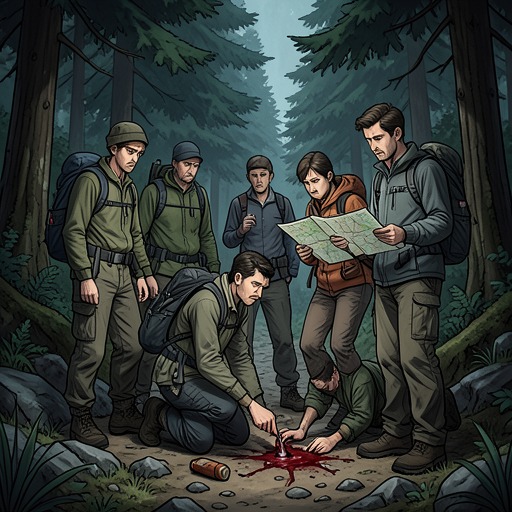
The restriction also shapes a group decision after hikers are lost. Beckett judges that it is too dark to search because they are off the trail and their location is unknown; he says he would consider going if they were on the trail. He adds that an evacuation cannot begin until morning and that an hour or so will not make a difference. The scene distinguishes the risks of following a known route from those of moving blindly through unfamiliar terrain after dark.
Helen knows where the lost group is but does not say so, and she recognizes the conflict between protecting Jake and helping Hugh. The rule therefore belongs to a wider moment of uncertainty: darkness limits what the group can safely do, while withheld knowledge complicates the choice of what to do next. Its significance lies in that double pressure. It offers a clear boundary against night travel, but it cannot remove the dangers that remain when people are already lost, or settle the competing responsibilities surrounding them.