Pickle
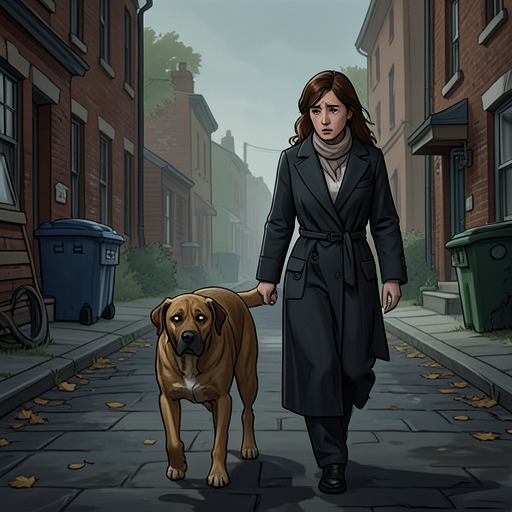
Happiness for BeginnersPickle is Helen's traumatized, defensively aggressive dog, a difficult companion whose death exposes both the depth of Helen's attachment to her and an unexpected tenderness between Helen and Duncan. Helen's descriptions of Pickle hold two truths at once: she can call her the worst pet in the world, yet still call her a favorite. Duncan, who secretly takes Pickle home from the vet, discovers his own fierce affection for the dog—and then has to tell Helen that she is dead.
Identity and Characterization
Pickle is Helen's dog, described in the book's character framing as carrying trauma and responding with defensive aggression. The available scenes do not detail the circumstances of that trauma or show particular episodes of aggression, but they establish that Pickle is not an easy or uncomplicated pet. That difficulty is part of the relationship rather than a reason Helen's attachment is shallow: she can call Pickle a horrible dog and still regard her as her very favorite.
Pickle's characterization also comes through in the way other people account for her. Duncan's affectionate description of her as a little rat-faced pooch does not erase her difficult reputation; it reveals that he has formed a bond with the same unruly animal Helen knows. Pickle is therefore more than a symbol of Helen's affection. The practical demands of looking after her shape other people's decisions, while the particulars of her behavior and personality matter to those who care for her.
Helen's Attachment
During the wilderness trip, Helen thinks of Pickle as one possible figure she might emulate, alongside Chuck Norris. She rejects the idea that she needs to become either of them, instead imagining that she could learn to be happy and perhaps let Jake join her. The brief comparison does not make Pickle a model of uncomplicated happiness; it shows how closely the dog is woven into Helen's private vocabulary for toughness and self-reinvention.
After the trip, Helen tells Windy that she expects to keep in touch with only one person from the group besides Jake. Windy offers to be her personal Pickle consultant. The offer turns Pickle into a practical link between the two women, not merely a subject of conversation: Helen's ongoing care for her is a relationship Windy can help sustain. Pickle consequently remains present in Helen's life even when absent from the wilderness journey itself.
Duncan's Care for Pickle
Pickle also shapes the choices Duncan makes while Helen is away. When Jake explains that Duncan had considered joining him as a wingman, he adds that Duncan was out of shape and that nobody else would have been available to watch Pickle. Duncan had apparently planned to be an exceptionally good dog-sitter. His responsibility for her is not incidental: it keeps him at home and gives him a role in caring for someone important to Helen.
Duncan later admits that he checked Pickle out of the veterinary clinic after Helen had checked her in. He did not want her to spend a month in a cage and wanted to bring her home, teach her tricks, and take good care of her as Helen had asked. His intentions were loving, but acting on them without Helen's knowledge meant that she believed Pickle was still at the clinic. Duncan describes their time together with small, concrete details: he bought her a jangly collar tag with her name in rhinestones, she ate his copy of Catcher in the Rye, and he taught her to shake. Helen corrects him that Pickle already knew the trick. The correction punctures his claim to have taught her something new, but not his account of their companionship.
Duncan insists that they were pals and that Pickle was happy with him. He says he came home one day to find her panting. His account makes clear that his care was affectionate, but it does not establish that taking her home caused her death; the narrative instead centers the terrible gap between his hopes for her and what happened afterward.
Illness, Death, and Disclosure
When Duncan finally tells Helen why he has come to speak with her, he blurts out that Pickle is dead. Helen initially insists that he must mean her dog is at the veterinary clinic, because she had checked her in. Duncan explains that she was not there: he had checked her out. His disclosure overturns Helen's understanding of where Pickle had been and reveals that Duncan, rather than the clinic, had been caring for her.
Duncan says Pickle's condition was lethal if it was not caught within an hour. The supplied account does not name the condition, but it establishes the narrowness of the window and the irreversibility of the outcome. Helen briefly resists the certainty of the news, wondering whether Pickle might only be unconscious with a very slow heartbeat. Duncan answers that the dog was unmistakably dead when he placed her in the bag. The confirmation ends the possibility that the loss is a misunderstanding: Pickle, whom Helen calls both the worst pet and her favorite, is gone.
Shared Grief and Narrative Significance
Helen first reacts to Duncan's confession with anger and disbelief, but his tears change the meaning of the conversation. He tells her that he loved Pickle; Helen recognizes that he means it, steps close, and hugs him. Her response does not undo his decision to take Pickle from the clinic or remove the pain of the loss. It acknowledges the affection behind his actions, allowing the siblings to meet in grief rather than remain on opposite sides of his mistake.
Helen describes the moment as the first time in what feels like their whole lives that she and Duncan have something good in common. Pickle's death is therefore both an individual loss and a turning point in their relationship: the dog they each loved gives them a shared experience that their previous conflicts had not provided. The ordinary details of Duncan's care—the rhinestone tag, the ruined book, the shake trick—make that bond specific, while Helen's final certainty that Pickle was her favorite preserves the contradictions at its center. Pickle is remembered as difficult and beloved, and her absence brings her surviving family closer.