
The City Search
Harold and the Purple CrayonHarold answers the failure to find his bedroom with ever more windows and buildings, only to discover that greater quantity does not provide recognition.
increasing Bearing strength in each event
 decreasing
Bearing strength in each eventdecreasingAn Empty View
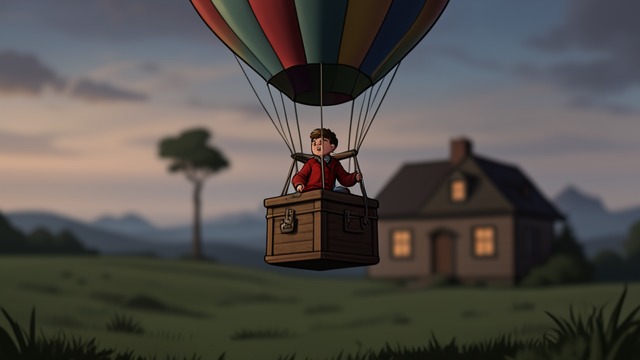
No House in Sight
A view without a destination
From the balloon, Harold has a fine view but cannot see his window. He cannot even see a house, so the height that rescued him does not solve the problem that brought him up the mountain.
Supplying a scene
Harold makes a house with windows and lands the balloon on the grass in its front yard. He creates a new place to search, but its windows still do not match his own.
More Windows
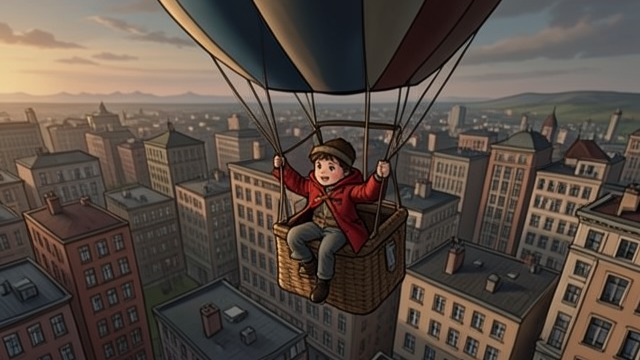
Multiplying Possibilities
Repetition as a strategy
None of the house's windows is Harold's, and he tries to think where his window ought to be. He answers the uncertainty by making some more windows.
Scale increases
One building grows into lots of buildings and then a whole city full of windows. The search becomes more impressive in scale, but each added possibility makes recognition no easier.
The Policeman's Direction
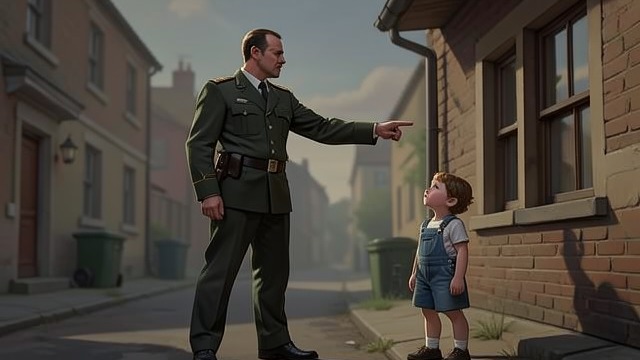
Asking for Help
Acknowledging uncertainty
When no window seems to be his, Harold cannot think where it might be and decides to ask a policeman. The question marks a shift from solitary drawing toward seeking external guidance.
Help without revelation
The policeman points the way Harold was already going anyway, and Harold thanks him. The exchange is courteous but does not solve the search; the decisive orientation will come from Harold's own remembered clue.
After Harold is safe in the balloon
After Harold lands by the house
Late in the search, after Harold cannot identify a window
