
Harold's Growing Disorientation
Harold and the Purple CrayonHarold moves from confidence in a straight route to uncertainty in an expanding city before recovering orientation through a remembered relationship.
increasing Bearing strength in each event
 decreasing
Bearing strength in each eventdecreasingConfidence in a Straight Line
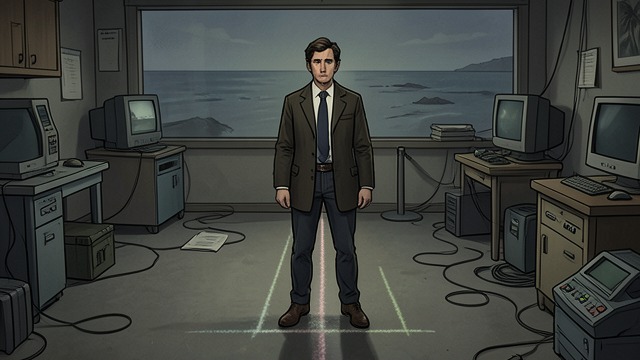
The Wish Not to Get Lost
A clear intention
Harold makes a long, straight path so that he will not get lost. The line represents a belief that the right route can protect him from uncertainty.
The first doubt
The path does not seem to take him anywhere. Harold's confidence gives way to dissatisfaction, and he leaves the line in search of a shortcut rather than treating it as reliable guidance.
A Landscape Without Bearings
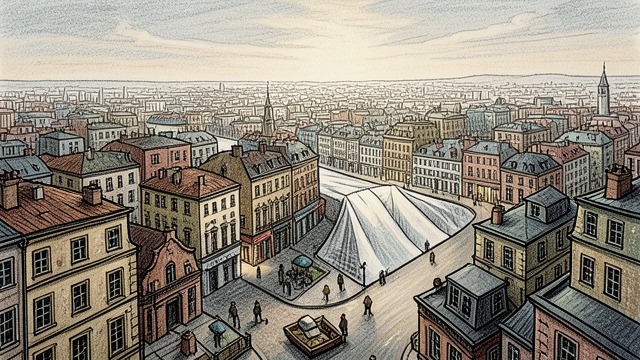
Uncertainty Multiplies
No view of home
The balloon offers a fine view but no house, and the house Harold then makes contains no recognizable bedroom window. The scenes provide possibilities without confirming where Harold is.
An expanding puzzle
He creates more windows and a whole city, yet none resolves his uncertainty. Harold's disorientation becomes sharper as his constructed world grows larger and less distinguishable.
Remembering an Anchor
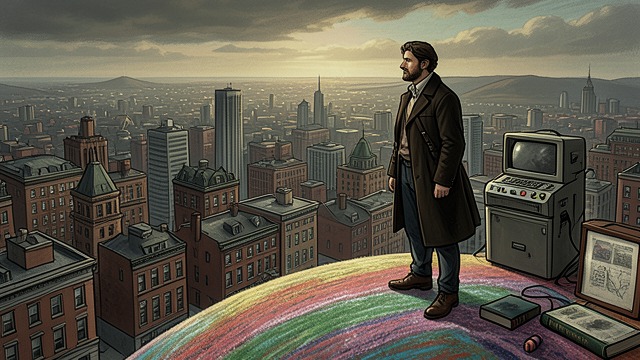
A Familiar Relation Returns
Recalling rather than adding
After the policeman points the way he was already going, Harold walks wishing he were in his room. Then he remembers the relation between his window and the Moon.
Orientation restored
That recollection gives him the answer that the city could not. Harold makes a bed and goes to sleep, ending the disorientation with a return to a personal landmark.
At the start of the outing
After the mountain fall, while Harold searches from the city
Late in the story, after Harold walks with the Moon
