
The Limits of Control
Harold and the Purple CrayonHarold's plans to prevent getting lost and to see farther encounter a world that resists complete control, prompting flexible rather than perfect solutions.
increasing Bearing strength in each event
 decreasing
Bearing strength in each eventdecreasingPlanning Against Lostness
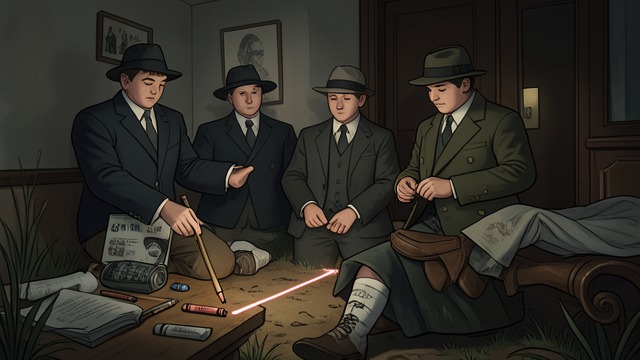
The Promise of a Straight Route
A preventative plan
Harold draws a long straight path so he will not get lost. The plan assumes that a simple line can keep the journey orderly.
Control does not ensure progress
The path does not seem to get him anywhere. Harold must accept that a neat plan can fail to provide either movement or certainty.
The View That Fails
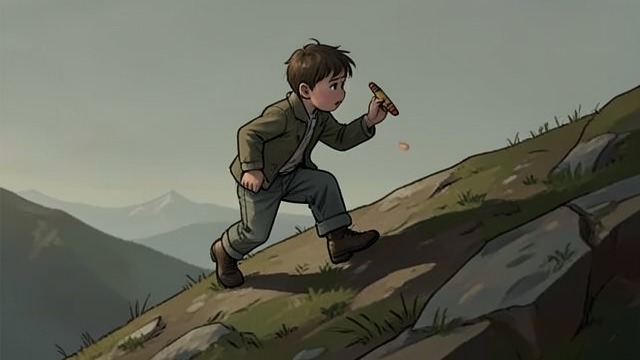
A Plan Meets an Empty Edge
Seeking comprehensive sight
Harold makes a mountain because height should let him see farther and perhaps reveal his bedroom window. His strategy aims to overcome uncertainty through a superior vantage.
The world exceeds expectation
He slips where there is no other side and falls in thin air. The scene refuses the stable landscape his plan presupposed, forcing Harold to focus on immediate survival.
Living with an Imperfect Guide
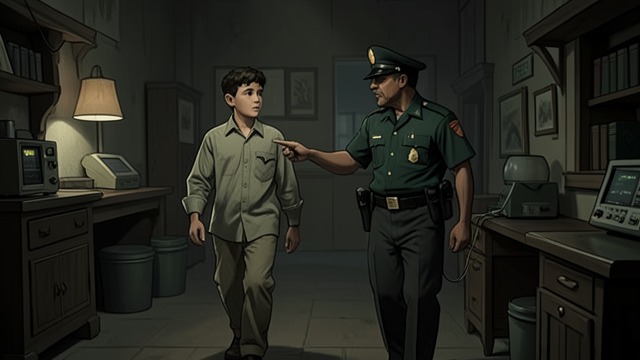
Flexibility over Certainty
Guidance is limited
The policeman points Harold in the direction he was already going. The encounter offers politeness and movement but not a complete explanation of where his room is.
An adequate solution emerges
Harold later remembers the window's relation to the Moon and uses that clue to finish the journey. The resolution accepts a practical, familiar guide rather than requiring total command of the whole world.
At the beginning, before Harold leaves the path
At the mountain top, when Harold looks down
Near the ending, after the policeman gives directions
