
The Conflict Between Scale and Recognition
Harold and the Purple CrayonHarold repeatedly enlarges his solutions, yet the story's central problem is resolved only when he recognizes a small, familiar relation.
increasing Bearing strength in each event
 decreasing
Bearing strength in each eventdecreasingBigger Than a Hill

Escalating the Viewpoint
A larger instrument
Harold decides a hill should become a mountain because height seems to promise a wider view. He increases the scale of the landscape in pursuit of information.
The strategy backfires
The mountain's absent far side produces a fall instead of a clear view. A larger solution has increased the danger without giving Harold the knowledge he wanted.
A City Built from Uncertainty

More Does Not Mean Clearer
Adding possibilities
Harold responds to the wrong windows by drawing more of them and then whole buildings. His strategy assumes that enough candidates will eventually include the right one.
Recognition still fails
Even a whole city does not identify his bedroom. The conflict shifts from lack of places to search toward lack of a meaningful way to distinguish among them.
A Small Clue Resolves It
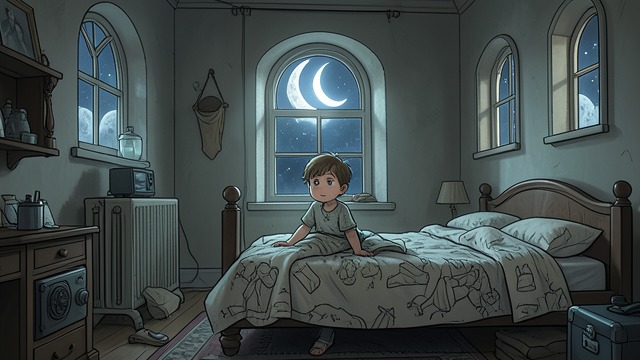
Relation Over Quantity
A remembered pattern
Harold remembers that the bedroom window is around the Moon. This clue is smaller than the city he has created, but it carries personal meaning that the many windows did not.
The search closes
Once Harold recalls the relation, he makes a bed and goes to sleep. The conflict between scale and recognition resolves in favor of a remembered connection rather than further expansion.
After the picnic, when Harold wants to see farther
After Harold lands beside his first house
Near the ending, after Harold's conversation with the policeman
