
From Invention to Recognition
Harold and the Purple CrayonHarold's journey shifts from making new features in response to every problem toward recognizing a relationship that was already meaningful.
increasing Bearing strength in each event
 decreasing
Bearing strength in each eventdecreasingMaking Each Next Thing
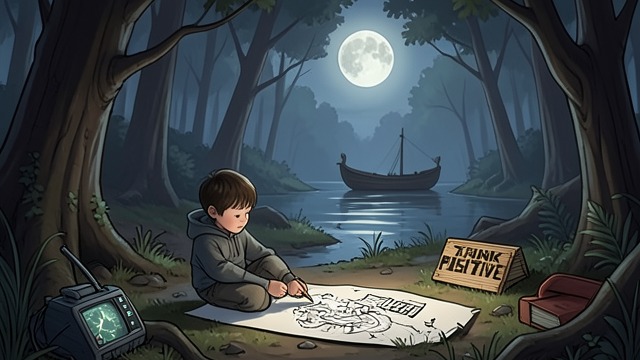
A World Built Step by Step
Immediate invention
Harold draws the path, forest, and boat as each situation calls for something new. The story's early movement depends on adding a practical element whenever the current one proves inadequate.
Action opens further scenes
A shortcut reaches a forest, fear gives way to an ocean, and the ocean requires a boat. Invention sustains movement, though it does not yet supply a final sense of direction.
Adding More Possibilities
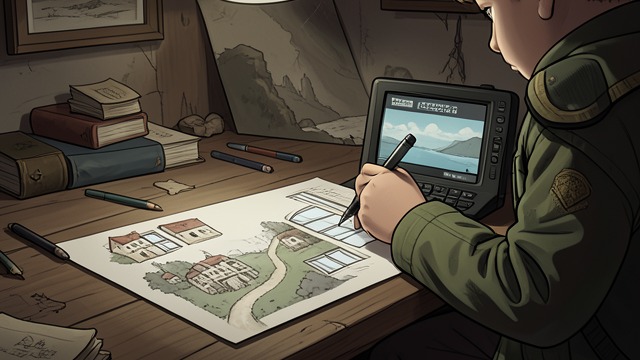
The Limits of Addition
A repeated response
When no window is his, Harold makes more windows and more buildings. He applies the established method of answering insufficiency with another construction.
Accumulation stalls
Even the whole city does not solve the problem. The failure shows that the missing element is not simply another window or building but a way to recognize the right one.
Recognizing What Was There

Memory Completes the Search
A connection replaces expansion
Harold recalls that his bedroom window is around the Moon. The solution arrives through recognition of a relation, not by drawing still more possible locations.
A quieter use of invention
He makes a bed and sleeps. The final act combines memory with drawing, but its purpose is closure: Harold need not keep enlarging the world once he understands where home is.
Across the early episodes, from the path to the boat
After Harold makes his first house and begins expanding the city
At the ending, after Harold remembers the Moon
