
Harold's Need for Home
Harold and the Purple CrayonHarold's increasingly explicit longing for his bedroom links the mountain climb, the failed urban search, and his eventual return to rest.
increasing Bearing strength in each event
 decreasing
Bearing strength in each eventdecreasingHome in the Distance
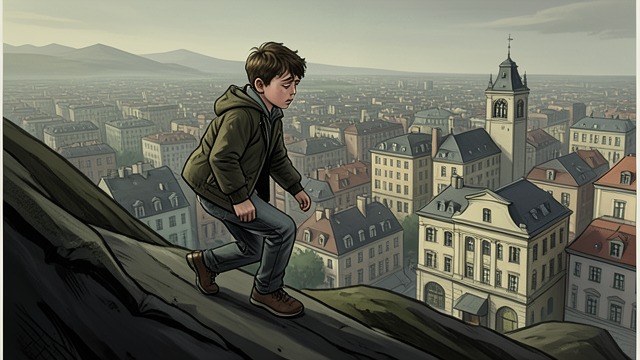
Hoping to See His Room
A personal destination
Harold hopes that climbing high enough will let him see his bedroom window. The window gives his wandering a personal destination beyond simply reaching a viewpoint.
Weariness becomes visible
He is tired and feels he ought to be getting to bed. The desire for home is therefore tied to bodily fatigue as much as to curiosity about where he is.
Home Among Unfamiliar Windows
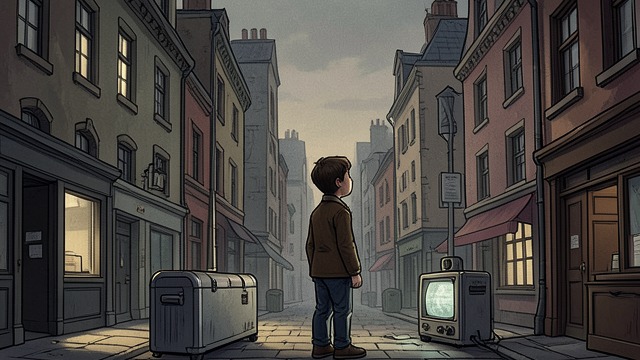
Searching Without Recognition
A substitute for home
Harold creates a house and then more buildings because he cannot find his window. These constructions offer the shape of inhabited places without the personal familiarity he needs.
Longing persists
The whole city remains unable to identify his room. Harold's search shows that making a home-like setting is not the same as recognizing his own home.
The Bedroom Recovered
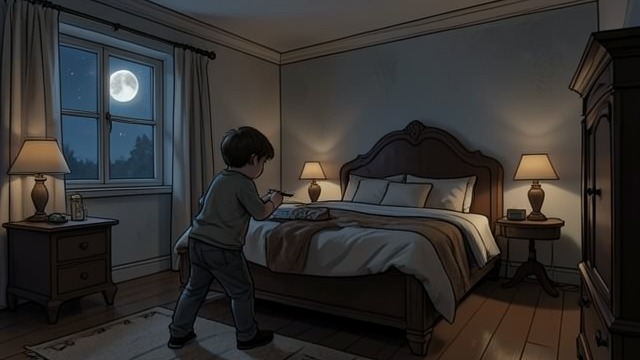
Returning to Rest
Recognition replaces distance
Harold remembers the window's place around the Moon. The memory reconnects the large, unfamiliar journey to the bedroom he had wanted to see from the mountain.
Shelter and sleep
He makes a bed, gets into it, and draws up the covers. Home is restored not by a literal account of travel but by his ability to place his room in relation to a familiar landmark.
During the mountain climb, after the picnic
After Harold creates the city
At the ending, after Harold remembers the window
