Harold falls into the sea and escapes by boat
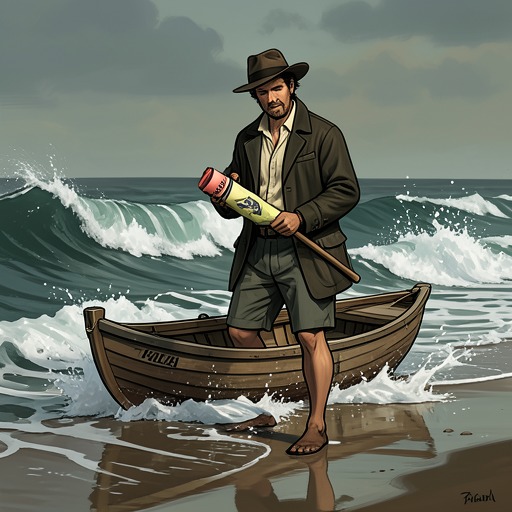
Harold and the Purple CrayonHarold falls into the sea and escapes by boat is the abrupt turn from the forest episode into an ocean voyage: after Dragon frightens Harold, he finds himself over his head in the water and must act quickly to get free. A trim little boat gives him a way out, but the rescue does not bring him home. Moon sails alongside him, and his eventual landing leaves him wondering where he is.
From the Forest to the Sea
Before the sea, Harold had put a frightening dragon beneath the apple tree to guard the apples. The creature is not merely threatening to some imagined intruder: it frightens Harold himself. He backs away, and the hand holding The purple crayon shakes. That physical reaction marks a change in his control of the scene. The instrument with which he has been shaping his surroundings is still in his hand, but the frightening image he has made now affects him in return.
The transition that follows is sudden. Harold realizes what is happening, only for the narration to disclose that he is already over his head in an ocean. It does not explain the steps between the forest and the water, or spell out exactly what Harold has realized. Instead, the immediate fact of danger takes precedence over explanation. The change in setting is therefore also a change in the problem before him: he has moved from retreating from a creature on land to facing a situation in which he must find a way to stay afloat and escape.
The Escape by Boat
Harold responds by thinking fast. The speed of the response matters: rather than lingering over how he got into the ocean, the episode moves directly from his recognition of the crisis to a practical solution. In no time, he is climbing aboard a trim little boat. The boat is described as small and neat, but its significance lies in what it enables him to do: leave the immediate danger and set a course across the water.
He quickly sets sail. The sequence gives Harold’s escape a clear progression—recognition, boarding, departure—without supplying details about navigation or the distance traveled. The boat does not take him straight to a known destination; it makes continued movement possible. In this respect, the escape resolves the urgent danger of being in the water but leaves Harold’s larger uncertainty intact. He is no longer over his head in the ocean, yet he does not know where the voyage will bring him.
Moon sails along with him. Its presence carries a familiar companion into a very different setting: after the sudden shift from the guarded apple tree to open water, the moon moves beside Harold as he travels. The text does not describe Moon directing the boat or explaining the route. Its stated role is accompaniment, a steady presence in a passage otherwise marked by an unexpected change of place and an unknown destination.
Landfall and Its Consequence
After he has sailed long enough, Harold makes land without much trouble. The calm ease of the landing contrasts with the suddenness of his arrival in the ocean. Yet reaching shore does not answer the question of where he is. He steps onto a beach wondering where he was, so the episode ends with a change in the immediate stakes rather than a return to certainty: the waterborne danger has passed, but Harold remains disoriented.
The landing also carries the voyage forward instead of closing it as a self-contained rescue. The boat has carried Harold away from danger, and the beach offers solid ground, but no familiar place or destination is identified here. The episode’s outcome is consequently mixed: Harold has escaped the sea and reached land, while the question of his location remains open. That unresolved arrival sets his continued search in motion and makes the boat’s success only one stage in his larger effort to find his way.