Albus Dumbledore
Harry Potter and the Chamber of SecretsAlbus Dumbledore, the headmaster of Hogwarts School of Witchcraft and Wizardry, stands as the story's moral and intellectual anchor. In a year shadowed by the reopening of the Chamber of Secrets, he is the one figure who never wavers in his trust of Harry Potter, even when the evidence and public opinion turn against the boy. His calm authority, his penetrating insight, and his unshakeable belief that "it is our choices, Harry, that show what we truly are, far more than our abilities" define both his character and the novel's central theme. Dumbledore is not merely a powerful wizard; he is the embodiment of wisdom, justice, and the protective force that holds Hogwarts together in its darkest hour.
Identity and Role at Hogwarts
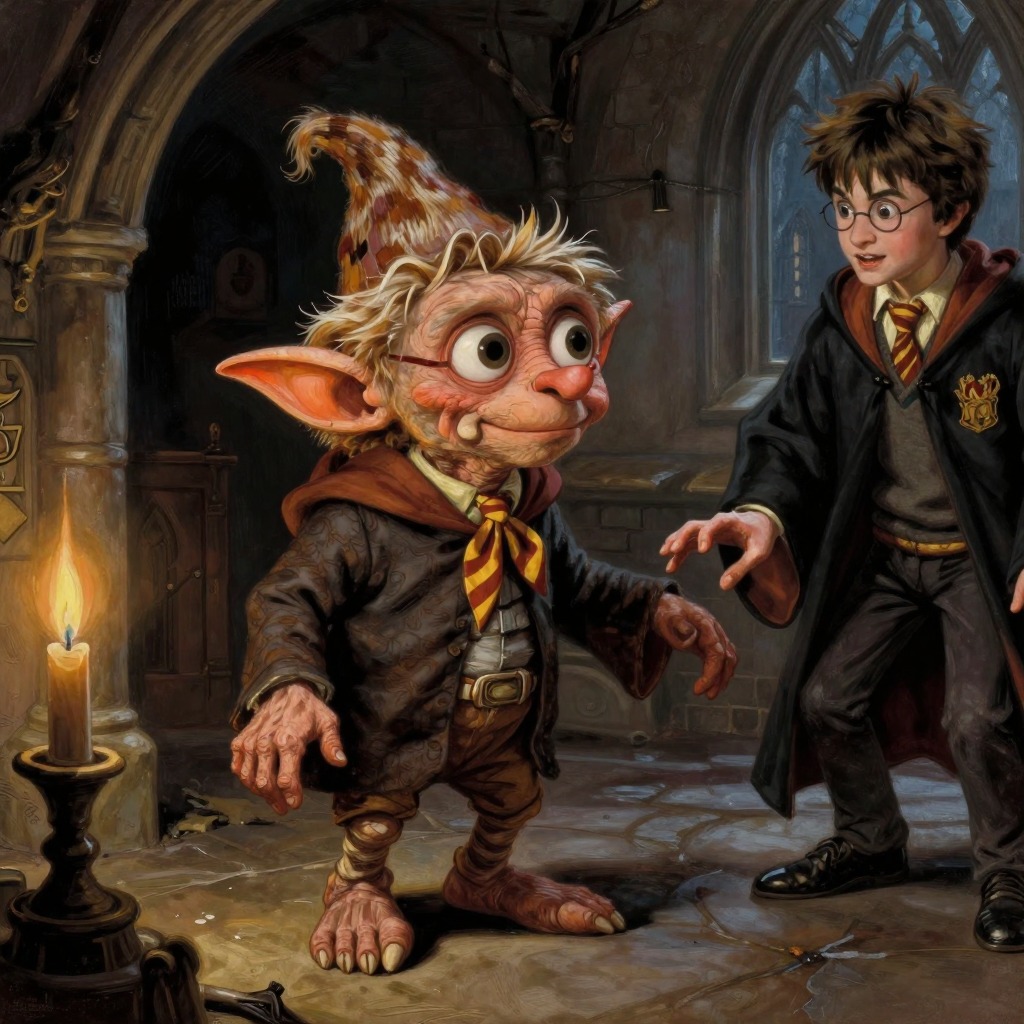
Dumbledore is introduced as the greatest headmaster Hogwarts has ever had, a reputation that even the house-elf Dobby acknowledges, noting that "Albus Dumbledore is the greatest headmaster Hogwarts has ever had. Dobby knows it, sir. Dobby has heard Dumbledore's powers rival those of He-Who-Must-Not-Be-Named at the height of his strength." He is a figure of immense magical power and moral authority, yet he is also approachable and kind, with a twinkle in his eye and a fondness for lemon drops and carols. His office, a circular room filled with whirring silver instruments and portraits of sleeping headmasters, reflects his wisdom and his connection to the school's history. He is the keeper of Hogwarts' secrets, including the truth about the Chamber of Secrets and the identity of Tom Riddle, whom he taught fifty years ago.
The Guardian of Truth and Justice
Throughout the crisis, Dumbledore consistently defends Harry and seeks the truth. When Mrs. Norris is found Petrified, he immediately examines her and declares, "She has been Petrified," while firmly dismissing Filch's accusation: "No second year could have done this. It would take Dark Magic of the most advanced." He later tells Snape, "Innocent until proven guilty, Severus," establishing a principle of fairness that contrasts with the suspicion and hysteria around him. When Harry is brought before him after the attack on Justin Finch-Fletchley and Nearly Headless Nick, Dumbledore listens without judgment and asks gently, "I must ask you, Harry, whether there is anything you'd like to tell me. Anything at all." Even when Harry lies, Dumbledore does not press, trusting that the boy will confide when ready. His faith is rewarded when Harry, Ron, and Ginny emerge from the Chamber, and Dumbledore's relief is palpable as he welcomes them back.
The Suspension and the Promise of Loyalty
Dumbledore's authority is challenged when Lucius Malfoy, acting through the Hogwarts Board of Governors, presents an Order of Suspension, forcing Dumbledore to step aside. In a moment of quiet defiance, Dumbledore tells Malfoy, "You will find that I will only truly have left this school when none here are loyal to me... Help will always be given at Hogwarts to those who ask for it." These words prove prophetic: even in his absence, his influence endures, and his loyalty to the school and its students never wavers. His suspension is a test of his character, and he accepts it with dignity, knowing that his true power lies not in his position but in the trust he has earned.
The Mentor and the Revelation of Choice
In the aftermath of the Chamber's opening, Dumbledore reveals to Harry the truth about his connection to Voldemort: "You can speak Parseltongue, Harry, because Lord Voldemort... transferred some of his own powers to you the night he gave you that scar." He then explains why Harry was placed in Gryffindor despite the Sorting Hat's initial inclination toward Slytherin: "It is our choices, Harry, that show what we truly are, far more than our abilities." This moment crystallizes Dumbledore's role as a mentor who sees beyond surface traits and nurtures the moral core of his students. He also acknowledges Harry's loyalty, saying, "You must have shown me real loyalty down in the Chamber. Nothing but that could have called Fawkes to you," revealing that the phoenix's arrival was a testament to Harry's character.
The Restorer of Order and the Symbol of Hope
Dumbledore's return to Hogwarts is marked by his swift restoration of order. He reassures the Weasleys that Ginny will face no punishment, declaring, "Older and wiser wizards than she have been hoodwinked by Lord Voldemort." He arranges for the Mandrake Draught to revive the Petrified victims, and he awards Harry and Ron Special Awards for Services to the School, along with two hundred points each for Gryffindor. His actions are not merely administrative; they are acts of healing and justice. He also confronts Lucius Malfoy, exposing the diary's origin and warning him against further meddling, while subtly protecting Harry from Malfoy's wrath. In the end, Dumbledore stands as the unwavering guardian of Hogwarts, a figure whose wisdom and compassion ensure that the school survives its darkest year, and whose belief in the power of choice leaves an indelible mark on Harry's understanding of himself.