Memory Charm
Harry Potter and the Chamber of SecretsThe Memory Charm, known by its incantation Obliviate, is a spell that erases or alters a person's memories. In Harry Potter and the Chamber of Secrets, it is not merely a magical technique but a narrative engine that drives the plot, exposes a major character's fraud, and ultimately delivers a form of poetic justice. The charm's power to rewrite personal history makes it a potent symbol of deception, while its backfiring on its most prolific user underscores the novel's deeper concerns with truth, identity, and the reliability of memory itself.
The Charm as a Tool of Deception
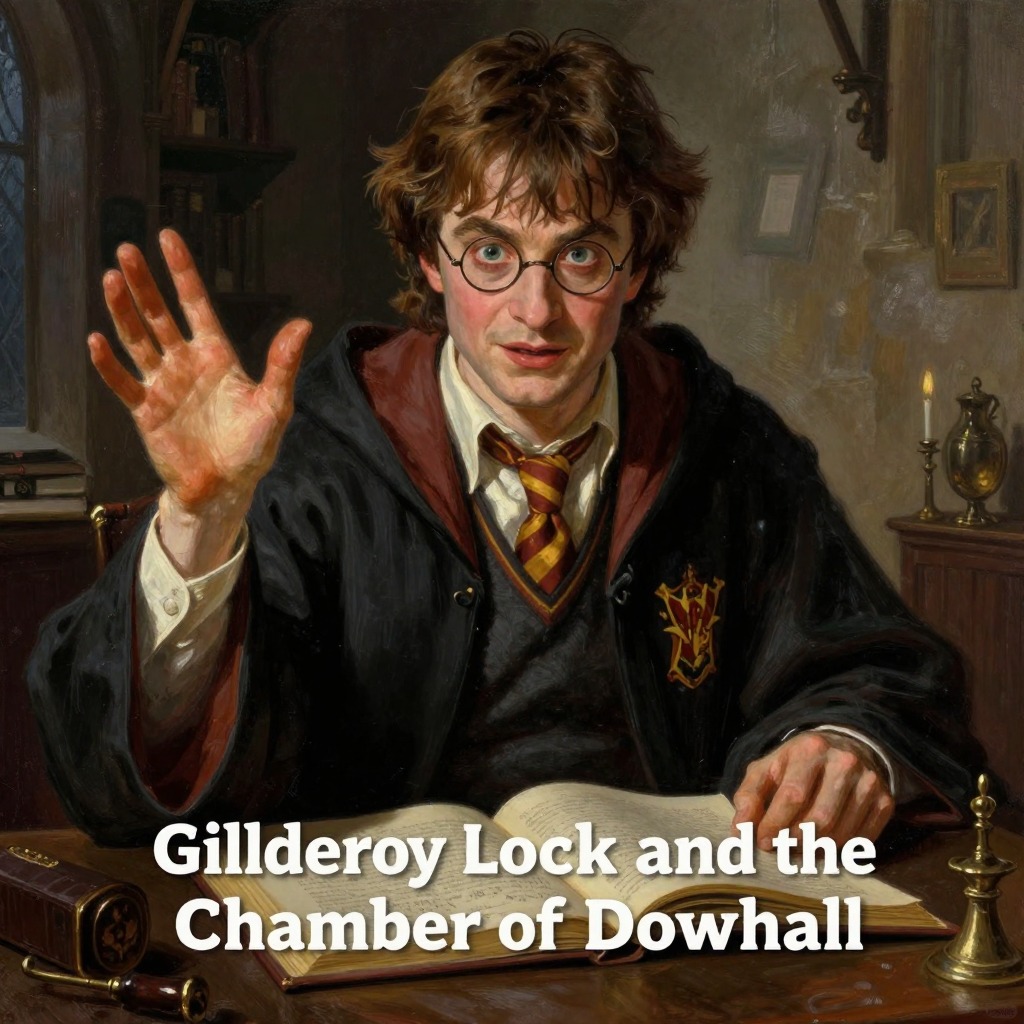
The Memory Charm is first revealed as the cornerstone of Gilderoy Lockhart's entire public persona. In a confession to Harry Potter and Ron Weasley, Lockhart admits that his celebrated books are fabrications. He explains that he tracked down the actual witches and wizards who performed the heroic deeds, asked them how they did it, and then "had to put a Memory Charm on them so they wouldn't remember doing it." This revelation recasts his entire career as a series of thefts, not of objects, but of memories and identities. The charm is thus the instrument that allows him to steal the accomplishments of others, erasing their pasts to construct his own false legend. His pride in this skill is explicit: "If there's one thing I pride myself on, it's my Memory Charms." This admission transforms the charm from a simple spell into a tool of profound ethical violation, one that robs individuals of their own life stories.
The Backfired Charm and Lockhart's Downfall
The charm's most dramatic and consequential use occurs in the Chamber of Secrets, when Lockhart attempts to use it on Harry and Ron to protect his secrets. After being forced at wandpoint to descend into the Chamber, Lockhart seizes Ron's broken wand and declares, "The adventure ends here, boys!" He intends to erase their memories and fabricate a story of his own heroism. However, the wand, which is damaged and unreliable, backfires. Lockhart shouts "Obliviate!" but the spell rebounds on him, and the explosion of the wand causes a rockfall that separates Harry from Ron and Lockhart. The charm's effect on Lockhart is total and irreversible: he loses his memory entirely. When Harry and Ron find him, he is "humming placidly to himself," with no recollection of who he is, where he is, or who they are. Ron reports, "His memory's gone... The Memory Charm backfired. Hit him instead of us. Hasn't got a clue who he is, or where he is, or who we are." This is a fitting and ironic punishment for a man who built his life on erasing the memories of others; the master of the Memory Charm becomes its ultimate victim, reduced to a harmless, amnesiac shell.
Memory as a Fragile and Manipulable Record
The novel repeatedly emphasizes the fragility and manipulability of memory, contrasting the Memory Charm with other, more permanent forms of recording the past. The official history of Hogwarts, as taught by Professor Binns, dismisses the Chamber of Secrets as "arrant nonsense" and "a tale told to frighten the gullible," demonstrating how institutional memory can suppress or erase traumatic events. In contrast, Tom Riddle's diary preserves his memories in a more lasting form than ink, allowing his sixteen-year-old self to interact with the present. Riddle tells Harry, "Lucky that I recorded my memories in some more lasting way than ink. But I always knew that there would be those who would not want this diary read." The diary thus functions as a counter-memory, a hidden record that challenges the official narrative. The Memory Charm, by contrast, is the tool used to create such silences, wiping clean the evidence of past deeds. The novel's resolution, in which the truth about the Chamber is finally revealed and the Petrified victims are revived, suggests that while memories can be erased or suppressed, the truth has a way of resurfacing, whether through magical objects like the diary or through the courage of those who seek it.